WoW Women in Women's Health - Veronika Bridgman, Liza Levy and Dr Alexandra Oti, co-founders of Unravel Health
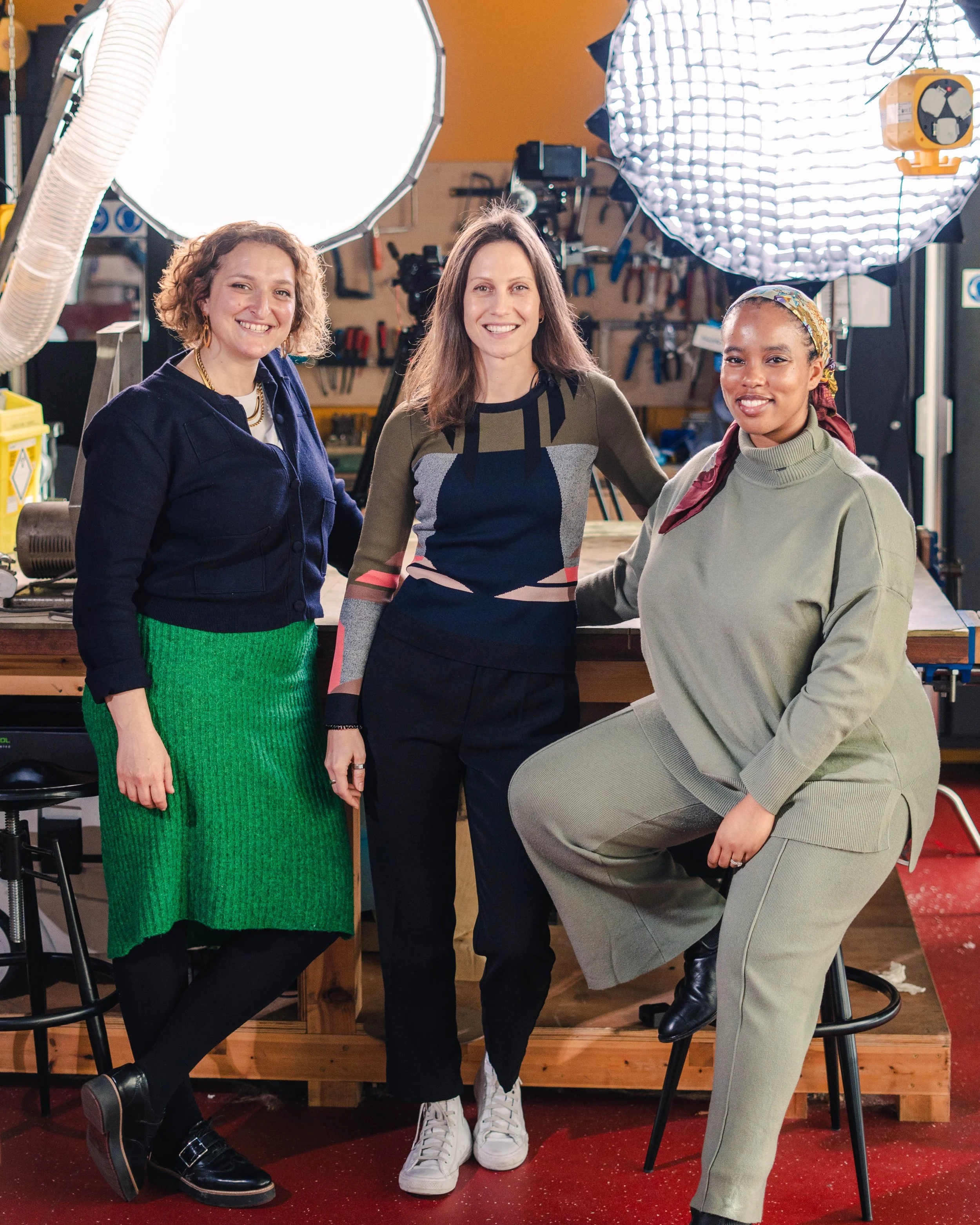
Veronika Bridgman, Liza Levy and Dr Alexandra Oti are the co-founders of Unravel Health.
Veronika Bridgman is a data and product leader with more than 15 years' experience taking global brands from concept to market across three continents, and the products she has built are used by millions of people worldwide. Her work has always centred on complex data infrastructure. Fifteen years ago, frustrated that a blood test told her almost nothing about her symptoms and unexplained infertility (later diagnosed as PMOS), she built her own hormone tracker and has been tracking her hormones ever since. Today, she is the co-founder and CEO of Unravel Health.
Liza Levy is the co-founder and Chief Commercial Officer of Unravel Health. She has worked in healthcare for ten years and comes from a family of doctors. As Head of International Growth at Doctor Care Anywhere, she helped the telehealth company grow from fewer than ten people to more than 700 and through its IPO. Earlier in her career, she studied Chinese, starting in 2002, and founded her first business in Shanghai, helping Premier League football clubs build their Chinese fan bases. She holds an INSEAD MBA and speaks six languages. A lifelong migraine sufferer, she is passionate about giving women real data about their hormones. She describes her career as a habit of joining revolutions before they start: China, telemedicine and now fluctuating hormone data.
Dr Alexandra Oti is the co-founder and Chief Medical Officer of Unravel Health. She is a doctor who also holds a degree in biomedical engineering, giving her a rare grasp of both the clinical need and the science required to meet it. In practice, she has seen patients, often women, return again and again with recurring symptoms that were non-fatal and yet ruined their lives. With limited answers as a clinician, and limited research to change this, this experience drives her work at Unravel. She leads the company's science team and is building its clinical advisory board.
Unravel Health is bringing the hormone lab into the home. Its Micro Lab is a palm-sized device designed to read multiple hormones from a saliva sample in minutes, day after day, filling the gap between one-off blood tests and wearables that can only estimate. Built on more than ten years of research at the University of Glasgow and protected by three granted patents, the technology gives women real hormone data over weeks and months, linked to their symptoms. Women's hormones are the first application; testosterone to follow next, with the platform already tested on markers for heart health and prostate cancer. Founded in 2024, Unravel is London-based.
Tell us a bit about your background and your projects so far.
Between the three of us, we cover the data, the commercial side and the clinic, and each of us came to hormones through personal experience as well as work.
Veronika has spent more than 15 years building products used by millions of people, always with a focus on complex data and infrastructure. On a personal note, she has been tracking her own hormones for 15 years. After years of struggling with irregular periods and a range of symptoms - yet being told it was just stress - she read papers and books to build the tracker and finally self-diagnose PCOS, later confirmed by a doctor.
Alexandra is both a doctor and a biomedical engineer, so she understands the clinical need and the scientific feat it takes to meet it. Whilst working in general practice, she has seen patients, often female, come back time and again with recurring, non-fatal problems and no answers.
Liza has worked in healthcare for ten years and comes from a family full of doctors. She has also had migraines her whole life, so she knows the "it's probably your hormones" conversation first-hand. Before Unravel, she helped the telehealth company Doctor Care Anywhere grow from fewer than ten people to more than 700 and through its IPO in six years, so she understands what it takes to scale.
Together we founded Unravel Health in 2024. We are building the Micro Lab, a palm-sized device that reads multiple hormones from a saliva sample at home, in minutes, day after day.
How did you get into this industry? Has it been an easy industry to get into, or have you had many challenges?
Liza and Alex have worked in healthcare for many years. Veronika always knew this was what she wanted to do; her years building data products were the training for it. What brought the three of us together was a shared frustration: how can we help accelerate this area of healthcare without real hormone data? How is it that when so much has changed with AI, yet this area of women’s health remains a black box, and one that AI simply can’t fix without new data?
Getting in has not been easy. Women's health has been underfunded and under-researched for decades, and hardware is harder still: you cannot ship a device the way you ship an app. Investors want to see the science working before they commit, and the science takes years. We have had to be pretty persistent to find investors who understand both deep science and women's health.
How long did it take you to get to where you are now? What was the biggest obstacle? What are the challenges of being in the industry you are in?
The technology behind Unravel took more than ten years of research at the University of Glasgow. Technically, that makes us a spinout, though we call ourselves a twistout. The company itself is two years old.
Our biggest obstacle has been the science. Saliva carries the hormones the body uses, but in quantities so tiny that until now only a lab could measure them. Reading several of them at once, in a palm-sized device, at home, is our Everest.
The wider challenge is that women's health rarely comes down to one hormone or one moment. Perimenopause, PMOS and hormonal migraine show up as patterns over weeks and months, and today's tools were not designed to see patterns. We also work in a regulated space, which rightly means proving accuracy carefully before anything reaches women.
What are your biggest achievements to date?
In October 2026, we closed a £2.5m round led by Conduit EIS Impact Fund and Wrightwood, joined by Leo Capital, Embryo Ventures, HERmesa and returning investor Zinc. It builds on more than £1m from Innovate UK, the Medical Research Council, SBRI, strategic angels and Zinc.
Our technology is protected by three granted patents. We ran a pilot that measured 45 women every day for three months using an available proxy kit, which showed how much hormone data a single test misses. This year Slush named us one of its top 100 startups in the world, and HLTH USA selected us as one of its top seven healthcare startups.
We are also proud of the team itself. All-female founding teams receive a tiny fraction of venture funding, and we are one that has raised.
What are the projects you are currently working on?
The new funding pays for external equivalency studies, which compare the Micro Lab's readings against lab methods, the development of additional markers and the start of the regulatory approval process. Our goal is to put the first early-access devices into women's hands in 2027, through partners in pharmacy, digital health and clinical research.
Women's hormones are our first application, but not our last. The underlying technology has already worked on markers for heart health and prostate cancer, and could bring many more lab tests into the home.
Is the #WomenInTech movement important to you, and if yes, why?
Yes. What gets built depends on who builds it. For decades, medical research treated the male body as the default, and women were told their symptoms were "probably hormones" without anyone measuring those hormones. That gap exists partly because women were missing from the rooms where research and products were designed.
As an all-female founding team building deep tech hardware, we know how rare we still are. Every woman who builds, funds, or leads in tech makes the next one more likely, and we take that responsibility seriously.
What will be the key trends in your industry in the next five years, and where do you see them heading?
Data over time will replace the single snapshot. Medicine is moving from one test on one day to patterns over months, and hormones are where that shift matters most, because they change every day.
Lab tests will move into the home. Glucose monitoring showed what happens when people can measure their own biology; hormones and many other markers will follow.
Women's health will become a mainstream clinical and commercial priority. Pharmacies, digital clinics and pharmaceutical companies are investing, and clinical trials increasingly need objective hormone data from women.
Finally, as AI matures, its value will depend on the quality of the data underneath it. Real, repeated hormone readings linked to symptoms, conditions and medication will let models find patterns no single appointment could reveal.
What is the most important piece of advice you could give to anyone who wants to start a career in this industry?
Work out what you can do that would be very hard for someone else to do, and build your career around it.
Then hold on to a piece of advice from one of our mentors, an Olympic athlete who now runs a highly successful business. Whatever has just happened, however total the disaster (your prototype gets stolen, a deal falls through), the only thing you can do is work out your next best decision. In the constant ups and downs of a founder's life, that idea is remarkably calming.
It also explains our favourite GIF: a puppet riding an old-fashioned roller coaster, up and down, up and down. It features heavily in our extremely active founders' WhatsApp group.