WoW Woman in Women's Health - Kate Gorsuch, co-founder of Sana Mujer
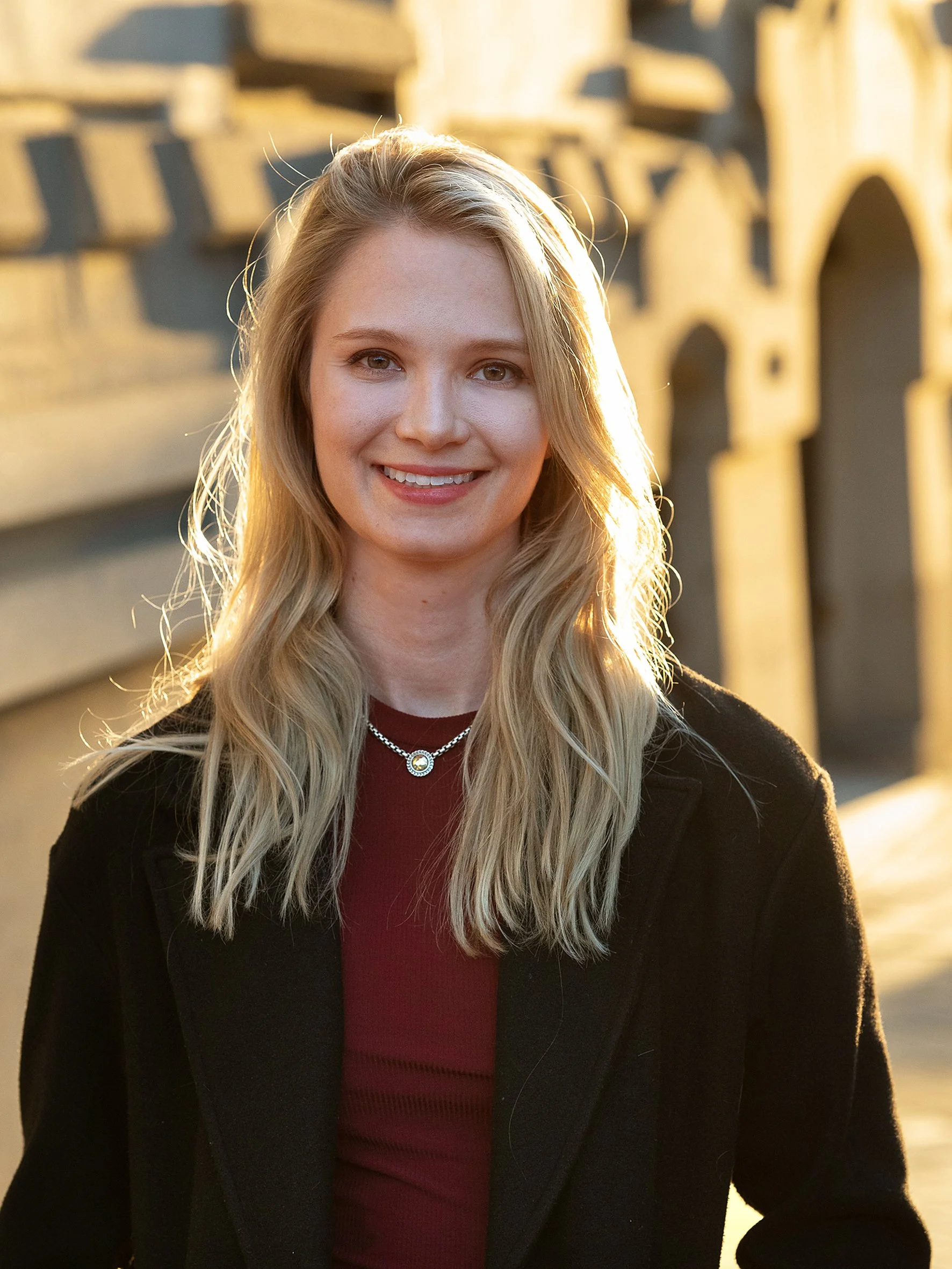
Kate Gorsuch is a family nurse practitioner with more than 10 years of healthcare experience and co-founder of Sana Mujer. She is based in Metro Detroit, Michigan and left her brick-and-mortar position during the pandemic to see patients 100% virtually in more than 25 states via telehealth. Prior to that, she worked in a Spanish-speaking primary care clinic, a school-based health centre, home health, and ICU. She is passionate about using technology to increase access to healthcare and lower costs. Her personal philosophy with patients is ensuring she provides adequate education and primary prevention with each encounter.
Sana Mujer is a 100% virtual telehealth platform dedicated to expanding access to birth control for uninsured Spanish-speaking women in the U.S. Our mission is to remove physical, insurance, and language barriers that prevent easier access. We don’t just translate our pages into Spanish, but rather, we are a Spanish-first platform. We operate in more than 25 states with a focus on providing low-cost generic birth control options whenever possible. We have a variety of methods including the pill, patch, ring, Depo injections, and emergency contraception. We provide options for home delivery versus sending the prescription to a local pharmacy.
Tell us a bit about your background and your projects so far.
I’m a family nurse practitioner with more than 10 years of healthcare experience. In my first position as a Nurse Practitioner, I worked in a primary care clinic in a primarily Hispanic neighbourhood in Chicago and saw how underserved this population is. I’ve seen alarming statistics that only about 8% of healthcare providers have language proficiency to see patients in Spanish, while about 19% of the total population in the U.S. speaks Spanish at home. Between the language barrier and lack of insurance, many patients had to wait months to get to see a specialist to get the appropriate treatment. This often led to their symptoms worsening with further complications and costs.
Additionally, I saw the effects of unintended pregnancies in this patient population due to not being able to access contraceptive care more easily and the spread of disinformation. My experience in telehealth and seeing the need for more Spanish-speaking services prompted me to create Sana Mujer.
How did you get into this industry? Has it been an easy industry to get into, or have you had many challenges?
Since 2013, I’ve worked in various settings as both a registered nurse and nurse practitioner. These include other telehealth startups, a primary care clinic, a school-based health centre, home health, and ICU.
During the pandemic, I saw how useful telehealth is for expanding access to healthcare, especially for patients living in rural or underserved areas. This, combined with my interest in healthcare technology, prompted me to shift my career from working in a traditional brick-and-mortar setting to devoting 100% of my career to telehealth.
Something that’s been difficult since transitioning to telehealth is that while I speak Spanish, many telehealth platforms I’ve worked for over the years have had a policy against treating Spanish-speaking patients due to not having the appropriate legal consents in Spanish. I’ve often had to refer out Spanish-speaking patients with easily treatable conditions, knowing that they may not be able to find another Spanish-speaking clinician locally. Surprisingly, there are still very few telehealth platforms that provide services in languages other than English.
Another one of the challenges working in telehealth in the US is a large upfront economic barrier to getting licenses in multiple states. While the practice of nursing remains the same across state borders, there is not a national U.S. nurse practitioner or medical license. State Boards of Nursing do not communicate directly with each other either, so to be able to reach more people in need, one must go through what is often an arduous, expensive, and bureaucratic process of getting fingerprinted and completing more paperwork.
How long did it take you to get to where you are now? What was the biggest obstacle? What are the challenges of being in the industry you are in?
I believe that every other position I’ve had as a nurse or nurse practitioner to date has helped prepare me for creating Sana Mujer. All my work experience has taught me how fragmented the U.S. healthcare system is and how prevalent healthcare disparities really are.
The biggest challenges for creating a telehealth startup come with healthcare being a heavily regulated industry. You can have an amazing idea, but creating a platform that is fully HIPAA-compliant and that is also user-friendly for those with lower health literacy and at the same time inspires trust can be a complicated project.
Another challenge has been censorship. I’ve often been subject to censorship on my social media platforms for using words like “vagina” and “sex” and have had to start substituting these terms for things like “v@gina” and “seggs.” It’s frustrating to not be able to use the correct terminology in educational content.
Lastly, another major challenge has been “translating” patients’ birth control methods to their US equivalents. For example, a common request I receive from patients is for the monthly birth control injection. This is a popular option in Latin America, but was taken off the US market in 2003. While the Depo quarterly injection is the same modality, it has a different hormone with different potential side effects and contraindications. A lot of times, there is simply no direct translation when finding the best birth control method in the US. I’ve ended up creating a table country by country as a resource for patients that compares common birth control methods used in Latin America with the US.
What are your biggest achievements to date?
One of my biggest achievements has been building Sana Mujer from a vague idea I had in my mind about a real problem to a real company that is providing such an important service. Although unofficially, the messages I receive from patients thanking me for being able to serve them feel like my biggest achievement. Besides the obvious language barrier, many of these women live in what’s termed “contraceptive deserts” where there is not a single clinic offering the full range of birth control methods.
What are the projects you are currently working on?
Right now, I’m focused on growing Sana Mujer by partnering with health promoters (promotores de salud) in several U.S. cities to more directly reach Spanish-speaking communities in the US. Health promoters are members of the community who help connect locals to healthcare services and other resources that are free or low-cost. I’ve seen that a lack of trust and prior experience with telehealth are major barriers for this patient population to completing a healthcare consultation online. Many patients cite concerns about fraud or being asked about immigration status. The goal of working with health promoters is to decrease these barriers.
Is the #WomenInTech movement important to you, and if yes, why?
Yes, very much so. Women continue to be underrepresented in technology, and historically women’s health research faces a chronic global funding gap. Movements like #WomenInTech help bring greater awareness to the need for more healthcare resources built specifically by and for women. #WomenInTech is also an important movement to provide networking opportunities, become inspired, and support other ambitious women in femtech.
What will be the key trends in your industry in the next five years, and where do you see them heading?
I believe AI in women’s telehealth will continue to play a larger role. For now, we see AI assistants for simple tasks like writing SOAP notes or answering simple patient questions about payments, etc. I’m sure AI will take on more of a clinical decision-making role in the next few years, either behind the scenes with clinicians or directly with patients. Thinking about this scares me a bit, but I think it could also have a lot of positive effects by further increasing access to healthcare. We will need to make sure that we prioritise patient safety using AI, however.
What is the most important piece of advice you could give to anyone who wants to start a career in this industry?
Creating a bootstrap telehealth practice takes a lot of dedication and patience and is not always a linear trajectory. Make sure that you have good systems in place from the start, as in the long run you will ultimately need these to provide high-quality care.
Also, it’s important to get to know your audience first and create trust, as it can be scary for a lot of women to provide data about their health over the internet.
Who are three inspirational women in your respective industry you admire?
There are so many that I admire in nursing, but these three come to mind as inspiration:
Florence Nightingale – the founder of modern nursing who helped promote simple handwashing to prevent hospital-based infections
Dr Loretta Ford – a public health nurse and co-founder of the nurse practitioner career after seeing a scarcity of healthcare resources in rural Denver
Clara Barton – Nurse and founder of the American Red Cross who risked her life to save hundreds of lives by transporting medical supplies to battlefields