
WoW woman in AI - Bianca Schor, AI researcher in women's health
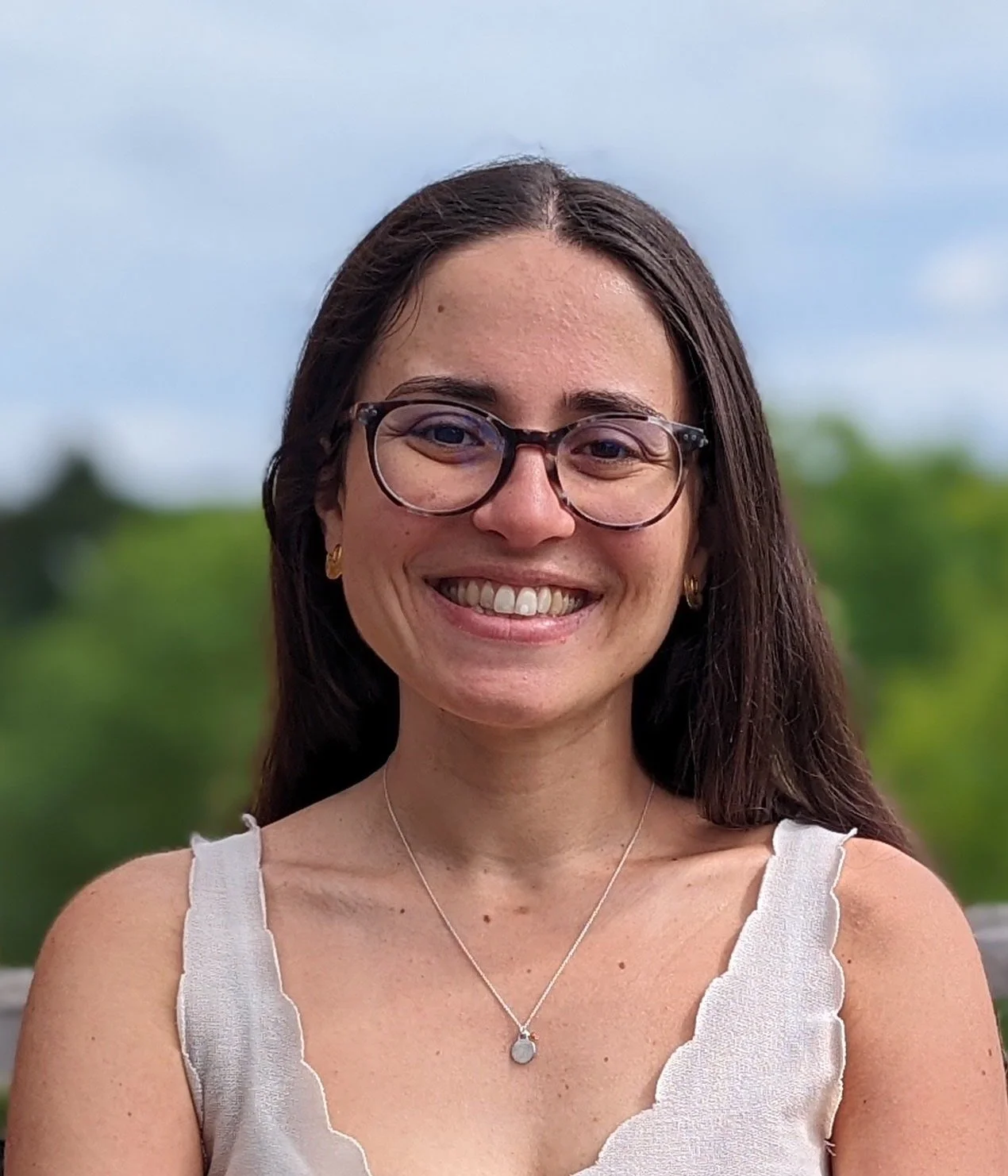
Bianca Schor is an AI researcher in women's health. Bianca waited seven years before being diagnosed with endometriosis and adenomyosis. As a disabled woman, she decided to dedicate her academic career to improving the diagnosis of these conditions and women's healthcare more broadly. Bianca holds a PhD in Computer Science from the University of Cambridge, UK, where she focused on designing responsible AI systems for non-experts, including families, teenagers, and clinicians. Using the latest Deep-learning models, Bianca co-designed AI prototypes for ovarian cancer, endometriosis and uterine disorders, and joined Amsterdam UMC, The Netherlands, as an AI researcher specialising in gynaecological imagery. She now co-leads the Womain lab. In 2023, Bianca also founded the UK’s national AI for women’s health academic group, hosted at The Alan Turing Institute in London. In 2025, the group was recognised as an "AI visionary" for their work in this field by the National Health Service (NHS) and the Department of Health and Social Care (DHSC) in the UK. Since 2025, Bianca has also coordinated the Dutch national hospital consortium and the European WomAIn consortium on AI for endometriosis and uterine disorders, leading to multiple national and international research grants.
in
Tell us a bit about your background and your projects so far.
My background is in Computer Science. I did my PhD at the University of Cambridge, UK. My thesis focused on designing responsible AI systems for non-experts, including families, teenagers, and clinicians. You can find all my academic papers available in open source here.
I now work full-time as an AI researcher in women’s health at Amsterdam University Medical Centres, The Netherlands. I am based in the gynaecology Department because I wanted to get as close as possible to the data. I co-head the interdisciplinary WomAIn lab (www.womain.nl). My AI work focuses mostly on improving our use of ultrasound scans to diagnose widespread conditions such as endometriosis, adenomyosis, and other uterine disorders. You can find out more about our latest Dutch national grant from ZonMw in this project description and this interview. And if you are interested in doing a PhD or postdoc with us, please check my LinkedIn, as we will be hiring soon!
Last but not least, I co-lead the UK’s national academic group called AI for women’s health, hosted at The Alan Turing Institute and Teesside University. We run online talks once a term and a yearly in-person event.
How did you get into this industry? Has it been an easy industry to get into, or have you had many challenges?
I was diagnosed with endometriosis and adenomyosis during my PhD, after seven years of awful symptoms. This is when I discovered the topic of women’s health for the first time, as I have no background in medicine and my previous knowledge of gynaecology and women’s bodies was unfortunately very limited. I was shocked to see how little was (and is still) known about women’s health. Take endometriosis, for example: we do not know what causes it, how it evolves and how to cure it. Our knowledge of adenomyosis is even more limited. So, as any researcher, I started reading as many medical and research papers as I could to teach myself about this. I quickly realised that there was a lot to be done in teams of AI research and development for women’s health, and especially for endometriosis. I quickly decided to dedicate my career to this under-explored field, as my health and the health of over 190 million women worldwide depend on new innovations and knowledge about our bodies to be explored further.
How long did it take you to be where you are now? What was the biggest obstacle? What are the challenges of being in the industry you are in?
I think that all my previous years of education and research, all my previous jobs in research and AI entrepreneurship, but also a decade of lived experience as a patient in the UK, France, the Netherlands, etc led me to where I am today. As a disabled woman, my health has impacted virtually every aspect of my life, and certainly my career.
Living and working with a chronic disabling condition is a serious challenge in itself, but there are also well-reported systemic challenges in women’s health that I had to deal with upfront, including the gender data gap, the lack of diversity (in datasets and in teams), the misogyny and sexism, and the lack of visibility for our work on AI and gynaecological imagery – which is the most widespread and cheapest medical imagery for gynaecology in most countries, including in specialised clinical conferences.
What are your biggest achievements to date?
I think it is too early to talk about achievements, but I am a strong advocate for open-source data (for science reproducibility and greater generalisability), multi-centred and interdisciplinary collaborations, and participatory research centred on patients’ voices and needs, so my aim is to help steer the AI for women’s health research culture in that direction in the coming decade. I think large-scale impact in this space will only come from a joint effort, so we need more of that going forward.
What are the projects you are currently working on?
Most of my research projects are still confidential/under review for publication, but this one is publicly advertised. We started it only recently, but we aim to publish the first open-source multi-centre ultrasound scan dataset specifically for endometriosis and adenomyosis at the end of the project. I think this data will be an important contribution to the field and I hope it will help encourage other research groups to also share their data publicly so that we can collectively do better AI research and development for women and all those affected.
What will be the key trends in your industry in the next five years and where do you see them heading?
Multi-centred research and better data collection processes, I hope. We hope to publish a paper to help towards this shortly.
What is the most important piece of advice you could give to anyone who wants to start a career in this industry?
To learn as much as you can on the topic. To do side projects (using open-source data, for example) and to join our AI for women’s health academic community. We even made a panel discussion specifically with advice for early career researchers who want to work in AI for women’s health, so feel free to have a look at this and our YouTube videos.
Who are three inspirational women in your respective industry you admire?
Dr Michelle Oyen (in the video mentioned above) for being a pioneer in this field and always sharing really good advice
Dr Valentina Lorenzi for being so proactive with the Cambridge Femtech Society and now with her own summer school WHIS, alongside her excellent academic research
Prof Judith Huirne, the Head of my gynaecology Department in Amsterdam UMC, for convincing so many people to invest in women’s health and AI innovation, on top of her full-time job as a surgeon, researcher and head of our Department.
All women working in this space deserve to be celebrated, so these are only some outstanding women and I thank all of the incredible women around me — colleagues, students and friends — for supporting our mission: to improve women’s health for all.