WoW Woman in Women's Health - Lisa Zahakos, founder of HEART RESERVE
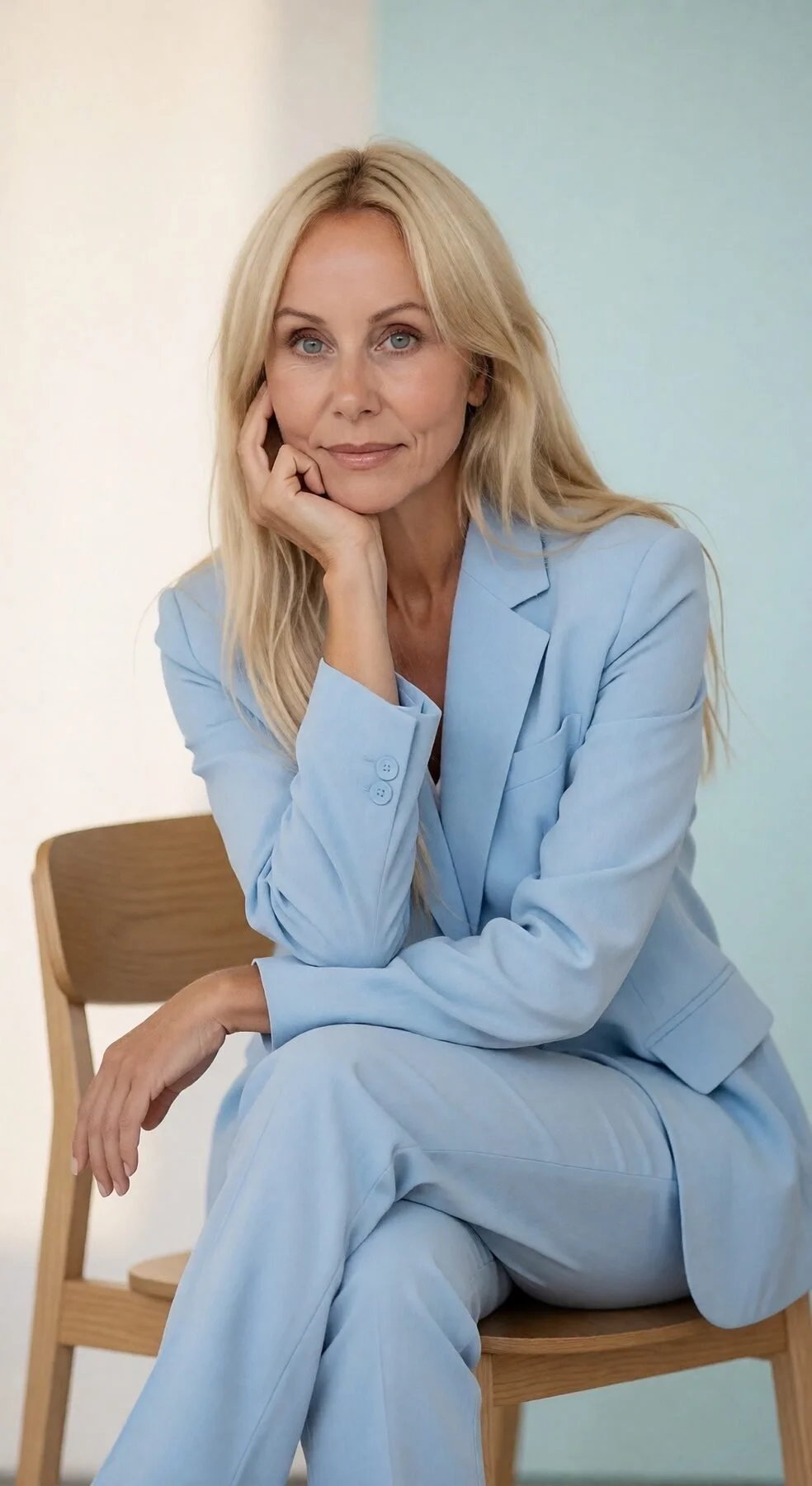
Lisa Zahakos, PA-C, is an NCCPA-certified physician assistant who began her clinical career in interventional cardiology in 2003. She brings more than two decades of patient-care experience to helping women understand their heart health and ask informed questions about their care.
She began her career in interventional cardiology and later worked across preventive and integrative medicine, including cardiovascular safety in hormone and metabolic care, psychiatry and addiction medicine, and patient education.
Lisa is the founder of HEART RESERVE, an independent women's cardiovascular-health education platform, and the author of the completed manuscript HEART RESERVE: How Women Can Build a Stronger Heart Now. Her work focuses on helping women see pregnancy history, blood pressure, cholesterol, blood sugar, weight, menopause, symptoms, testing, family history, and physical capacity as parts of one longitudinal heart story. In health-technology conversations, she brings a clinician-user and patient-communication perspective, with a particular interest in responsible AI and tools that support better questions without replacing qualified medical care.
After fetal surgery for Stage III twin-to-twin transfusion syndrome and the premature birth and nearly three-month NICU stay of her identical twin sons, she became a patient-family advocate and USFetus ambassador. During the COVID-19 pandemic, she founded Sew Away Corona, bringing together out-of-work Broadway costume professionals, seamstresses, and volunteers to make and distribute masks, protective supplies, and care packages. A mother of four, she is passionate about clear medical communication, women's health, writing, running, and yoga.
HEART RESERVE is an independent women's cardiovascular-health education platform founded by Lisa Zahakos, PA-C. It helps women bring together the parts of their heart story that are often separated: pregnancy history, blood pressure, cholesterol, blood sugar, weight, menopause, symptoms, testing, family history, fitness, and physical capacity. Through clear articles and practical, non-diagnostic tools, HEART RESERVE explains what changed, what a test did and did not answer, and what questions may be useful at the next clinical visit. Its central message is simple: your heart has a midlife too, and understanding your history can help you build the heart you need now. Its practical goal is to help women understand their heart history and take informed steps toward building the strength, stamina, and heart health they need for the life they want to keep living.
Tell us a bit about your background and your projects so far.
I am a physician assistant, and I have been in clinical practice since 2003. I began in interventional cardiology, where I learned early that a test can answer one question very well without answering every question a patient has. I later worked in preventive and integrative medicine, including cardiovascular safety around hormone and metabolic care, and then in psychiatry and addiction medicine. Across very different settings, the thread has been the same: helping people understand complicated information well enough to use it.
HEART RESERVE grew out of a pattern I kept seeing in medicine. My own experience as a woman and a mother inside the healthcare system made that pattern personal. During a medically complex twin pregnancy, I underwent fetal surgery for Stage III twin-to-twin transfusion syndrome. My identical twin sons were born at 28 weeks and 5 days and spent nearly three months in the NICU. That experience made the cost of fragmented records, unfamiliar language, and disconnected care intensely personal. It also changed how I think about the information women are expected to carry from one chapter of life into the next.
I founded HEART RESERVE to help women see pregnancy history, blood pressure, cholesterol, blood sugar, weight, menopause, symptoms, testing, family history, and physical capacity as one heart story. Pregnancy history is heart history. It belongs in the story without being the whole story. I have also completed a manuscript, HEART RESERVE: How Women Can Build a Stronger Heart Now. The goal is not to give women a diagnosis. It is to help them understand what happened before, what has changed, what their tests have actually answered, and what to ask next.
How did you get into this industry? Has it been an easy industry to get into or have you had many challenges?
I came into this industry through exam rooms, not through engineering. Even in cardiology, the problem was often not a lack of data. A patient might have results from different years and different offices, with no clear way to see what had changed or what a test had really ruled out. Later, working in preventive care and with women navigating hormones, metabolism, and midlife concerns, that pattern became even clearer.
Entering the health-technology conversation has been a learning curve. I am careful not to claim expertise I do not have. I am not building an algorithm or a diagnostic calculator. What I can contribute is more than two decades of seeing where information breaks down, which questions women bring to visits, and which words help them take part in their own care. The challenge is getting clinical nuance, patient experience, and technical capability into the same conversation without flattening any of them.
How long did it take you to be where you are now? What was the biggest obstacle? What are the challenges of being in the industry you are in?
HEART RESERVE is the result of more than two decades in medicine, but I did not spend 23 years following a business plan toward it. I had to work and live long enough to recognize the same problem in many forms. A woman may have a pregnancy complication in one record, years of blood pressure readings in another, a cholesterol change around perimenopause somewhere else, and a reassuring test that answered only one question. No one may be looking at the sequence.
The biggest obstacle is that fragmentation. The other challenge is translation. Cardiovascular evidence can be sophisticated, and the language can become so technical that a woman cannot use it in an ordinary appointment. But if you simplify too aggressively, you can make the science less true. I spend a great deal of time deciding what can be said clearly without saying more than the evidence supports.
Health technology adds another challenge. Data can look definitive simply because it is displayed beautifully. A trend from a wearable, an AI summary, or a risk estimate may be useful, but it still needs context, validation, and clinical judgment. Responsible tools should make the next conversation better, not make a woman think she has been diagnosed by a dashboard.
What are your biggest achievements to date?
The achievement I am proudest of professionally is staying close to patients for 23 years while continuing to grow. I have worked in very different parts of medicine, but the responsibility has remained personal: understand what is in front of me, explain it honestly, and know when another kind of expertise is needed.
Building HEART RESERVE and completing the manuscript are major milestones because they bring that work into one clear framework for women. I am also proud of the advocacy that grew out of my twin pregnancy and our NICU experience. Helping another family reach the right fetal-medicine evaluation or understand a frightening term is work I care deeply about.
During COVID-19, I founded Sew Away Corona. We brought together out-of-work Broadway costume professionals, seamstresses, and volunteers to make and distribute masks, protective supplies, and care packages. It began with a practical question: Who needs help, and what can we do with what we have? That question still guides me.
What are the projects you are currently working on?
My main project is HEART RESERVE. I am preparing the completed manuscript for publication while building heartreserve.blog as a useful education home for women. The site includes articles and simple, non-diagnostic tools that help a woman put her history in order: what happened before, what has changed, what her tests have actually answered, and what she wants to ask next. FLOW, BEAT, PUMP, and POWER give women a plain-language way to organize questions about circulation, rhythm, heart structure and function, and physical capacity.
I am also developing the ideas behind The Data Women Carry, my proposed contribution to the Women of Wearables AI in Women's Health conference. I am interested in how responsible AI and wearable data could help preserve a woman's story across years and changes in care, without pretending to replace diagnosis or clinical judgment. At this stage, that is a clinical and patient-communication perspective, not a claim that I have built or validated a technology product.
Alongside that work, I remain in clinical practice and continue fetal-medicine advocacy.
Is the #WomenInTech movement important to you and if yes, why?
Yes. I came into this conversation through clinical medicine, not engineering. After more than two decades in practice, I know what patients remember, what gets lost when care changes hands, and how easily one test result can be mistaken for the whole story.
Health technology reflects the questions its designers choose to ask and the information they choose to preserve. If pregnancy history is omitted, or menopause is treated as a side note rather than a time when cardiovascular risk factors may change, a new tool can repeat an old blind spot.
Engineers are essential, but clinicians and patients need seats at the table from the beginning. They can help designers see whether a tool fits real life, whether its language creates false reassurance or unnecessary alarm, and whether it leads to a better clinical conversation. For me, #WomenInTech is also about who gets to define the problem and whose experience counts as meaningful data. I am still learning how to bring my work into the technology conversation responsibly, and I believe that honesty belongs at the table too.
What will be the key trends in your industry in the next five years and where do you see them heading?
In the next five years, I hope the most meaningful progress is not one magic score but a better long view of a woman's health. A pregnancy complication in her thirties, changing blood pressure or cholesterol in her forties, the menopause transition, symptoms, test results, family history, fitness, and wearable data may all sit in different places. With consent and appropriate safeguards, better-connected systems could help bring those pieces into view together. A lab result is a photograph. A decade of results is a movie.
Wearables may add useful context through activity patterns, heart-rate trends, sleep estimates, and, on some devices, rhythm notifications. But a stream of data is not a diagnosis, and the capability of one device or feature should not be assumed for another. Measurements need to be validated for their intended use, understandable to the woman receiving them, and interpreted in context.
Responsible AI could help organize records, surface changes over time, and prompt questions that might otherwise be missed. It also needs clear limits, representative testing, privacy protections, and accountable human oversight. I am less interested in technology giving women more numbers than in helping them understand the numbers they already have. The future I want is not a dashboard that makes women more anxious. It is a more connected story that helps a woman and her clinician ask a better question sooner.
What is the most important piece of advice you could give to anyone who wants to start a career in this industry?
Stay close to the person who will have to use what you build. It is easy to fall in love with a feature, a dataset, or a polished explanation. Spend time in real appointments and listen to women describe what they understood, what frightened them, and what they could not find later.
If your background is clinical or patient-facing rather than technical, do not assume that makes your perspective secondary. Learn enough to collaborate well, be exact about the limits of your expertise, and ask the uncomfortable questions early: Who is missing from the data? What happens when the tool is wrong? Will this help someone have a better clinical conversation? The strongest work begins with a real problem and remains accountable to the people living with it.
Who are three inspirational women in your respective industry you admire?
Three women come to mind for different reasons. Dr. Nanette Kass Wenger spent decades challenging the idea that cardiovascular disease was primarily a man's problem. Her persistence helped change what medicine studies and what clinicians recognize. Ida Tin helped give femtech a name, which mattered because overlooked needs are easier to dismiss when they do not even have a category. I also admire Fei-Fei Li's work on human-centered AI. It is a reminder that technology should begin with people and serve them. Each has shown what can change when someone notices what the existing system has missed.
Find out more about HEART RESERVE here.
Follow HEART RESERVE on Instagram.