WoW Woman in FemTech - Anu Sharma, founder and CEO of Millie
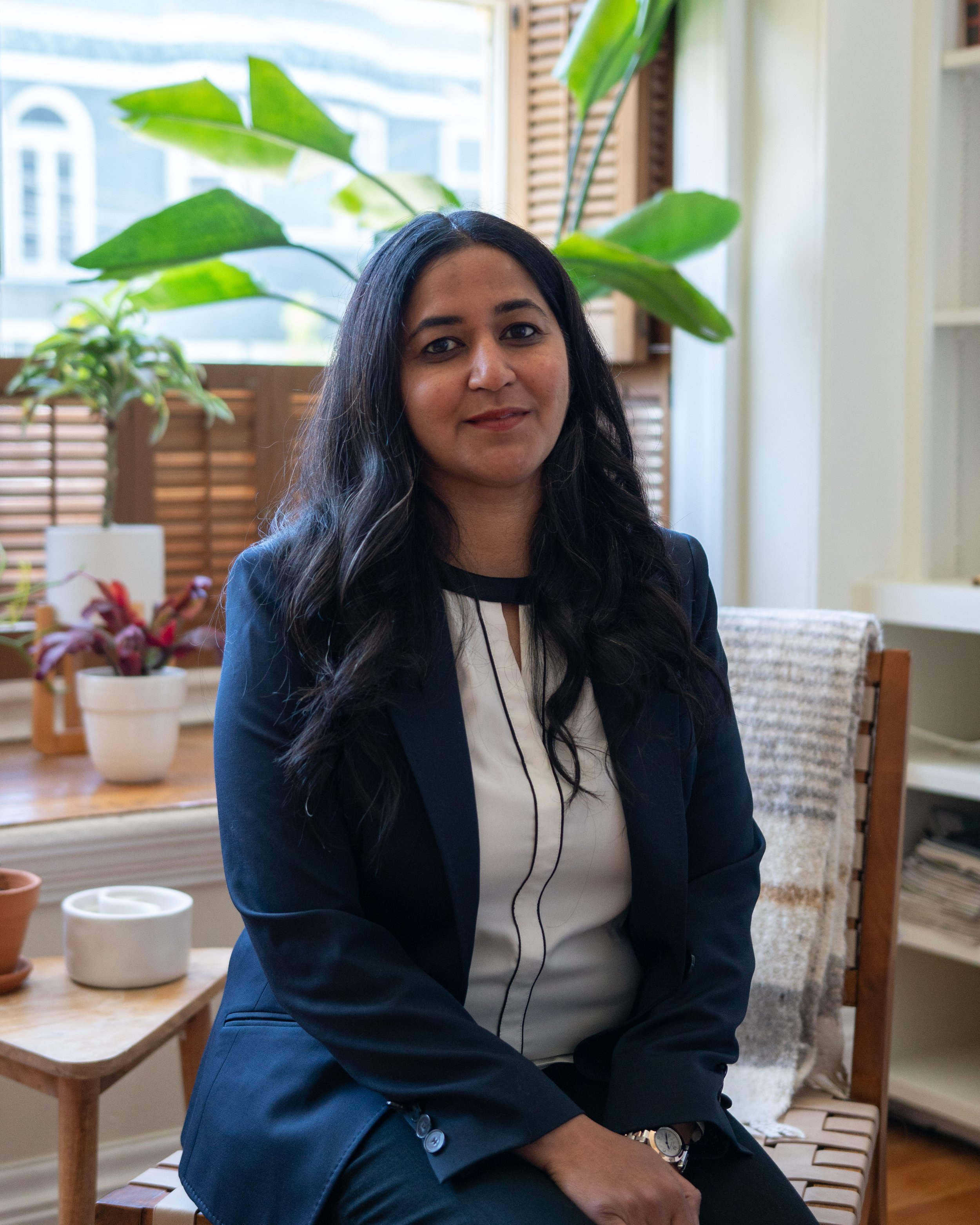
Anu Sharma is the founder and CEO of Millie. Anu is working to build a better maternity care model for American mothers and birthing people. Previously, she was a founding executive at Burd Health, where she helped build the next generation of health benefits for self-insured employers. These included a full replacement alternative to traditional PBM models and a platform for early cancer detection and management. In her role, she led all commercial functions across clients and industry partners.
Prior to Burd Health, she was a Principal at Booz & Company, where she led complex engagements with national and Blue health plans and major U.S. health systems across strategy, M&A, and cost transformation. Among other engagements, she served as program lead for the creation of the third-largest U.S. health insurer and for a politically complex four-way health system integration.
When she is not working on Millie, she advises VCs, startups, and nonprofits on making real change happen in healthcare. She lives in San Francisco with her husband and six-year-old daughter, who is the inspiration for Millie.
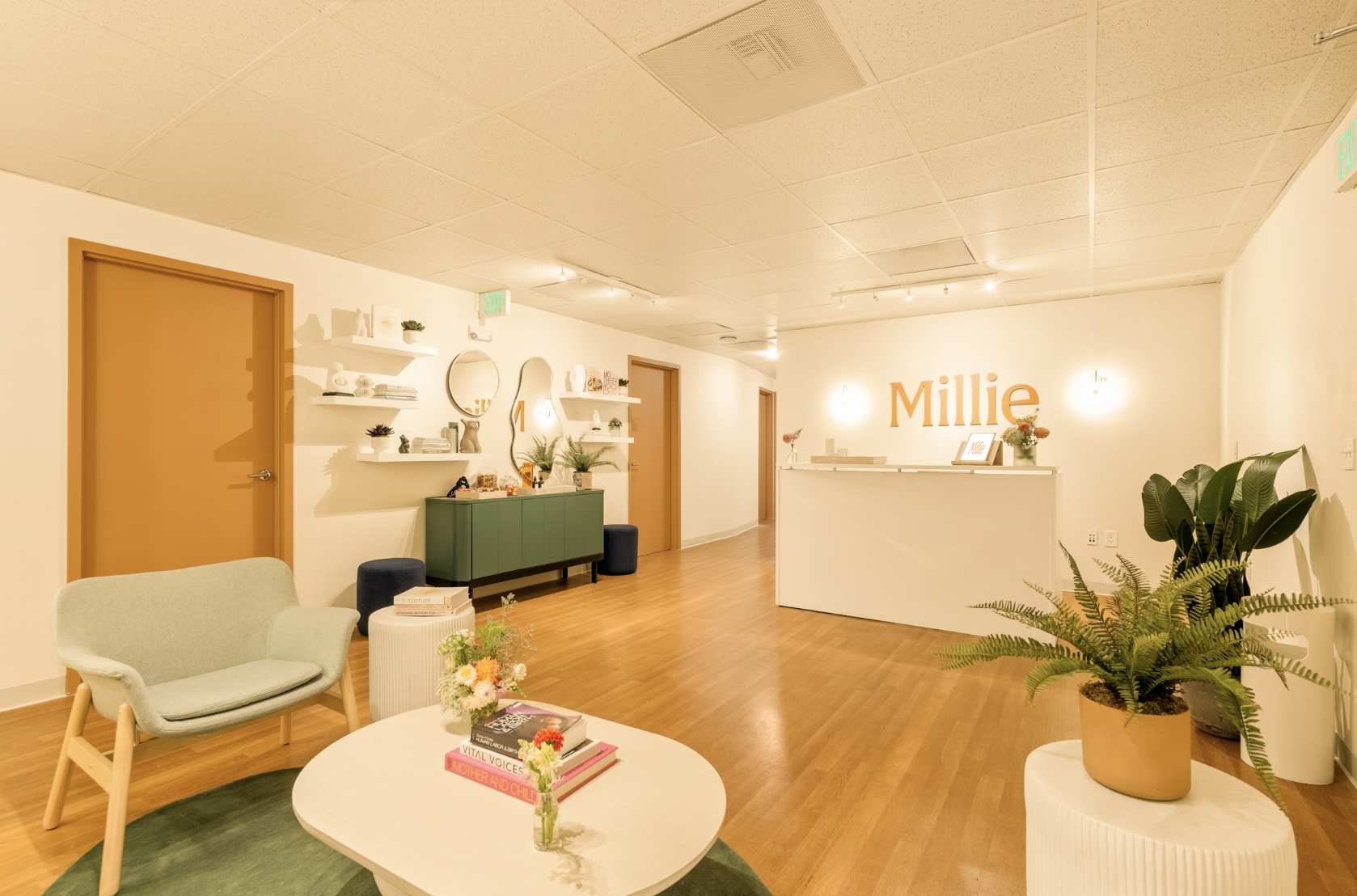
Headquartered in San Francisco, California, Millie is a new kind of maternity clinic, built by moms and care providers, that is reimagining the standard of maternity care in the United States. Millie delivers 360-degree, human-centered care grounded in clinical best practices, supporting patients from conception through pregnancy, labor and delivery, postpartum, and ongoing gynecological care. Additional services include miscarriage management, lactation support, mental health counseling, personalized nutrition guidance, and postpartum support groups.
Tell us a bit about your background and your projects so far.
I’ve spent more than 15 years working in healthcare, first as a management consultant focused on strategy, M&A, and cost transformation, and later in the startup world, where I helped build new health benefits for self-insured employers. I’ve worked with some of the largest health plans and health systems in the country, so I understood the complexity of the healthcare system well before I became an entrepreneur.
But the experience that ultimately changed the direction of my career was much more personal. I had my daughter later in life, after going through multiple rounds of IVF. After everything it took to become a mom, I expected the maternity care system would be there to support me through pregnancy, birth, and postpartum. Instead, I had a long and complicated delivery involving an induction, more than two days of labor, an unplanned C-section, and a near-hemorrhage. I was discharged from the hospital, only to walk myself into the ER about 36 hours later on the verge of a stroke with HELLP syndrome and postpartum preeclampsia.
I remember lying in a CT scanner being evaluated for a possible pulmonary embolism and thinking two things at once: how grateful I was for the physicians who were taking care of me, and how fundamentally broken the model of maternity care was. I was considered high-risk, yet after all of that, the standard plan was essentially to go home and come back for a postpartum visit weeks later. There was no one checking in on me in between. That experience turned me into both a mom and an entrepreneur. I went back to my midwife, Talia, and asked her a simple question: if we could provide maternity care the way we actually believed people needed to be cared for, what would that look like? That conversation ultimately became Millie.
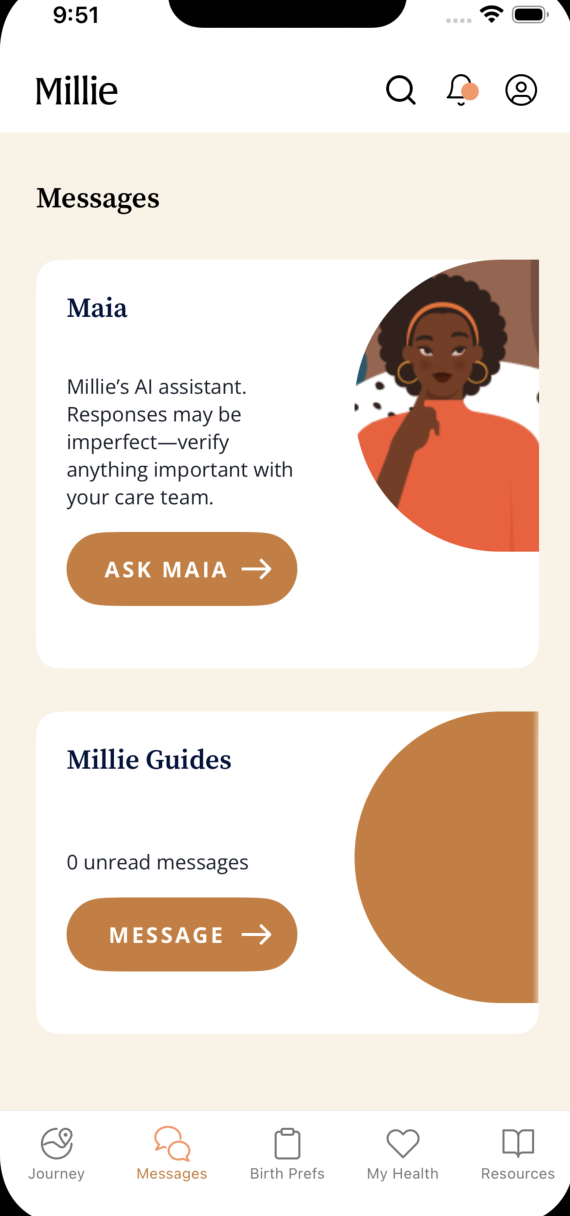
Today, I’m the founder and CEO of Millie, where we’re building a better model of maternity care for American mothers and birthing people — one that combines collaborative midwifery and OB care with virtual care, remote monitoring, mental health, nutrition, lactation, and other support throughout pregnancy, birth, postpartum, and early parenthood.
How did you get into this industry? Has it been an easy industry to get into or have you had many challenges?
Healthcare has been the focus of my career from the beginning, but becoming a founder in maternity care was not something I had planned. I started in management consulting, working with national and Blue health plans and major U.S. health systems on strategy, M&A, and cost transformation. I then moved into the startup world, where I became a founding executive at Burd Health and helped build new health benefits for self-insured employers. Those experiences taught me how healthcare works from the inside — but it was my own experience as a patient that made me want to change it.
I wasn’t coming at this as a technologist who had identified a market opportunity. I was coming at it as a healthcare operator who understood the system, and as a new mother who had experienced its gaps firsthand. Building in healthcare is never easy. In maternity care, you’re simultaneously building a clinical model, a technology platform, patient experience, insurance infrastructure, and partnerships with health systems. It’s highly regulated, deeply complex, and the stakes are incredibly high. But that complexity is also what makes the work so meaningful. We’re not just building another app or telemedicine platform. We’re trying to change the underlying model of how maternity care is delivered.
How long did it take you to be where you are now? What was the biggest obstacle? What are the challenges of being in the industry you are in?
I’ve spent more than 15 years working in healthcare, and each chapter of my career prepared me for what came next. Consulting taught me how healthcare organizations work and how to navigate complex systems. Working inside a startup taught me what it actually takes to build and commercialize something. And becoming a mother gave me a completely different perspective on the system I had spent my career working in.
The biggest obstacle has probably been the sheer complexity of changing healthcare. It’s not enough to have a great idea. You have to make the clinical model work, build the right technology, navigate reimbursement and regulation, develop relationships with health systems, and create an experience that actually works for patients.
Maternity care adds another layer because the journey is long and the stakes are incredibly high. We’re caring for someone through pregnancy, birth, postpartum, and early parenthood, while also needing to recognize when something is changing and they need a higher level of care. My own experience showed me that even when you have access to excellent physicians and a world-class health system, the model itself can still fail you. That’s what continues to motivate me. I want Millie to help create a system where people get the right care, at the right time, from the right person — and where we don’t have to wait for a crisis to provide it.
What are your biggest achievements to date?
What I’m proudest of is that we’ve taken an idea born from a deeply personal experience and built a care model that is delivering meaningfully better outcomes for patients.
Clinically, we’re seeing outcomes that are meaningfully better than national benchmarks. Our C-section rate is 20.2%, compared with a 25.6% national NTSV benchmark and a 32.4% overall national rate. NICU admissions are 8.2% versus 9.8% nationally, and low birthweight births are 4.1%, less than half the 8.58% national rate. Among patients attempting a vaginal birth after cesarean, 66.7% successfully achieve a VBAC. We’ve also demonstrated that there is significant demand for this model and that it can scale. Patient volume has doubled in just one year, from 1,500 to 3,000 patients, while our health system partnerships have grown from one to soon-to-be four.
For me, that combination is particularly meaningful; we’re seeing better clinical outcomes and experiences for patients while also building a model that can scale through partnerships with leading health systems.
What are the projects you are currently working on?
I’m currently focused on expanding Millie’s maternity care model through partnerships with leading health systems across Northern California. We’re working with UCSF Health through its Clinically Integrated Network to create a more coordinated experience for families in the East Bay, and we’re continuing to build additional health-system partnerships that can extend this model to more patients.
More broadly, I’m focused on scaling this partnership model — working with health systems to make high-quality, personalized maternity care more accessible while improving continuity across pregnancy, birth, and postpartum.
As we grow, we’re looking at additional locations and partnerships that can bring this model to more families across Northern California and eventually beyond.
Is the #WomenInTech movement important to you and if yes, why?
Absolutely. Women have historically been underrepresented not just in technology, but in the research, investment, and healthcare decision-making that determine what gets built and whose problems get prioritized. That matters enormously in women’s health. When women aren’t represented in those conversations, it’s easier for important problems to be overlooked or for gaps in care to persist for decades.
My own experience is a good example. I spent my career working in healthcare, but it wasn’t until I became a patient and experienced the maternity care system firsthand that I fully understood some of the gaps in how we care for women during pregnancy and postpartum. I think having more women building companies and leading in healthcare and technology changes what problems get recognized and prioritized. And ultimately, that benefits everyone.
What will be the key trends in your industry in the next five years and where do you see them heading?
I think one of the biggest shifts we’ll see is technology becoming a true force multiplier for clinicians. We already have a provider shortage, and that’s only going to become more acute. The answer isn’t replacing clinicians with technology — it’s using technology to take work off their plates so they can spend more time actually caring for patients. At Millie, for example, we’re using AI to automate frontline operational tasks so our clinical teams can focus more of their time on care.
At the same time, consumers are expecting more from healthcare. They want care that is accessible, personalized, and built around their lives, rather than having to navigate a fragmented system themselves. I think that will continue to drive growth in care models that combine technology with high-quality human clinical care. Ultimately, technology is only valuable if it helps us deliver better care, better outcomes, and a better experience for patients.
What is the most important piece of advice you could give to anyone who wants to start a career in this industry?
Learn how healthcare actually works. It’s easy to get excited about the technology or the idea of disrupting healthcare, but this is an industry with enormous complexity, entrenched incentives, and a lot of stakeholders. Spend time understanding how patients, clinicians, payors, health systems, employers, and regulators experience the system.
I’d also encourage people to get as close to the problem as possible. Talk to patients and providers and understand what happens on the front lines. The best healthcare innovations usually come from deeply understanding a real problem rather than starting with a technology and looking for somewhere to apply it.
And finally, be persistent. Healthcare change takes time. There will be setbacks, regulatory hurdles, funding challenges, and plenty of reasons something shouldn’t work. If you believe the problem is important enough to solve, you have to be willing to stay with it.
Who are three inspirational women in your respective industry you admire?
Margaret Charles Smith, Dr. Virginia Apgar, and Dr. Rebecca Lee Crumpler.
Find out more about Millie on their website.
Connect with Anu on LinkedIn.