WoW Woman in Women's Health - Carine Marcotte, co-founder of Track28
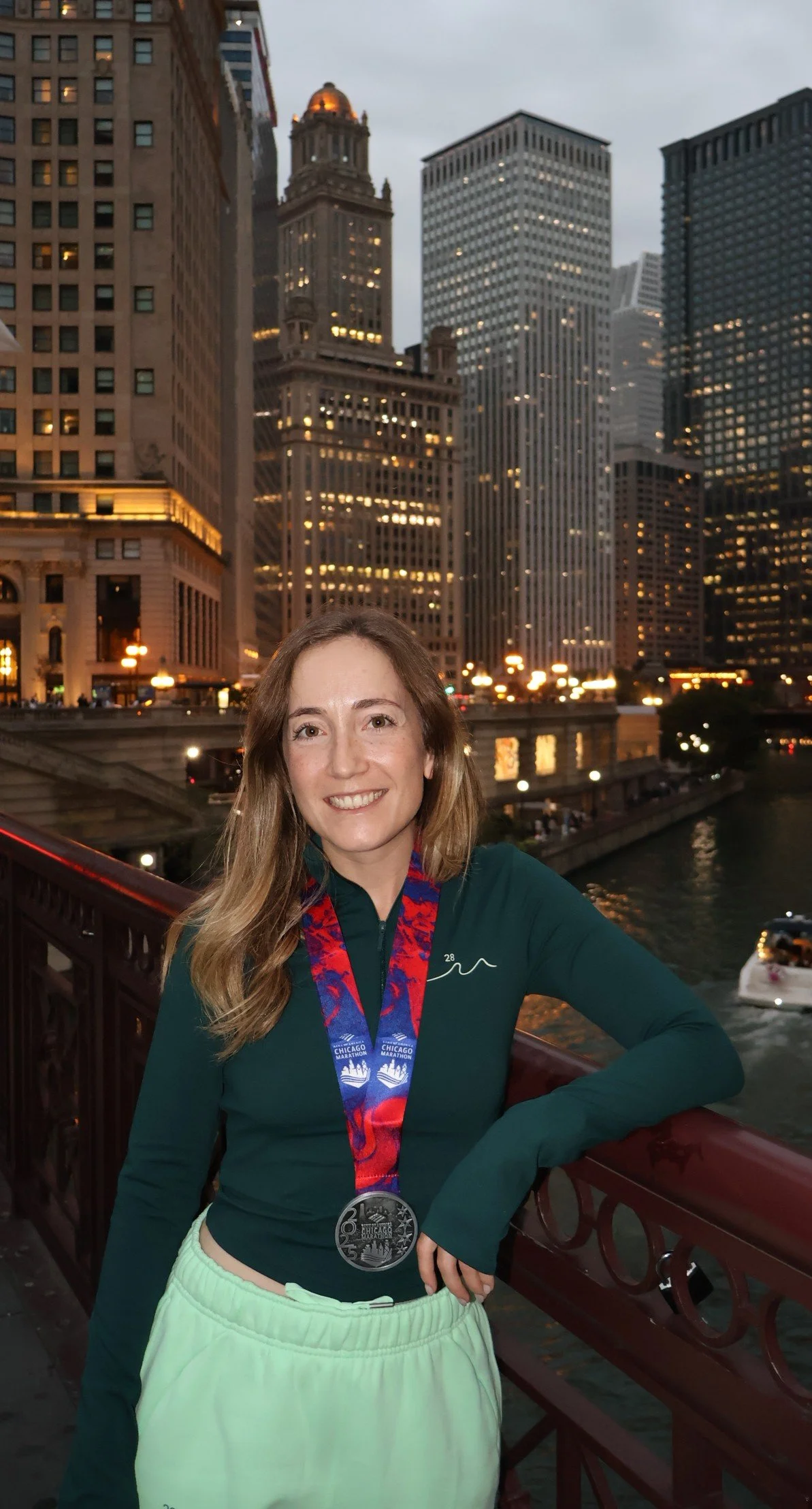
Carine Marcotte is a Montreal-based entrepreneur, Chartered Professional Accountant (CPA), certified running coach, and co-founder of Track28, a FemTech startup bringing a new perspective to women's running.
After building a career in finance, she made the unexpected leap into entrepreneurship, combining her professional background with her passion for running and women's health.
Carine and her co-founder brought Track28 to life in 2026, transforming a coaching philosophy into a mobile app that's already helping a growing community of women rethink their relationship with running.
A Boston Marathon qualifier and active member of Montreal's running community, she leads educational workshops, collaborates with running organisations, and advocates for a more inclusive, sustainable approach to endurance sports.
Through Track28, she hopes to help more women feel like they belong in the running community, build confidence in their abilities, and discover everything the sport can bring to their lives beyond pace and performance.
Track28 is a Montreal-based FemTech startup rewriting the running rules for women. Its mobile app combines recognised endurance training principles with a proprietary menstrual cycle-based algorithm to personalise training intensity and recovery. Designed for recreational runners balancing personal goals, busy schedules, and fluctuating energy, Track28 replaces rigid training plans with training loads that account for how menstrual cycle symptoms can affect energy and recovery, time-based workouts and a flexible calendar that adapts to real life. By taking the guesswork, pressure and guilt out of training, Track28 helps women stay consistent, progress with confidence, and build a lasting relationship with running.
Tell us a bit about your background and your projects so far.
I'm a Chartered Professional Accountant, running coach and now a FemTech founder. I spent the first part of my career in finance and really thought that was my path! I was always very risk-averse and never imagined I would one day take the huge risk of quitting an established career for entrepreneurship.
Early in my career, exercise was the first thing I sacrificed to work and other commitments. Almost ten years later, it’s become non-negotiable. Running is my stress reliever, a source of confidence and freedom, and ultimately gave me the courage to leave finance and become an entrepreneur.
As I fell in love with the sport, I also became passionate about sharing the physical and mental well-being I'd found through running. I became a certified running coach and started asking myself: How can I help more women experience everything running has given me?
That's what led to the creation of Track28.
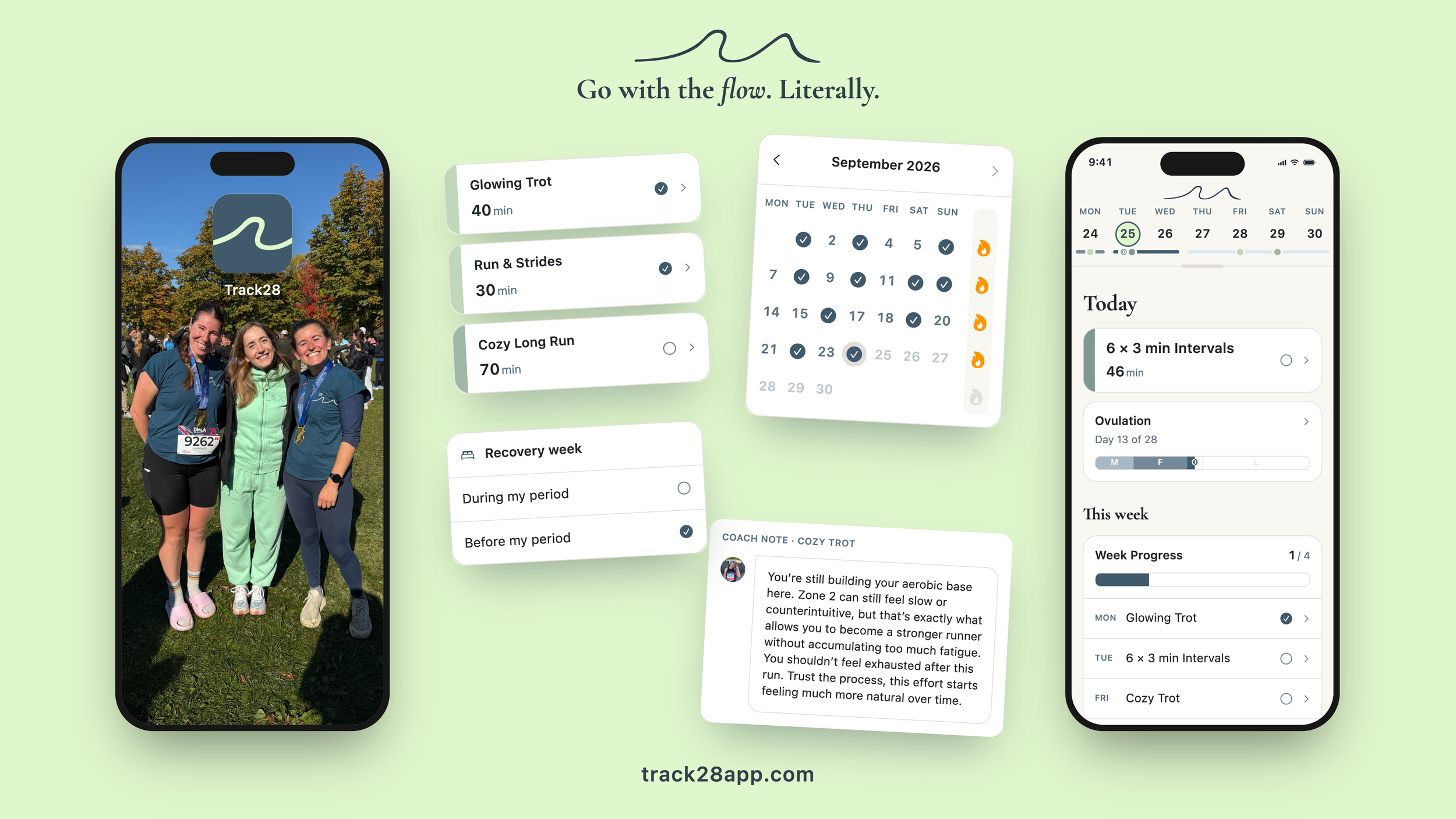
Track28 is a running app that uses menstrual cycle information, fitness level, and running goals to personalise training intensity and recovery. Once the plan is set, the app automatically adjusts the training throughout the cycle without requiring runners to track or plan around each phase themselves. But it's not just about the menstrual cycle. We combine the structure of a training plan with the flexibility of real life, through time-based workouts and a calendar that women can adapt to their schedules. Instead of asking women to organise their lives around a training plan, we're building one that adapts to them. Because we believe women shouldn't have to choose between progressing as runners and having the energy and time for everything else that matters to them.
How did you get into this industry? Has it been an easy industry to get into, or have you had many challenges?
As a coach, I've seen so many women struggle to stay consistent, not because they don't want to run, but because life gets in the way. Between work, family, fluctuating energy levels, and everything else competing for their attention, moving often becomes the first thing they sacrifice.
And I get it. I used to be that woman!
I got into Femtech because I wanted to scale the coaching approach that allowed me to fit running into my life sustainably. By combining the right amount of training load, an approach that acknowledges female physiology and enough flexibility to accommodate real life, I'd seen how much of a difference this type of coaching could make. Technology offered a way to make the ‘’Go With The Flow’’ method accessible to more women.
Has it been easy? Absolutely not!
Running is booming, which is exciting, but it also means entering an industry filled with established brands and companies with much bigger budgets. Instead of competing for attention, I started looking for ways to contribute, like hosting educational workshops with run clubs, volunteering at major races, creating content, and showing up wherever I could bring value.
Somewhere along the way, those opportunities became partnerships, and strangers became friends. We're not just building an app; we're building a community where women feel supported and capable, and where distance and pace are the least interesting things about us.
How long did it take you to get to where you are now? What was the biggest obstacle? What are the challenges of being in the industry you are in?
I have been working on Track28 full-time since February 2026, but the idea has been taking shape for years through my own running journey and coaching experience. In less than a year, we went from an idea to a beta tested by 20 women, to launching on the App Store and building a growing community of runners.
One of our biggest challenges has been finding ways to stand out in an increasingly competitive industry that's evolving very fast.
With AI accelerating development, what feels innovative today can become a standard feature tomorrow. We're competing with established running apps that have years of development and significantly more resources.
But we know technology alone isn't what will differentiate us. It's the human experience behind it. Giving someone a training plan is easy. Helping her believe in herself, stay consistent, and develop a positive relationship with running is much harder. Translating that into an app is our biggest priority but also our biggest product challenge.
There's also the scientific challenge. Women remain underrepresented in sports science, and research on menstrual cycles and athletic performance remains limited. We hope to contribute to closing that knowledge gap through research that deepens our understanding of female physiology and helps us develop more individualised training approaches.
What are the projects you are currently working on?
One of our biggest priorities is taking Track28's proprietary personalization technology to the next level through research and development.
At its core, Track28 is powered by a proprietary menstrual cycle-based training algorithm, which combines a woman's cycle characteristics, fitness level, and goals to strategically organize training intensity and recovery.
Our next step is to push personalization further. We're now initiating a research protocol focused on menstrual cycle predictability and individual variability. Because research consistently highlights how differently women experience their cycles, we want to better understand individual patterns and improve the accuracy of our training planning algorithm.
Working with reproductive health information also comes with significant responsibilities. Data confidentiality, transparency, and user trust are central to how we approach our technology and research.
Looking ahead, we want to expand our technology to support women with irregular menstrual cycles, conditions such as PMOS and endometriosis, and those navigating different life stages, from returning to physical activity postpartum to perimenopause.
Our long-term ambition is to build a coaching resource supporting women across different hormonal profiles, sports, and life stages. Because ultimately, this is about helping more women discover what they're capable of and experience the confidence that comes with it.
What are your biggest achievements to date?
My biggest achievement has been seeing that what we set out to build is actually doing what we hoped it would do.
What started as Post-it notes on a calendar has become an app on the App Store, and we're starting to see the impact of our approach. What's particularly exciting is seeing something we'd already observed through individual coaching now reflected on a larger scale: despite varying training loads throughout the menstrual cycle, our runners report stable perceived effort across phases. Seeing that pattern emerging across a growing community is incredibly rewarding.
But the most meaningful part of building this business comes directly from the women using the app. They're telling me they're becoming more consistent, feeling more confident, and accomplishing things they never thought were possible. That sums Track28’s ‘’why’’ perfectly.
On a personal level, pushing through my risk-aversion and leaving a stable career to build something from scratch is a huge accomplishment. There have been (and still are) countless moments when I question absolutely everything. But I keep going anyway.
And by continuing to push forward, I've been able to contribute to building a company that's joined a specialised tech incubator, received our first grants, built meaningful partnerships, and launched a product that's making a difference in women's lives. None of those things would have happened if I'd let fear make my decisions for me.
Is the #WomenInTech movement important to you, and if yes, why?
Absolutely! And for reasons that go beyond representation.
Having more women in technology is about innovation. Different experiences lead us to ask different questions, challenge assumptions, and build different solutions.
I've also discovered how supportive female founders can be. Women have generously shared their experiences, opened doors, and supported me in any way they could.
That's why #WomenInTech matters. It creates visibility, connections, and opportunities that help more women see themselves in this industry. I can't help but wonder how many incredible ideas we're missing simply because the women who have them don't see themselves as tech founders. I'm proud to be part of this movement, and I hope that by sharing my own journey, I can inspire more women to see themselves as founders and take the leap, even if they don't come from a traditional tech background.
What will be the key trends in your industry in the next five years, and where do you see them heading?
I think two trends will shape women's fitness technology: the rise of cycle-aware living and the growing demand for technology that feels more human.
I believe women are increasingly interested in understanding how their menstrual cycles influence energy, sleep, mood, concentration, creativity and performance. After decades of female physiology being underrepresented in science, that's exciting! I'm hopeful this growing interest will lead to more research, investment, and better data, helping us translate scientific findings into practical recommendations that women can use in their everyday lives.
The second trend is, of course, AI. As it is easier than ever to build sophisticated products, I think we're also reaching a point of app fatigue. We're surrounded by apps that track everything, analyse everything, and constantly ask for more of our input. At some point, more features and more data stop feeling helpful and start feeling annoying.
And I think that's where the opportunity lies. As technology becomes more sophisticated, we're not necessarily looking for more of it. We're craving something that feels human. We want to feel understood, supported, and connected. I think the companies that achieve this will be the ones that truly stand out.
What is the most important piece of advice you could give to anyone who wants to start a career in this industry?
The one thing I wish I'd realised earlier is that I was never supposed to have it all figured out. I was supposed to figure it out.
When I started building Track28, I was obsessed with having a plan; I thought not knowing what to do next meant I was doing something wrong. On top of that, I kept hearing I needed a solid business plan, financial projections, a go-to-market strategy, etc. And you do! But as a risk-averse accountant, I took that advice VERY seriously. I spent so much time and energy building these documents, trying to perfect a plan for a business I still had everything to learn about. Planning has always been my entire personality!
Looking back, not having it figured out was one of the best things that could have happened to me. Because I didn't know what would work, I tried everything. I reached out to people, said yes to opportunities, and put myself in situations I never would have planned for. And somewhere along the way, I started finding my own way of building a business.
So my advice is simple: TRY. Try everything. Put yourself out there. And do it with generosity.
Share what you know. Offer your time. Start conversations. Support people you believe in.
Don't spend all your energy trying to become the founder you think you're supposed to be. Show up as yourself, build genuine relationships, be patient and trust that the right people will recognise themselves in what you're creating.
Who are three inspirational women in your respective industry you admire?
Jess McClain, professional marathoner
Jess stepped away from professional running for a few years, came back on her own terms, and now trains as a professional runner while working full time. Her approach to running is refreshing as she fits running into her life instead of the other way around. That's the philosophy I live and coach by. Consistency comes from building a relationship with running you genuinely want to keep. Jess is proof that this approach doesn't hold you back. It can take you all the way to the top, like finishing second at the New York City Marathon!
Lisa Volkers, co-founder and CEO of PERIOD.
Lisa is carving out her place in a crowded field by standing firmly behind values that might seem counterintuitive in a world driven by profit. Instead of following the playbook, she’s betting that doing right by women is what will set her apart. As a coach with some unpopular opinions about how women should train, I relate to that deeply. It takes courage to build something around what you believe in, especially when it goes against how things are usually done. Lisa reminds me that your values can be your biggest differentiator.
Kate Mackz, running content creator
Kate has built a huge community through content by tapping into something simple: the joy running brings. Her videos aren’t about pace, gear or performance. They’re about people, conversations and the feeling of moving together. That’s exactly what I aspire to. Running has given me some of my most meaningful relationships, and Kate shows how powerful it can be when you use running to bring people together. She makes the sport feel welcoming to everyone, and that’s the kind of community I want to keep building with Track28.