
WoW woman in Wearable Tech - Jane Ollis, medical biochemist, environmental scientist and founder of SONA™
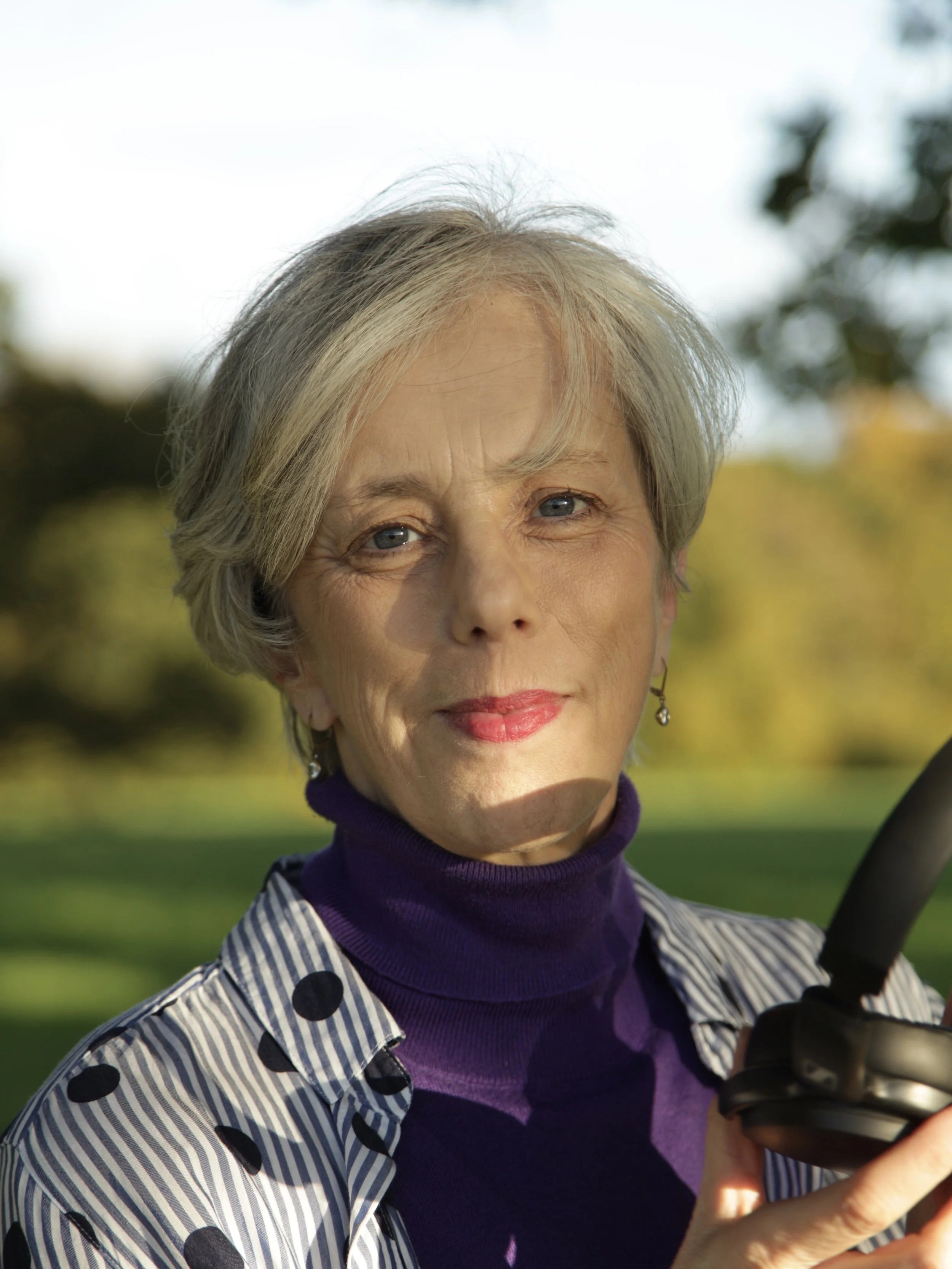
Jane Ollis is a pioneering health-tech entrepreneur, speaker and expert in medical biochemistry, environmental science and neuroscience, focused on transforming how chronic stress is understood and managed. She is the founder of SONA™, a bioelectronic innovation company developing an AI-powered wearable designed to support the nervous system in real time, helping people build resilience and improve their overall wellbeing.
Based in the UK, Jane combines decades of experience across healthcare, scientific research, renewable energy and innovation, bringing a unique multidisciplinary approach to developing solutions that address complex human health challenges. Her work investigates the connection between chronic stress, inflammation, brain health and long-term disease, with a focus on creating technology that empowers individuals and organisations to take proactive control of wellbeing. Jane has advised global corporations, charities and governments, and her achievements include a business fellowship at Oxford University and recognition as a visionary leader in healthcare innovation and sustainability. Passionate about improving human health while supporting a more sustainable world, Jane uses her expertise to inspire change through research, entrepreneurship and public speaking. Through SONA™ and her wider advocacy, Jane continues to advance the future of personalised health technology and resilience-focused care.
SONA™ is the world’s first AI-powered, personalised vagus nerve stimulator, designed to help you take control of your nervous system and support lasting mental and physical wellbeing. Developed by neuroscientists and engineers, SONA™ delivers tailored stimulation in real time, adapting to your unique physiology and goals. In just 10 minutes a day, SONA™ promotes stress recovery, focus, calm and better sleep. The companion SONA™ App provides lifetime access to personalised protocols, real-time feedback and a library of audio and breath exercises; no monthly subscription is required. Backed by science, guided by data and designed for real-life impact, SONA™ offers intelligent, adaptive support for everyday performance, recovery and emotional balance.
Tell us a bit about your background and your projects so far.
I'm a biochemist who took the scenic route: the lab bench, a spell at NASA, then years in Australia running public sector organisations as a CEO while raising a family, before joining the NHS in 2018, where I've chaired innovation networks and sat on boards. And then, just when convention suggested I might slow down, I founded a neurotech company instead. MindSpire is the company behind SONA™, a wearable earpiece that uses AI to personalise vagus nerve stimulation for stress, sleep and nervous system regulation. We've launched in the UK and US, sold out our first production runs, hold two international patents pending and are building a clinical pipeline alongside.
How did you get into this industry? Has it been an easy industry to get into or have you had many challenges?
Easy? Picture it: a grandmother walks into a room full of tech investors. It sounds like the start of a joke and judging by some of the faces I've encountered, a few of them thought it was. I don't fit the pattern. What I brought instead was decades of science, leadership experience on two continents and the stubbornness of someone who has watched too many brilliant ideas die between the research paper and the patient. The numbers tell their own story: less than 3p in every £1 of UK venture funding goes to all-female founding teams. But I've found underestimation to be a rather reliable source of fuel.
How long did it take you to be where you are now? What was the biggest obstacle?
Six years and counting. This is a marathon, not a sprint, and nobody tells you that the overnight successes were a decade in the making. Hardware takes time. Evidence takes time. Trust takes the longest of all. The biggest obstacle hasn't been any single setback; it's been keeping faith through the long, unglamorous middle miles. You learn to pace yourself, celebrate the small wins, and remember that endurance is a competitive advantage most people never train for.
What are your biggest achievements to date?
The official answer: taking SONA from an idea to a certified, revenue-generating product with sold-out production batches, Innovate UK and NIHR backing and genuine clinical partnerships. The honest answer: the messages from women sleeping through the night for the first time in years. You can't put those on a cap table, but they're the reason it exists.
What are the projects you are currently working on?
Scaling SONA™ commercially, including our first B2B partnerships and pushing the science deeper. Our data keeps confirming something rather inconvenient for the rest of the industry: response to stimulation is highly individual, which is why one-size-fits-all protocols are, politely, a fiction. The frontier that excites me most is women's health. HRV shifts with hormones across the menstrual cycle and through menopause, which means an AI that reads the nervous system in real time could one day deliver support calibrated to where a woman actually is, not where a spec sheet assumes she is. As someone navigating that hormonal territory personally, I can confirm the market research is robust.
Is the #WomenInTech movement important to you and if yes, why?
Enormously and not merely on principle. Health tech built without women in the room gets built around a default body and that default has rarely been female, over forty or hormonal. Every woman who joins this industry drags a blind spot into the light.
What will be the key trends in your industry in the next five years and where do you see them heading?
Wearables are about to stop nagging and start helping. The last decade gave us devices that tell you you're stressed, which, frankly, I knew. The next decade is about intervention: devices that actually do something about it, in real time, tuned to your physiology. Women's health will shift from a category to a lens, with cycle- and menopause-aware design becoming table stakes. And as consumer wellness and clinical care continue to blur, evidence becomes the moat. The winners will be those who can prove it, not just pitch it.
What is the most important piece of advice you could give to anyone who wants to start a career in this industry?
Fall in love with the problem, not the technology; technologies date, problems endure. Build your evidence earlier than feels necessary, because in health, credibility compounds and you cannot retrofit it. And if you don't look like the person the room was expecting, walk in anyway. The room adjusts.
Who are three inspirational women in your respective industry whom you admire?
Dr Louise Newson, who has used her voice relentlessly to drag menopause out of the shadows and into mainstream medicine, changing what millions of women expect from their own healthcare. Amber Vodegal, who bootstrapped Pregnancy+ into the world's largest pregnancy app, sold it to Philips, briefly considered retiring to play tennis and came back to build 28x instead. I recognise that refusal to wind down. And Kate Lancaster, Chief Executive of the Royal College of Obstetricians and Gynaecologists, championing women's health hubs and shorter gynaecology waits at the national level, is proof that transforming women's health needs leaders inside the system as well as founders outside it. Three women, at every stage of life, making women's health impossible to ignore.