
WoW Woman in AI - Gabriela Ramírez Rey, founder of Gabriela Ramírez AB
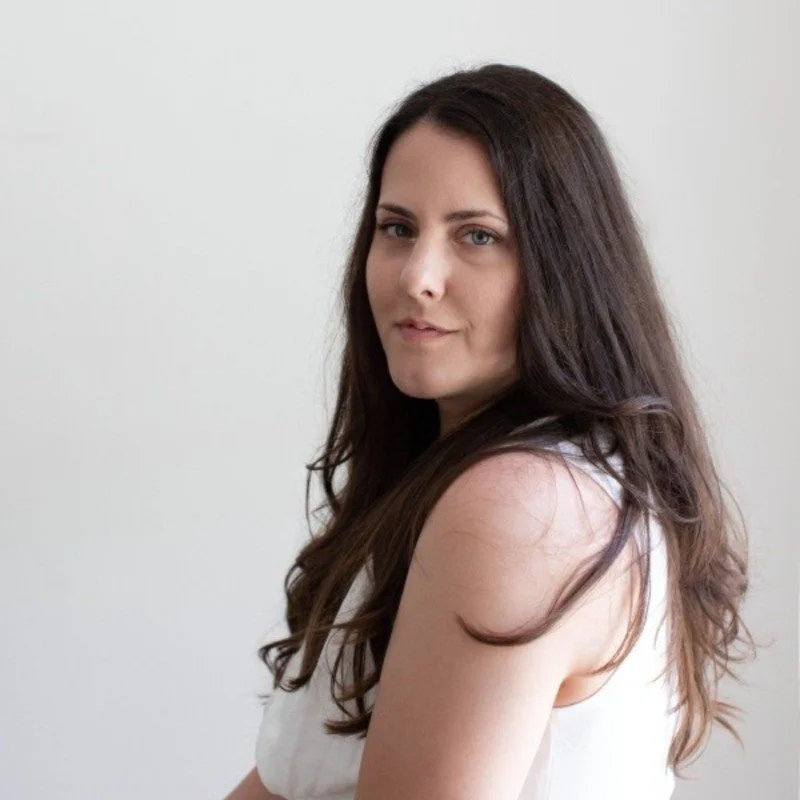
Gabriela Ramírez Rey is an Argentine journalist, researcher, public speaker, and strategic advisor based in Stockholm, Sweden. Her work examines how AI and digital technologies shape the production, circulation, and legitimacy of knowledge, and how these processes influence whose voices are heard, trusted, and acted upon. She is particularly interested in women's health, digital health, and the societal implications of emerging technologies.
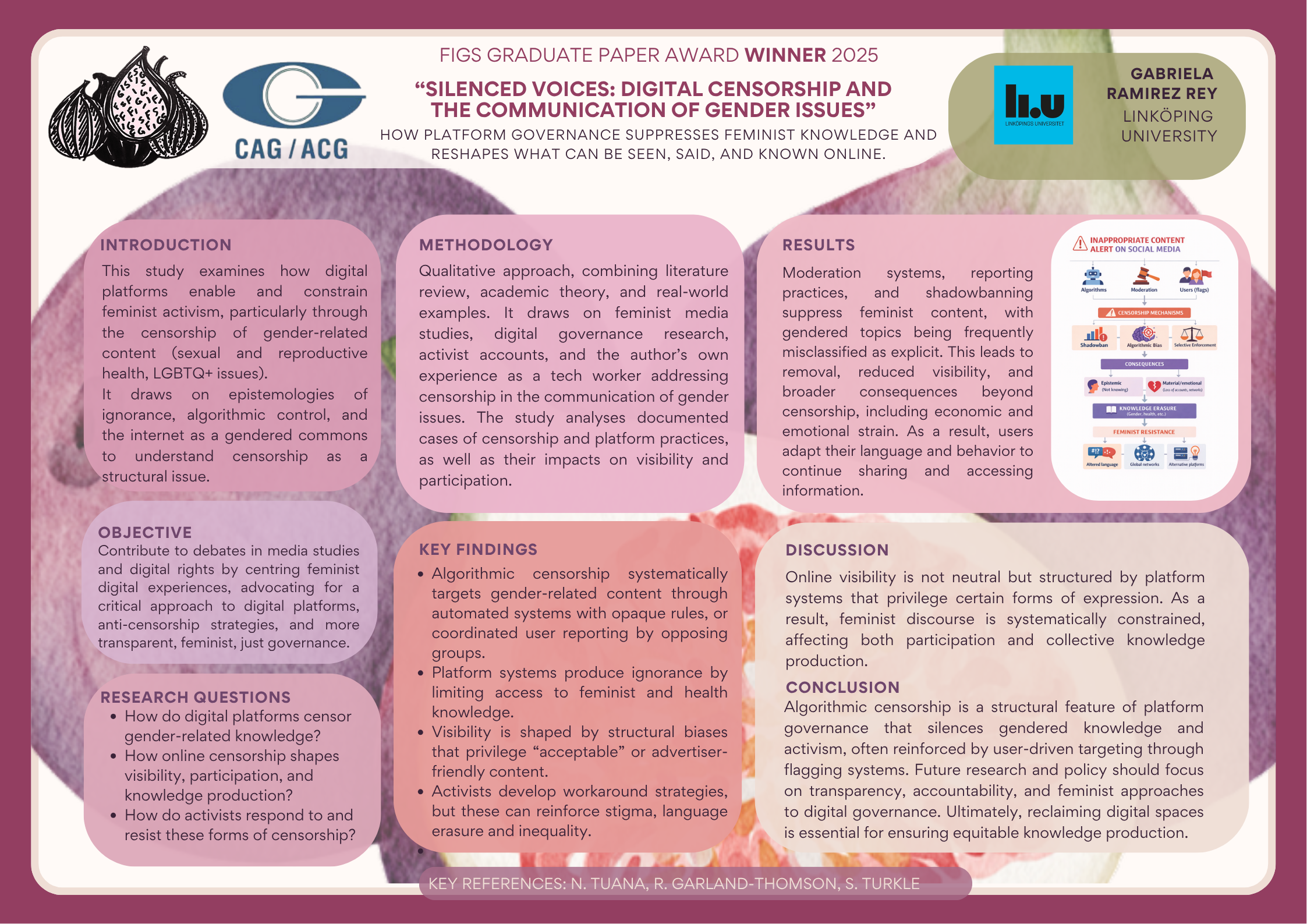
She holds a Master's degree in Gender Studies and brings more than 15 years of experience across journalism, global technology companies, academia, and civil society. This interdisciplinary trajectory allows her to bridge research and practice, combining critical inquiry with strategic communication to help organizations navigate technological change. Her award-winning research on algorithmic censorship and women's health explores how digital platforms shape access to women's health information and public knowledge.
As the founder of Gabriela Ramírez AB, she advises organizations on technology, communication, and social impact, translating research into evidence-informed strategies, public engagement, and policy. She also serves as Technical Coordinator and Scientific Advisor at the Argentine Network of Scientists, Academics and Researchers in Sweden (RCAIAS), where she supports international collaboration across science, technology, and innovation.
Across her research and professional work, Gabriela is driven by a central question: how can emerging technologies foster more democratic, equitable, and trustworthy knowledge ecosystems, rather than reinforce existing inequalities?
Tell us a bit about your background and your projects so far.
I'm a journalist, researcher, and strategic advisor. My work explores how AI and digital technologies shape knowledge, public debate, and decision-making, with a particular focus on women's health and digital health.
My career has taken me through journalism, global technology companies, academia, and civil society. Rather than following a linear path, I've been driven by the same question throughout: how do technologies influence what we know, whose voices are heard, and how societies make decisions?
My previous research examined how social media platforms shape the visibility and circulation of women's health information through algorithmic censorship and content moderation. I am now expanding this work to investigate affective relationships with AI in contexts of medical neglect during perimenopause and menopause, exploring how AI increasingly mediates trust, care, and health decision-making. More broadly, my research asks how algorithmic systems and AI are reshaping the production of knowledge about gendered bodies, and whose experiences become visible, trusted, or overlooked in the process.
Alongside my research, I work with organizations navigating technological change, helping them translate complex evidence into strategy, communication, and public engagement.
How did you get into this industry? Has it been an easy industry to get into, or have you had many challenges?
I didn't start in technology; I started in journalism. My curiosity about how digital platforms shape public conversations eventually led me to work in the tech industry, where I experienced innovation from the inside. Later, I returned to academia to better understand the broader social implications of these technologies.
It hasn't always been an easy journey. Much of my career has unfolded in fields where positions of influence and decision-making continue to be male-dominated, particularly in technology. Moving between journalism, tech, and research also meant constantly learning new languages, methods, and ways of thinking. Looking back, that interdisciplinary path has become one of my greatest strengths because it allows me to connect perspectives that don't often meet, and it has reinforced my commitment to making these spaces more accessible for women and for people whose careers don't follow conventional or linear paths.
How long did it take you to be where you are now? What was the biggest obstacle? What are the challenges of being in the industry you are in?
It's taken more than 15 years to build the career I have today, and I'm still learning. Looking back, the biggest challenge was allowing myself to change. Moving from journalism into technology, and later into academia, meant letting go of the idea that careers have to follow a straight line.
Today, one of the biggest challenges is keeping pace with technologies that evolve faster than our institutions, policies, and public conversations. That's why I believe interdisciplinary collaboration has never been more important.
What are your biggest achievements to date?
One of my biggest achievements has been building a career that brings together journalism, feminist research, and technology to examine how this moment of rapid technological change is reshaping women's lives, health, and access to knowledge, and to be able to translate complex technological issues into public conversations, policy discussions, and practical strategies.
A particularly important milestone was contributing to policy work within the European Union, including the development of a policy roadmap aimed at increasing women's participation in technology and innovation.
I am also proud that my research on algorithmic censorship and women's health has received international recognition. This work has opened opportunities for me to participate as a speaker in international panels and conferences on AI, digital health, women's health, and the politics of knowledge in the algorithmic age.
More broadly, I consider it an achievement to have created an interdisciplinary career in which journalism, research, policy, and public engagement strengthen one another.
What are the projects you are currently working on?
I am currently developing a research agenda on how AI and digital technologies are reshaping the production, circulation, and legitimacy of knowledge about gendered bodies.
My main project focuses on perimenopause and menopause in contexts of medical neglect. I examine how users develop affective relationships with AI when seeking information, recognition, and support that they may not receive from healthcare institutions. I am developing a conceptual framework with three movements — seduction, affect, and extraction — to understand why AI becomes particularly persuasive in contexts where traditional institutions have failed to provide recognition, care, and trustworthy knowledge. The framework looks at how AI first attracts users by presenting itself as available and trustworthy, how these interactions can evolve into relationships of trust and dependence, and how those relationships are ultimately embedded in opaque systems of data extraction and knowledge production.
My previous research focused on social media, algorithmic censorship, and the visibility of women's health information. That work led me to a broader question: how digital technologies shape whose knowledge becomes visible, credible, and trusted. My current research extends that question into AI, asking what happens when people begin to rely on AI not only for information but also for recognition, care, and health-related decision-making.
Alongside my academic work, I advise organizations navigating technological change, translating interdisciplinary research into strategy, policy, communication, and public engagement.
Is the #WomenInTech movement important to you and if yes, why?
Absolutely. As someone who has worked in the technology industry, I've experienced the #WomenInTech movement from the inside. I've seen how important it is to create communities where women can connect, support one another, and make their work more visible.
The early years of the #WomenInTech movement also coincided with a powerful moment for Argentina's feminist and reproductive rights movements. Together with colleagues, I contributed to initiatives that strengthened women's participation in technology by building communities, amplifying women's voices, and helping shape policy discussions on inclusion. That experience showed me that technology is never separate from the broader social and political context in which it develops.
Today, my research has led me to think about #WomenInTech in a broader way. For me, building better technology is also about building more inclusive ways of producing knowledge. It's about asking whose experiences shape the technologies we build, whose expertise is recognized, and whose voices are left out of the conversation. Technology reflects the questions we ask, the problems we choose to solve, and the kinds of knowledge we consider valuable.
What will be the key trends in your industry in the next five years and where do you see them heading?
I think the conversation around AI is becoming much more political and over the next five years, we'll see growing debates about monopoly power, regulation, children's use of AI, copyright, and the responsibility of AI companies for the information their systems generate and amplify.
I'm also convinced that we'll pay much more attention to AI's role in shaping knowledge. Questions about misinformation, epistemic authority, and who gets to define what counts as reliable knowledge will become just as important as questions about technical performance because AI is increasingly influencing how people learn, make decisions, and understand the world.
I would like to believe that the future of AI will be shaped through broader collaboration between engineers, researchers, policymakers, healthcare professionals, educators, and civil society. But so far, most of these decisions have been driven from the top down by a small number of companies. I hope the next phase comes from stronger public participation and grassroots movements demanding a more democratic approach to how these technologies are developed and governed.
What is the most important piece of advice you could give to anyone who wants to start a career in this industry?
Don't feel pressured to fit into a single discipline.
Technology increasingly shapes public life, politics, healthcare, education, and even the way our democracies function, so it is no longer just a sector for engineers or computer scientists. That means we need people from many different backgrounds helping shape its future.
My own career has taught me that some of the most valuable perspectives come from people who don't follow a traditional path. Stay curious, keep learning, and don't be afraid to ask questions that others aren't asking. Technology needs people who can connect technical innovation with human experience, ethics, and society. The people building our digital future should reflect the diversity of the societies they are building for.
Who are three inspirational women in your respective industry whom you admire?
Sue Anne Teo, for her work on how artificial intelligence challenges the foundations of human rights and for pushing us to think beyond technological innovation toward questions of governance, accountability, and justice.
Caroline Criado Perez, for exposing how gender data gaps shape the design of products, policies, and technologies, and for making visible the everyday consequences of excluding women's experiences from data and decision-making.
Nancy Tuana, whose work on the epistemologies of ignorance has fundamentally shaped how I understand the production of knowledge. Her research has been particularly influential in my thinking about medical neglect, women's health, and the ways institutions produce and sustain not only knowledge, but also ignorance.
Find out more on Gabriela Ramírez AB website.
Connect with Gabriela on LinkedIn.