
WoW Woman in Health - Heather Cooper Ortner, President and CEO of the International Myeloma Foundation
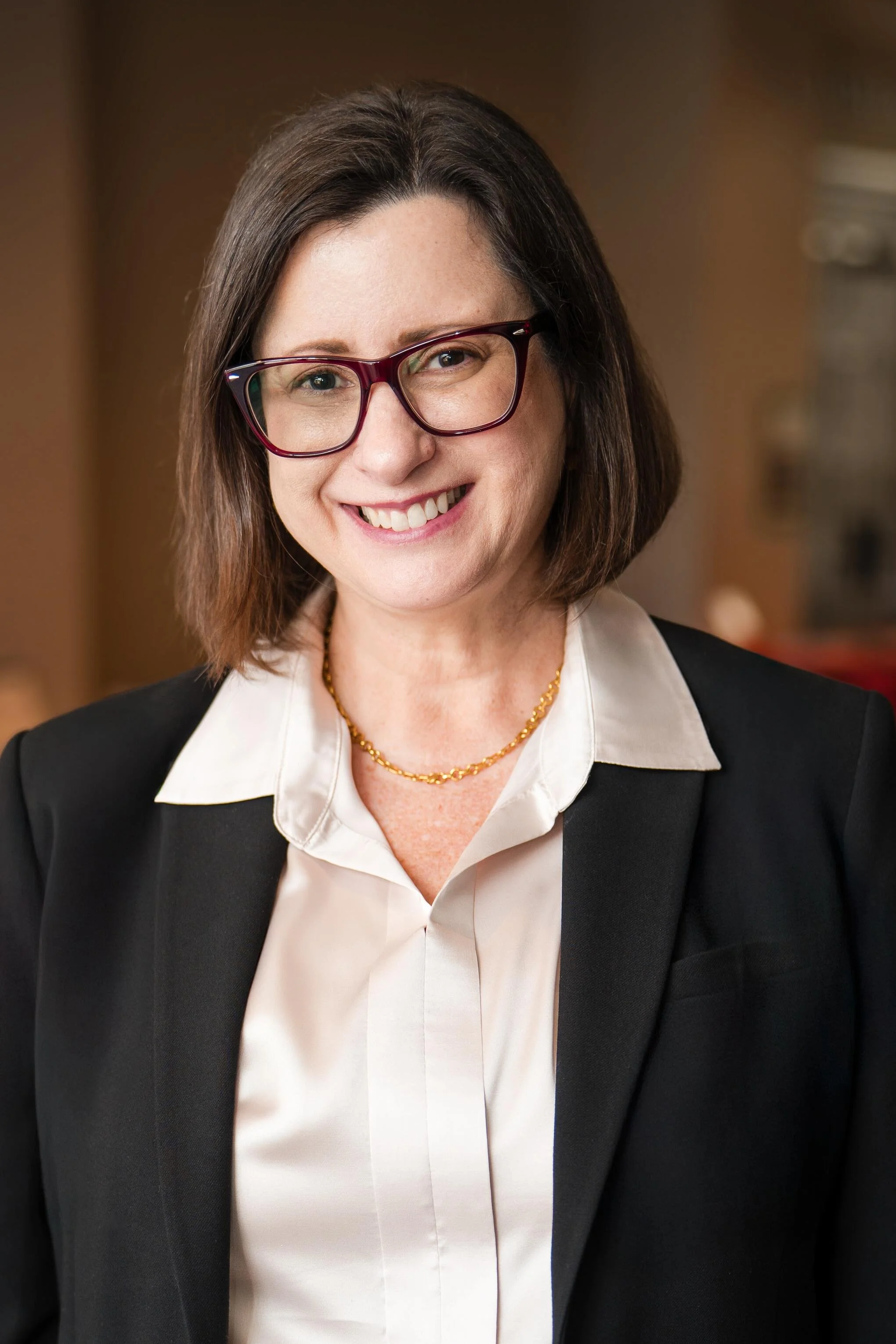
Heather Cooper Ortner brings deep institutional knowledge and executive leadership to her role as President and CEO of the International Myeloma Foundation. With longstanding ties to the IMF, including seven years with the organization and prior service as Executive Vice President of Development, she is honored to lead the Foundation into its next chapter.
Heather has more than two decades of leadership experience guiding mission-driven nonprofit organizations. Before returning to the IMF, she served as President and CEO of Alzheimer's Los Angeles, where she oversaw organizational operations, strategic planning, and program development. She also served as CEO of the Dr. Susan Love Research Foundation, leading its operations and long-term strategic direction. Throughout her career, she has worked to build expertise in fundraising, organizational growth, and stakeholder engagement. Heather earned a Bachelor of Arts in English from the University of California, Los Angeles (UCLA).
Founded in 1990, the International Myeloma Foundation (IMF) is the world’s leading organization dedicated to multiple myeloma. The IMF is steadfast in its mission: accelerating the prevention and cure of myeloma and improving the quality of life for patients and families.
The IMF serves people impacted by myeloma at every stage through world-class research, global advocacy, trusted education, and support. Its International Myeloma Working Group (IMWG) of more than 380 experts develops globally recognized guidelines, while support groups, its AI assistant Myelo®, the InfoLine, and educational and support programs help patients and care partners navigate diagnosis, treatment, survivorship, and access to care.
Tell us a bit about your background and your projects so far.
I've spent my career leading nonprofit organizations dedicated to improving the lives of people facing serious health challenges. From the beginning, I was drawn to organizations that combine scientific advancement with patient education, support, and advocacy because I believe lasting progress happens when research and compassionate care move forward together.
Throughout my career, I've had the opportunity to lead organizations through periods of growth and transformation by strengthening culture, building high-performing teams, modernizing operations, and developing strategies that expand impact while remaining firmly grounded in mission.
Today, as President and CEO of the International Myeloma Foundation, I'm focused on accelerating research, expanding equitable access to education and clinical trials, strengthening support services for patients and care partners, and building strategic partnerships that bring promising therapies to patients more quickly. Much of our work is centered on ensuring that scientific breakthroughs don't remain confined to laboratories or academic centers but reach every patient and every community that can benefit from them.
What continues to inspire me most is working alongside researchers, clinicians, advocates, volunteers, and patients who share a common goal: improving quality of life today while working toward a future where diseases like multiple myeloma can ultimately be prevented and cured.
How did you get into this industry? Has it been an easy industry to get into or have you had many challenges?
I always knew I wanted to work in the nonprofit sector because I wanted my career to improve the lives of people facing serious health challenges. Over time, I was drawn to organizations that sit at the intersection of scientific research, healthcare delivery, and patient education, support, and advocacy. That's where I believe nonprofits can have their greatest impact—not only by advancing science, but by helping people navigate their lives with greater confidence and hope.
Like any career, it hasn't always been easy. The work is deeply meaningful, but it also requires balancing mission, strategy, fundraising, operations, and people. Healthcare is constantly evolving, and nonprofit leaders must evolve with it while staying focused on the patients and families they serve.
How long did it take you to be where you are now? What was the biggest obstacle? What are the challenges of being in the industry you are in?
Leadership is never something that happens overnight. It's built over many years of learning, listening, making difficult decisions, and earning the trust of colleagues, boards, donors, researchers, and the communities you serve.
One of the biggest challenges has been finding opportunities to continue growing while remaining committed to organizations whose missions genuinely matter. The nonprofit sector has a strong pipeline of talented women at the staff and middle-management levels, yet many of the largest organizations are still led by men. Advancing into executive leadership required persistence, confidence, and being willing to take on increasingly complex challenges while remaining true to my values.
Healthcare nonprofits also operate in an environment where expectations are incredibly high and resources are always finite. Every decision carries real consequences for patients and families, which makes the responsibility both humbling and incredibly rewarding.
What are your biggest achievements to date?
I'm proud of helping organizations navigate periods of transformation while keeping their missions at the center of every decision. That includes strengthening organizational culture, building high-performing teams, modernizing operations, expanding strategic partnerships, and positioning organizations for long-term growth.
Today, as President and CEO of the International Myeloma Foundation, one of the achievements I'm most proud of is helping shape a vision that brings together research, education, support, and advocacy in ways that accelerate scientific discovery while improving the lives of patients today. When an organization can both advance tomorrow's treatments and make today easier for patients and their families, that's a meaningful impact.
What projects are you currently working on?
We're working on several initiatives designed to improve both access to care and the pace of scientific discovery.
That includes expanding community-based education programs that reach populations historically underserved by healthcare systems, strengthening patient navigation and support services, and developing new clinical research infrastructure that helps bring innovative treatments to patients more efficiently. Across all of these efforts, we're focused on ensuring that scientific breakthroughs translate into real improvements in people's lives.
Is the #WomenInTech movement important to you and if yes, why?
Absolutely. While my career has been in healthcare nonprofit leadership rather than technology itself, technology is becoming inseparable from how we deliver healthcare, conduct research, educate patients, and reduce disparities.
I'm particularly passionate about ensuring that women—especially those facing economic, educational, cultural, or systemic barriers—have equitable access to both technology and the skills to use it. Innovation only achieves its full potential when everyone has the opportunity to benefit from it. Whether we're talking about digital health tools, artificial intelligence, clinical research, or patient education, inclusion has to be part of innovation from the beginning.
What will be the key trends in your industry in the next five years and where do you see them heading?
I believe we'll see three major trends.
First, precision medicine will continue transforming treatment by making therapies increasingly personalized based on a patient's disease biology.
Second, artificial intelligence and advanced data analytics will dramatically accelerate research, clinical trial design, and patient engagement while helping clinicians make more informed decisions. The IMF has already been investing in this area through Myelo®, our AI assistant that answers personal questions and provides highly detailed and personalized responses, helping to democratize access to qualified and accurate information needed for making critical treatment decisions.
Finally, I believe healthcare will become much more patient-centered. Success won't be measured solely by extending survival but also by improving quality of life, reducing barriers to care, and ensuring that innovation reaches every community—not just those with the greatest resources.
The organizations that succeed will be those that can effectively connect scientific innovation with the real-world needs of patients.
What is the most important piece of advice you could give to anyone who wants to start a career in this industry?
Never lose sight of the people behind the mission.
Technical expertise, strategic thinking, and leadership skills are all important, but the best leaders remain curious, compassionate, and willing to listen. Build relationships. Seek mentors. Continue learning throughout your career. And don't be afraid to tackle difficult problems—healthcare needs people who are willing to challenge the status quo while bringing others along with them.
Purpose and perseverance are a powerful combination.
Who are three inspirational women in your respective industry whom you admire?
Frances Hesselbein has long been an inspiration to me. She transformed what it means to lead a mission-driven organization by demonstrating that great leadership begins with purpose, integrity, and investing in people. Her belief that "leadership is a matter of how to be, not how to do" continues to influence nonprofit leaders around the world.
I also admire Mary Lasker, whose vision and advocacy fundamentally changed the way our nation invests in medical research. Her ability to bring together philanthropy, public policy, and science created a legacy that continues to improve the lives of millions of people today.
Finally, I greatly admire Dr. Fei-Fei Li. Although her work is rooted in artificial intelligence rather than nonprofit healthcare, she has been a leading voice for ensuring that technology is developed ethically and with humanity at its center. As AI increasingly shapes healthcare and scientific discovery, her commitment to responsible innovation is one I deeply respect.
What connects all three is that they didn't simply excel in their own fields — they changed the systems around them. They brought people together around a shared vision and created a lasting impact that extends far beyond their own organizations. That's the kind of leadership I strive to emulate.
Find out more about the International Myeloma Foundation.
Connect with Heather on LinkedIn.