
WoW Woman in FemTech - Dr Frances Conti-Ramsden, Co-founder and Chief Medical Officer of Megi Health
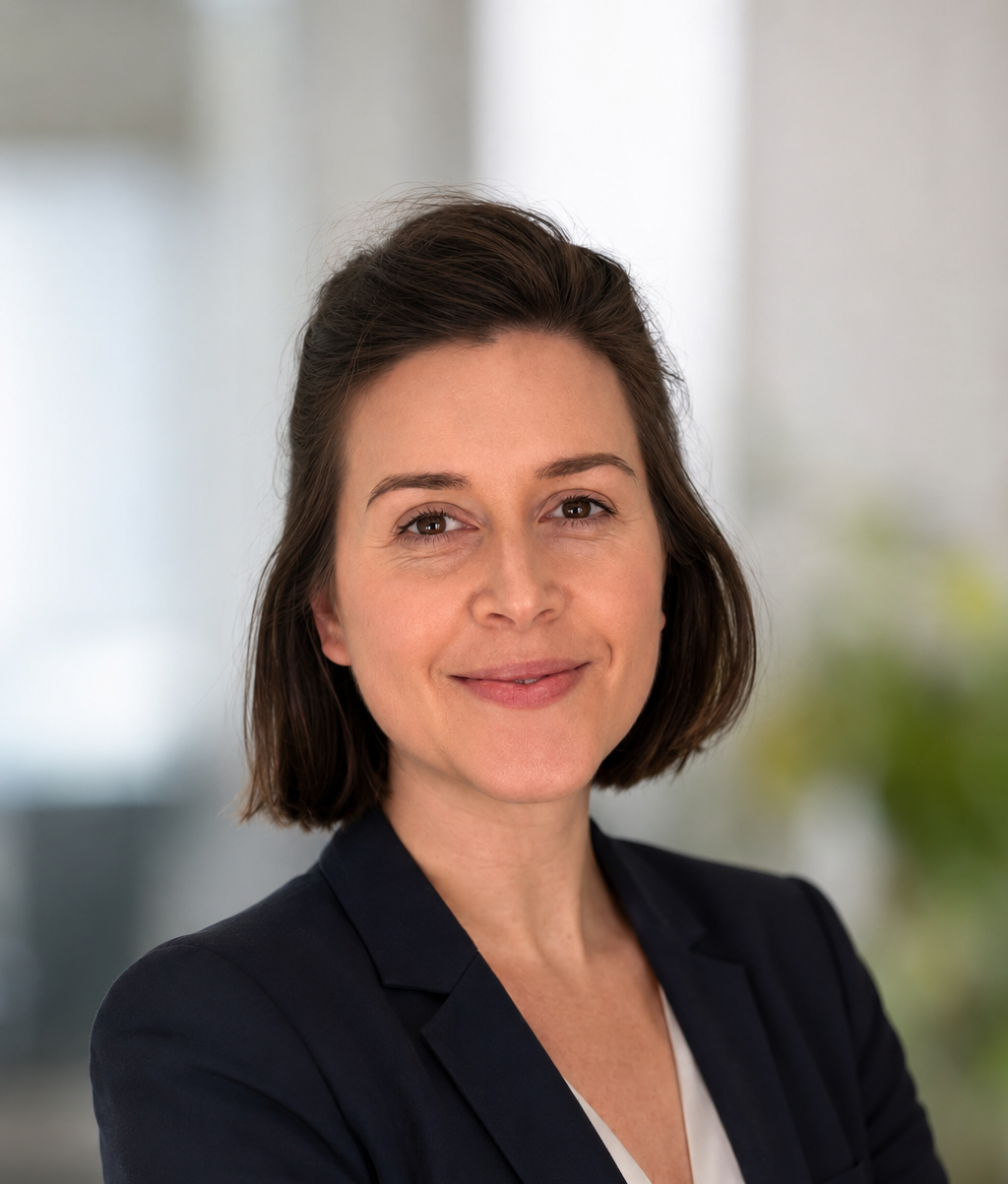
Dr Frances Conti-Ramsden is a clinician, clinical academic and innovator working to transform women's cardiovascular health. She is a Chadburn Clinical Lecturer at King's College London, an Obstetrics & Gynaecology registrar at St Thomas' Hospital, and she is co-founder and Chief Medical Officer of Megi Health. Her research combines the application of real-world data, clinical trials and artificial intelligence to build equitable, data-driven solutions in maternal care, with a particular focus on hypertensive disorders of pregnancy.
Fran completed an MRC-funded PhD at King's College London and an NHS Clinical AI Fellowship, and holds an MSc in Health Data Analytics and Machine Learning from Imperial College London. She has published more than 20 peer-reviewed papers (h-index 13), and her work on ancestry and pre-eclampsia was recognised with the ISSHP Zuspan Award in 2024. In 2025/26, Fran was named an Innovate UK Women in Innovation awardee. At Megi Health, she co-leads the development of AI-enabled tools to predict and modify women's cardiovascular risk across the life course, beginning in pregnancy. Based in London, Fran is driven to move women's health from studying problems to building solutions and to close the long-standing data gaps in the field.
Megi Health (megi.ai) is a women's health technology company closing the gap in women's cardiovascular health, starting in pregnancy. Megi’s CE-marked platform combines a smartphone app, remote blood-pressure monitoring and AI to predict and modify cardiovascular risk across a woman's life course. Built on a DTAC-compliant, ISO 13485-accredited and GDPR-compliant foundation, it supports home monitoring, guideline-based feedback and clinician oversight, and has been used by thousands of individuals worldwide. Focusing on tackling the systemic data gaps in women's health, Megi Health brings together clinical, data-science and engineering expertise to turn research insight into scalable, equitable care.
Tell us a bit about your background and your projects so far.
I wear three hats - clinical, academic and commercial. I started off wanting to be a Scientist, reading Natural Sciences at Cambridge. A lecture from a clinical academic cardiologist changed how I saw how science could lead to translational clinical impact, and I retrained in graduate medicine at Imperial. I've spent the last seven years as an Obstetrics & Gynaecology trainee, and alongside that I completed an MRC-funded PhD at King's College London on pre-eclampsia, an NHS Clinical AI Fellowship, and an MSc in health data science. Today I'm a Chadburn Clinical Lecturer at King's, working on national maternity datasets and a world-first trial of wearables and AI to optimise blood-pressure control after hypertensive pregnancy. And I'm co-founder and CMO of Megi Health, where we're building AI-enabled tools to predict and modify women's cardiovascular risk, starting in pregnancy. The thread through all of it is closing the data gaps in women's health and now focusing on building the solutions rather than describing the problems.
How did you get into this industry? Has it been an easy industry to get into or have you had many challenges?
I met my co-founder Nina Sesto through LinkedIn in the final year of my PhD. We got talking, realised we shared a vision, and it grew from there. I'd also done a couple of life-sciences consulting projects around that time - I was tired of publishing papers on the problems and wanted to move from studying them to also building solutions. There's a real need for investment and capital across women's health, and industry is where a lot of that gets unlocked. Has it been easy? No. Moving into tech and commercial spaces from a clinical-academic background means learning a new language, a new pace, and a completely different way of working. But being able to build something that may reach women more quickly has made it worth it.
How long did it take you to be where you are now? What was the biggest obstacle?
About a decade! My career path has taken many twists and turns. Whilst studying and practising medicine, I have increasingly realised the impact of the deep, systemic data gaps running through women's health: medicine is imperfect, and it's shaped by who we study, which is largely driven by what gets funded. I’m now working to try and change that – visibility is the first step. My biggest obstacle has been mindset: actually believing that I have the knowledge and the skills for my voice to matter – I am still working on this!
What are the challenges of being in the industry you are in?
The biggest challenge is a tension I feel every day: how do you move fast enough to matter without cutting the corners that women's health can least afford? In AI for women's health, the model is rarely the hard part. The hard part is the foundations — data that represents women, the governance and integration into overstretched services, and the patience to generate evidence that stands up. Getting a commercial AI tool into an NHS trust can take one to three years, and most fail at validation. We need a specific kind of speed - well-scoped problems, representative data, and clinical rigour built in from the start.
What are your biggest achievements to date?
Completing my PhD. On paper, that might sound routine, but it came during the hardest period of my life. During those three years, my then-husband became long-term disabled following COVID, and I became his carer as well as a new mum to a newborn. Walking away with a PhD at the end of it, and continuing to progress in my career as a single mother and earner in the last few years, is the thing I'm most proud of. It taught me what I'm capable of carrying and forced me to re-evaluate my life. It underpins everything else I've done since, including taking more risks.
What are the projects you are currently working on?
At Megi, we're building products to predict and modify women's cardiovascular health across the life course, starting in pregnancy, which is exciting and challenging work. Academically, I'm working with national maternity datasets, which means grappling with the unglamorous challenges of data cleaning and harmonisation that have to be solved before any AI can add value. And I'm running a clinical trial looking at how we reduce the friction of remote monitoring in the postpartum period. Another interesting challenge as this is a difficult time to deliver any intervention, when a woman has a newborn and almost no bandwidth, but it is also emerging as one of the most important windows for her long-term cardiovascular health.
Is the #WomenInTech movement important to you and if yes, why?
Hugely. I'm often one of the few and sometimes the only woman in the room or on the panel, particularly on the tech side. That's exactly why visibility matters: you can't be what you can't see. It's one of the reasons I'm so proud of the Women in Innovation Award: being recognised as a female scientist, clinician and innovator, and being able to show the next generation of young women that you don't have to fit into one box or pick one path.
What will be the key trends in your industry in the next five years and where do you see them heading?
Right now there's a lot of hype around AI in health and not a lot of evidence of gain. My hope is that in five years we'll have matured — that we'll understand where AI adds value and where it doesn't, backed by robust clinical evidence, so we're using the real capabilities of the technology to drive improvements in care rather than chasing novelty. For women's health specifically, that means building the datasets and the evidence base that has been missing, so the tools we create are equitable and work for the women they're meant to serve.
What is the most important piece of advice you could give to anyone who wants to start a career in this industry?
Network. Almost every opportunity I've had has come through my network. Reach out to people whose work you admire — I met my co-founder on LinkedIn — say yes to conversations, and build relationships. Your network is what turns a non-linear path into a series of open doors.
Who are three inspirational women in your respective industry you admire?
I've been lucky to work with and learn from incredible women. Professor Lucy Chappell - Professor of Obstetrics and Chief Scientific Adviser to the Department of Health and Social Care - has been a supervisor, mentor and a model of clinical-academic leadership. I also greatly admire Professor Dame Lesley Regan for her tireless work bringing women's health onto the national agenda. With my recent Innovate UK award, I am now also really enjoying joining an ecosystem of many female innovators who are working to solve complex problems – you can read more here.
Dr Frances Conti-Ramsden has received backing from Innovate UK to use everyday smartphone technology to improve heart health for women in pregnancy and beyond, as well as to reduce inequality in maternity services globally. You can read more about it here.