
WoW Woman in FemTech - Sivan Sadan, Co-founder and CEO of PinkStar Technologies
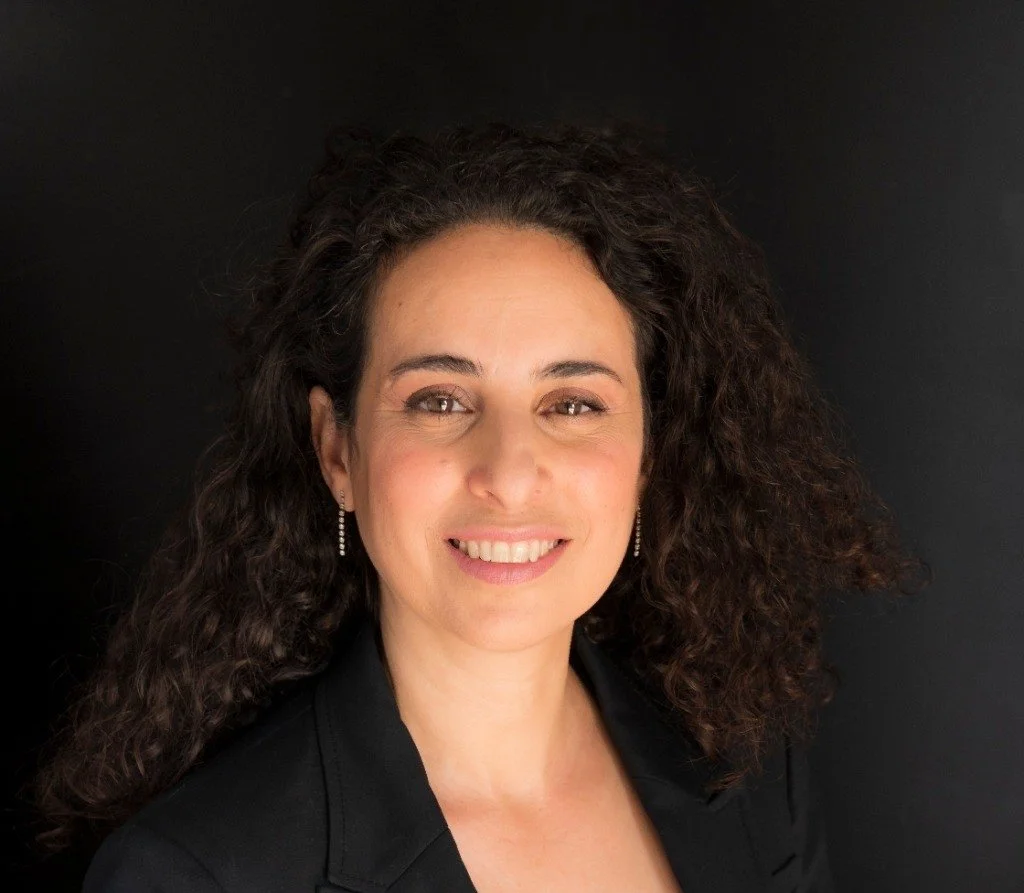
Sivan Sadan is a women’s health entrepreneur, investor and business executive with more than 25 years of experience across investment banking, venture capital, and company leadership.
She is Co-founder and CEO of PinkStar Technologies, a women-led company originating at Sheba Medical Center that is developing AI-based decision support software for breast MRI.
Before founding PinkStar, Sivan served as CFO and Executive Vice President of HeraMED (ASX:HMD), a digital health company focused on connected maternity care. Her work in women’s health has been recognised by Women of Wearables, which named her one of its 200 Trailblazing Leaders in Women’s Health and FemTech in 2023. She is passionate about translating promising science and technology into real businesses, and bringing more capital, talent and attention to women’s health. Based in Israel, she works at the intersection of healthcare, AI and entrepreneurship.
PinkStar is an AI technology company originating at Sheba Medical Center, through the ARC Innovation Center, developing AI-based decision support software for breast MRI. The technology is designed to support radiologists in classifying breast MRI findings, with the goal of earlier detection and more informed clinical decision-making. PinkStar is building its technology on diverse real-world clinical data and has entered a collaboration agreement with Mount Sinai in New York to expand its US clinical data resources. The company has raised a $1M pre-seed round and was awarded a $550K grant from the Israel Innovation Authority to advance development and clinical validation.
Tell us a bit about your background and your projects so far.
I began my career in finance, and over more than 25 years I worked across investment banking, venture capital, CFO, business management and executive leadership. Over the last decade, I have increasingly focused on women’s health. As CFO and Executive Vice President at HeraMED, I led work across financial strategy, capital raising and business development in connected maternity care. Today, I am Co-Founder & CEO of PinkStar Technologies, which I co-founded with Prof. Miri Sklair-Levy and Dr. Debbie Anaby in partnership with Sheba Medical Center. For me, PinkStar is where these different pars of my career come together: my background in finance, my experience in healthcare and my passion for building companies, all focused on a mission I deeply believe in: moving breast cancer detection earlier and improving the quality and efficiency of clinical decision-making.
How did you get into this industry? Has it been an easy industry to get into or have you had many challenges?
I got into women’s health almost by accident. About ten years ago, while I was working in finance, two entrepreneurs I worked with approached me about joining them at HeraMED. As I started learning about the field, I realised women's health is a blue ocean: enormous unmet clinical needs, limited innovation, and a huge market that had been largely overlooked. I became fascinated by the opportunity to combine capital, technology and business leadership to solve problems that genuinely matter to women.
It has definitely not been easy. Women’s health is underfunded and under-researched, and building companies in this space often means having to prove twice that the clinical need is real and that the market is worth investing in. But that challenge is also what makes it so exciting.
How long did it take you to be where you are now? What was the biggest obstacle? What are the challenges of being in the industry you are in?
It took me nearly three decades to arrive at this point, including about ten years working directly on the company side of women’s health. The biggest obstacle has probably been access to capital. Healthcare innovation requires scientific credibility, clinical validation, regulatory discipline, commercial execution and capital, all at the same time.
We are still looking for the right investors for PinkStar. We are building a company with a meaningful mission in women’s health, but we are a-lso building a commercial business with the ambition to create significant financial value for our shareholders. For me, what matters is finding investors who believe in the opportunity and are aligned with our ambition, whether that comes from the impact we can create, the financial opportunity, or both.
What are your biggest achievements to date?
I think my biggest achievements are less about one title or transaction and more about having experienced different sides of the innovation journey. Early in my career as an investment banker, I was fortunate to help finance emerging technologies. Later, on the venture side, I had the opportunity to sit on boards and support entrepreneurs. At HeraMED, I learned firsthand what it takes to build and operate a healthcare company and navigate its many complexities. PinkStar is where these experiences come together. I am particularly proud to have co-founded the company with Sheba and two exceptional women, Prof. Miri Sklair-Levy and Dr. Debbie Anaby, raised our $1 million pre-seed round, secured support from the Israel Innovation Authority and expanded our clinical data work through our agreement with Mount Sinai.
And on a much more personal level, I am proud to be a mother and a wife while building companies and pursuing a demanding career. I hope my children see that it is possible to be ambitious while also being present for the people you love.
What are the projects you are currently working on?
My focus is building PinkStar. We are advancing our AI-based decision support technology for breast MRI, expanding our clinical datasets and collaborations, initiating our US regulatory strategy, and building the infrastructure required for clinical validation. We are also working with leading partners and raising capital to accelerate the next stage of development. The objective is to build a company that can achieve clinical and commercial scale.
Is the #WomenInTech movement important to you and if yes, why?
Absolutely. For me, #WomenInTech is not simply about having more women in technology. It is about women having a seat at every table: as founders, investors, engineers, scientists, clinicians, executives and decision-makers.
The people who build technologies influence which problems are researched, what data is collected and whose needs are prioritised. If women are not part of those decisions, we risk continuing to build healthcare solutions around a model that does not fully reflect women’s needs. I also believe strongly in the power of visibility. When women see other women building companies, leading research and raising capital, it changes what they believe is possible.
What will be the key trends in your industry in the next five years and where do you see them heading?
One area where I strongly believe personalissation can transform healthcare is breast cancer screening. I believe that we need "the right test, at the right interval, at the right time"
Today, we still largely operate with a relatively simple model: women considered high risk follow one screening pathway, while the vast majority follow another, typically centered around mammography. But women are not one homogeneous population. Around 40–50% of women undergoing screening have dense breasts, which can make cancers more difficult to detect on mammography. I envision a future in which every woman has a personalized breast screening strategy. AI could help radiologists and clinicians integrate multiple dimensions of information, including age, family and genetic history, breast density, previous imaging and imaging-based risk signals, to determine which modality is most appropriate and how frequently she should be screened. For one woman, that might mean routine mammography; for another, supplemental MRI; And importantly, I believe that AI will turn MRI into a financially viable option for women who need it. This plan should evolve over time as her risk and imaging change.
To me, this is what precision medicine should look like in women’s health: not simply treating every woman according to the same protocol, but using technology to understand the individual woman in front of us and give her the right test, at the right interval, at the right time.
What is the most important piece of advice you could give to anyone who wants to start a career in this industry?
A friend once told me "Where there is a will, there has to be a wallet".
Choose a problem before you choose a technology. In healthcare, it is easy to become excited about AI, digital health, or a new device, but the real question is whether you are solving a clinical problem and whether someone will actually use and pay for the solution. AI is not the point. The problem we are solving is the point.
Who are three inspirational women in your respective industry you admire?
Three women come immediately to mind. Dr Regina Barzilay inspires me because she has shown how world-class AI research can be translated into healthcare applications, particularly in breast cancer.
Dr Laurie Margolies, Professor of Radiology at the Icahn School of Medicine at Mount Sinai and Vice Chair for Breast Imaging, and Dr Elisa Port, Chief of Breast Surgery at Mount Sinai Health System, have inspired me through our collaboration with Mount Sinai. Beyond their extraordinary clinical expertise, I was struck by their openness to innovation and their commitment to improving care for women. They represent the kind of clinical leadership that can move healthcare forward.
And I am fortunate to be surrounded by inspiring women every day. My co-founders, Prof. Miri Sklair-Levy and Dr. Debbie Anaby, bring exceptional clinical and scientific expertise, while Anat Katz-Arotchas, our CPO, brings outstanding strategic thinking. Building PinkStar alongside them is in itself a source of inspiration.