
WoW Woman in MedTech - Anat Shani, CEO of Synchrony Medical
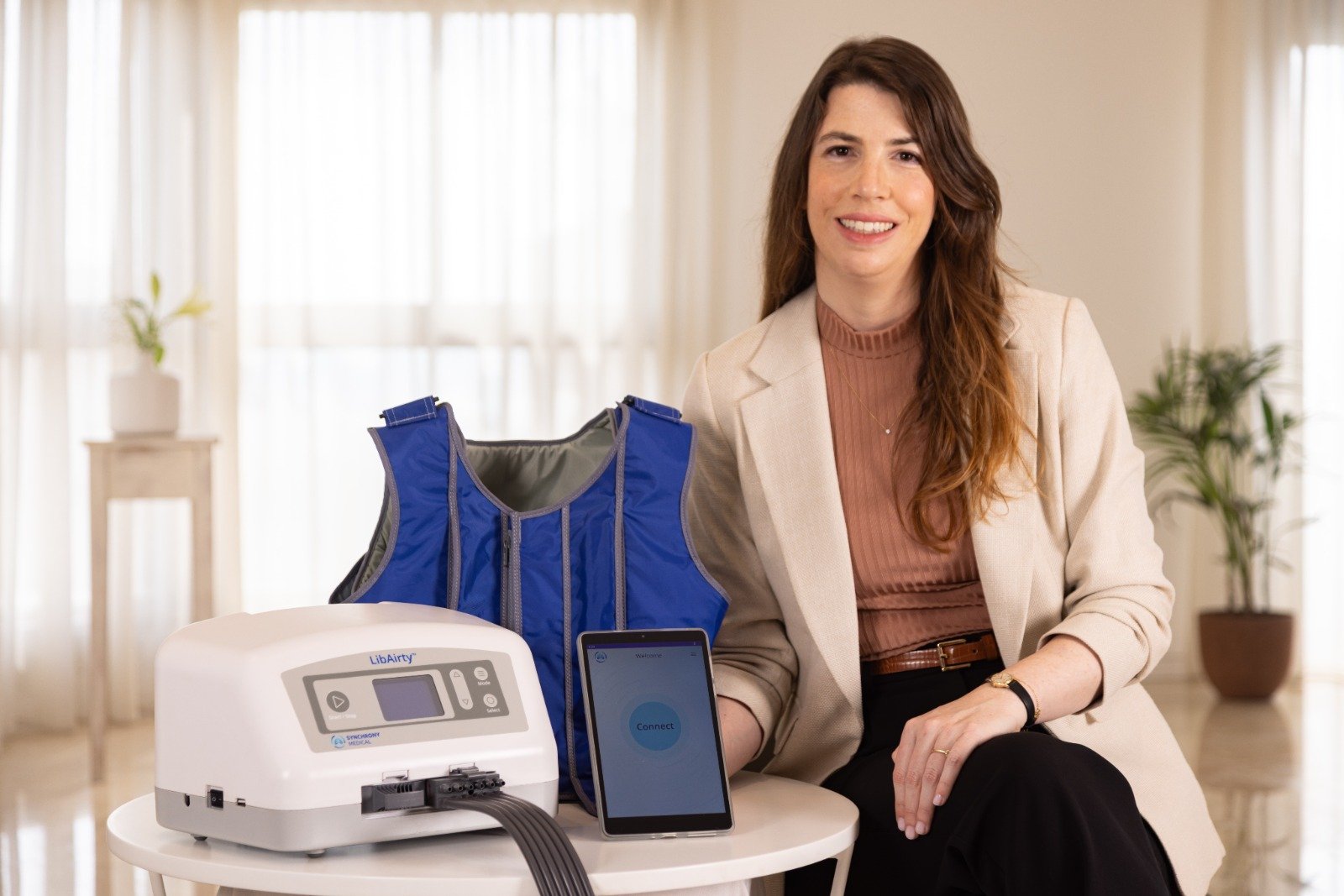
Anat Shani is the CEO of Synchrony Medical, creators of at-home airway clearance technology that is redefining respiratory care. She has over a decade of experience in the development of wearable medical devices overseeing projects from the initial concept phase through to product launch. Prior to founding Synchrony Medical—where she brought the LibAirty device from inception to clinical validation, FDA approval, and commercialization in under five years—Anat served as an R&D Project Manager at Sensible Medical, leading the development of the wearable component of a multi-disciplinary device for heart failure monitoring. Anat holds a B.Sc. in Bio-Medical Engineering (summa cum laude) from Ben-Gurion University and an MBA focused on innovation and entrepreneurship from Reichman University. Anat lives in Tel Aviv and is a proud mother of two young daughters.
Synchrony Medical is a commercial-stage respiratory care technology company, developing advanced at-home airway clearance solutions. The company's FDA-cleared, LibAirty™ Airway Clearance system was developed in collaboration with leading pulmonologists at the Sheba Medical Center, inspired by proven airway clearance techniques. LibAirty transforms respiratory therapy into an easy-to-manage daily routine that patients can perform independently at home, setting a new standard of care for people living with chronic lung disease. Founded at the MEDX Xelerator venture studio supported by the Israeli Innovation Authority, Synchrony Medical is headquartered in Jersey City, New Jersey, with additional operations in Or Yehuda, Israel.
Tell us a bit about your background and your projects so far.
I am a biomedical engineer and MedTech entrepreneur specializing in wearable and home-use technologies. Throughout my career, I’ve focused on bringing wearable medical devices from initial concept to global product launch within startup environments.
Five years ago, I co-founded Synchrony Medical alongside pulmonary specialists from the world-leading Sheba Medical Center, with a clear mission to transform respiratory care for millions of people living with chronic lung conditions. We developed the LibAirty™ Airway Clearance System, which transforms respiratory therapy into an easy, independent daily routine for patients at home. LibAirty™ is the first and only airway clearance system to synchronize controlled, app-guided breathing with targeted chest compressions, delivered by an inflatable vest. It’s been an incredible journey—after completing two successful clinical studies demonstrating that our technology is twice as effective as the current standard of care, we received FDA clearance and have recently launched the product in the U.S. market.
How did you get into this industry? Has it been an easy industry to get into or have you had many challenges?
I entered the MedTech industry immediately after completing my bachelor’s degree in biomedical engineering. I was driven by the opportunity to combine engineering with real-world impact in healthcare. From my very first job as an R&D engineer, I was fascinated by how technology can transform healthcare, and I am grateful to be working in such an innovative MedTech ecosystem. After several years focusing on R&D, I completed an MBA focused on innovation and entrepreneurship, with the goal of expanding my scope beyond pure engineering into leadership and company building. Through the MEDX Xelerator venture studio, I was introduced to Prof. Ori Efrati, Dr. Moshe Ashkenazi, and Gil Sokol from the Sheba Medical Center, and together we founded Synchrony in the early days of COVID.
How long did it take you to be where you are now? What was the biggest obstacle? What are the challenges of being in the industry you are in?
The journey from establishing the company to achieving our first commercial sale has taken five years of intensive and uncompromising work. In the world of medical devices, you have to navigate the complex balance of precise engineering, strict regulatory requirements, and rigorous clinical validation—all while ensuring every step aligns with the company’s long-term commercial strategy.
The biggest obstacle was achieving these milestones during a challenging global MedTech funding environment. Operating with limited resources forced us to be incredibly disciplined; we had to filter out the noise and focus entirely on the core value proposition of our product. This environment demanded a level of prioritization and execution that I now consider a competitive advantage—it pushed our team to be more efficient and sharpened our decision-making. Navigating these constraints is one of the greatest challenges of our industry, but it's also what ensures that only the most impactful technologies reach the patient.
What are your biggest achievements to date?
Our biggest achievement is seeing LibAirty™ transition from an early prototype to a life-changing device for patients with chronic lung conditions. Nothing validates our work more than hearing from patients that our technology has dramatically improved their overall health and quality of life. Patients report that with LibAirty they are able to clear their lungs more effectively than ever before. For many, this isn't just about health; it’s about the freedom to live their lives to the fullest, without their condition preventing them from engaging in physical or social activities. Now, we are focused on scaling that impact across the U.S. market.
Beyond the patient impact, I am incredibly proud of our clinical and regulatory milestones. We successfully completed two clinical studies demonstrating 2x superiority compared to standard of care and secured FDA clearance with a lean, focused team. It proves that you don't need a large corporation to disrupt traditional medical categories—you just need a clear mission and a commitment to excellence.
On a personal note, I began the journey of building Synchrony shortly after my oldest daughter was born. Over time, I found a lot of similarities between being a first-time mother and a first-time founder, and both have taught me resilience. Navigating this entire journey while raising my two young daughters has been deeply meaningful; I want them to grow up seeing firsthand that it’s possible to pursue a demanding, high-impact career, while also being present for the people who matter most.

What are the projects you are currently working on?
We are currently focused on expanding access to LibAirty across the US, so that more patients can experience the benefits of our technology. Initial feedback from clinicians and users has been incredibly encouraging, and in 2026 we plan to reach a wider patient base through partnerships with respiratory clinics, home-care providers, and healthcare systems.
To support this growth, we are currently scaling our team while continuing to advance our technological innovation. Our goal is to further enhance the device’s impact on patients’ lung health and quality of life, making LibAirty the new standard for at-home airway clearance
Is the #WomenInTech movement important to you and if yes, why?
Yes, absolutely—especially since for much of my career, I was often the only woman in the room. That experience didn't just shape my leadership style; it reinforced my belief that diversity is not just about fairness but about valuing different perspectives that lead to better work environments and eventually to building better products. Furthermore, it is important to establish visible and successful role models. By seeing women in leadership and technical roles, we inspire the next generation to pursue STEM, ensuring a more balanced, supportive, and successful future for the tech industry.
What will be the key trends in your industry in the next five years and where do you see them heading?
Personalized and patient-centric care is becoming central to the medical device industry. We’re moving from devices that demonstrate value in clinical settings—yet not necessarily convenient for independent patient use—to solutions designed for everyday real-world use, where usability, adherence, and patient experience are just as important as clinical outcomes.
Connected devices are rapidly becoming core components of disease management. When combined with apps and software platforms, they enable improved monitoring, treatment feedback, and real-world data collection. As AI-driven analytics become integrated with these systems, providers will be able to make more informed, data-driven treatment decisions rather than relying solely on patient-reported outcomes.
The hospital-at-home model has enormous potential to improve outcomes while reducing costs and system strain. While progress slowed after COVID, advances in home-based medical devices, remote monitoring, and care coordination will drive renewed momentum in this space.
What is the most important piece of advice you could give to anyone who wants to start a career in this industry?
Working in the medical device industry presents unique challenges, but that is exactly what leads to such a significant sense of reward. MedTech is a complex industry with many different stakeholders—including varied clinical practices, rigorous regulatory requirements, and complex health systems. Because we are dealing with people’s health, the stakes are high, requiring time, resilience, and a deep attention to detail.
My advice for anyone starting out is to spend significant time observing and understanding the ecosystem. Speak with patients, physicians, and payors to truly understand the incentives and priorities of everyone involved.
For women specifically, my advice is to trust the value of your perspective. This industry can be traditional, but your voice is necessary to disrupt it. Don’t hesitate to ask questions and challenge common assumptions; that is the key to successful innovation.
Find out more about Synchrony Medical on their website.

If you want to share your story with us and be featured on our WoW Women blog, get in touch.