
WoW Woman in HealthTech - Dr. Myra Ahmad, founder and CEO of Mochi Health
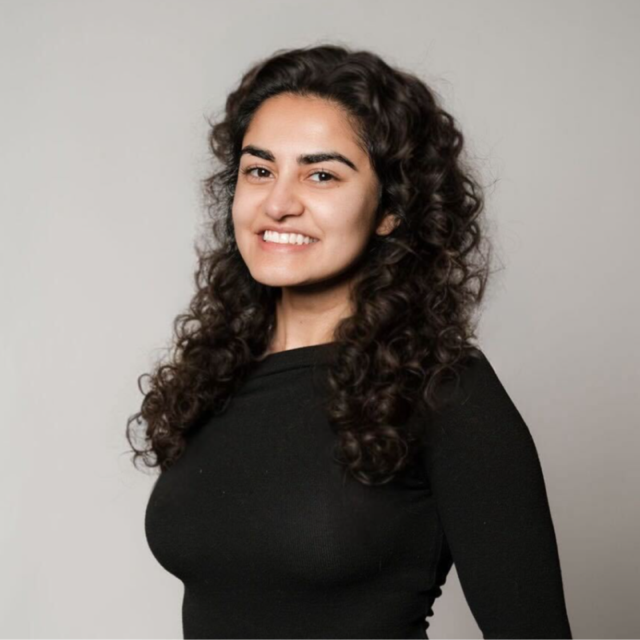
Dr. Myra Ahmad is the founder and CEO of Mochi Health.
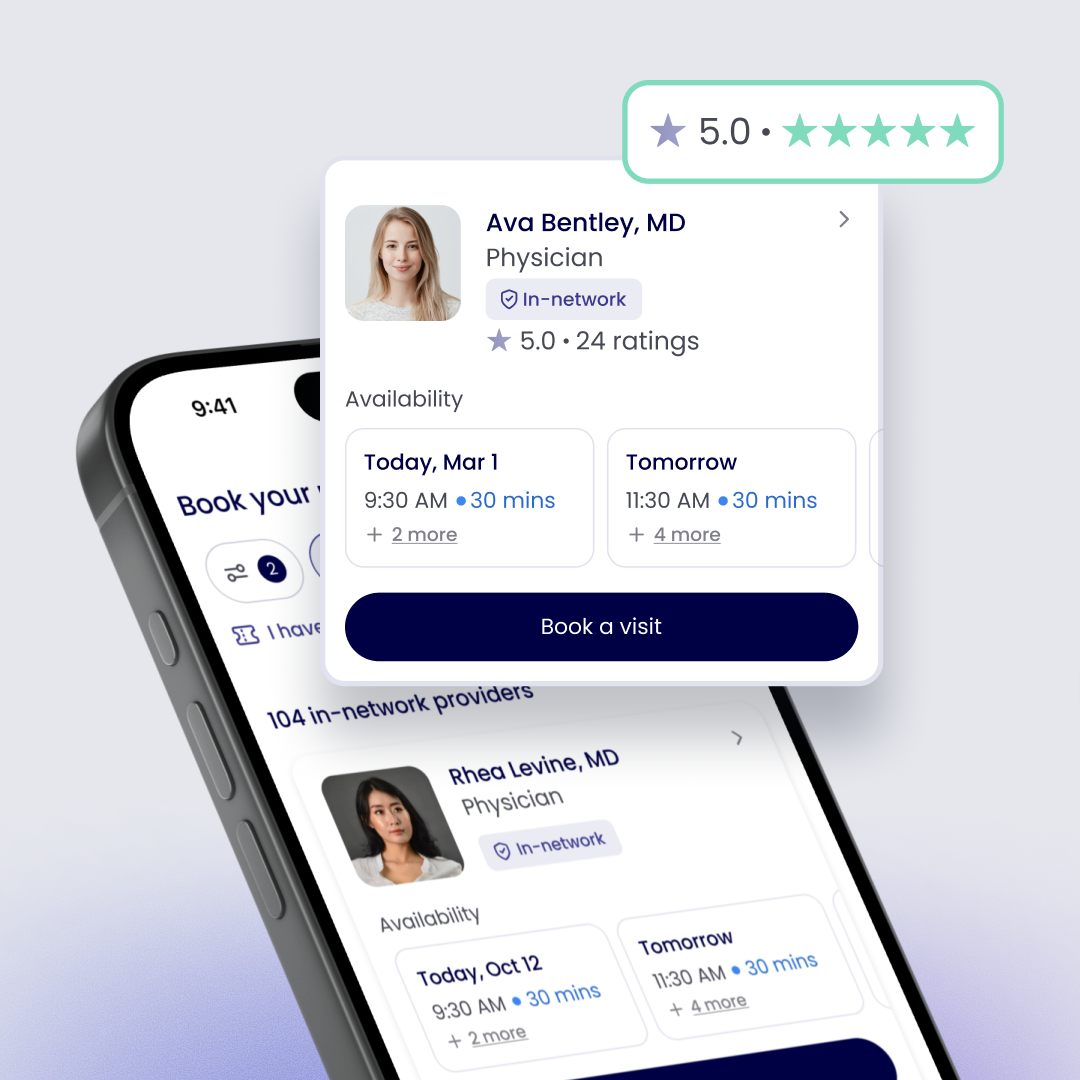
Her career has been shaped by a single driving question: “Where do patients fall out of care, and how do you bring them back?”. After earning her MD from the University of Washington School of Medicine and conducting research at MIT and UCSF, she identified a critical gap in obesity care delivery, where patients were bouncing between bariatric practices, endocrinology, and primary care without anyone actually treating the underlying disease. In 2022, she founded Mochi Health in San Francisco to address that gap directly, building not another prescription-first telehealth company but a three-sided marketplace connecting patients, providers, and independent pharmacies on a single platform. Today, Mochi has served more than 500,000 patients across 15 treatment areas and has achieved cash flow positive growth on minimal outside funding. The company operates as what Myra describes as the “discovery layer of healthcare”, where patients can find and stick with a provider they trust, access over 2,000 medications with transparent pricing, and receive the kind of continuity care that was once reserved for patients lucky enough to find a great primary care doctor and keep them. Her work is anchored in a conviction that one-size-fits-all medicine is failing patients, and that personalized, physician-guided care at prices that actually work is not just possible but already happening.
Mochi Health is a telehealth marketplace on a mission to build a world where healthcare actually works. Founded in 2022, Mochi connects patients, providers, and pharmacies across all 50 states through a three-sided marketplace that puts choice, transparency, and affordability at the center of every interaction. Patients choose their own doctor, pharmacy, and treatment plan. Providers practice without interference. Pharmacies access a growing patient base without middlemen. Since founding, Mochi has served 500,000+ patients across 120+ conditions, from GLP-1 weight management to skincare, hair loss, mental health, and reproductive health. Mochi is the only platform where patients, providers, and pharmacies all win.
Tell us a bit about your background and your projects so far.
I am Dr. Myra Ahmad, the founder and CEO of Mochi Health. I received my MD at the University of Washington School of Medicine, and held various research positions at MIT and UCSF. My research was focused on obesity treatments, specifically the reasons behind why patients consistently fail to get the care they deserve. What I discovered was that our healthcare system is optimized for billing codes rather than clinical outcomes. Patients bounce from specialist to specialist, yet no one seems to “own” their care.
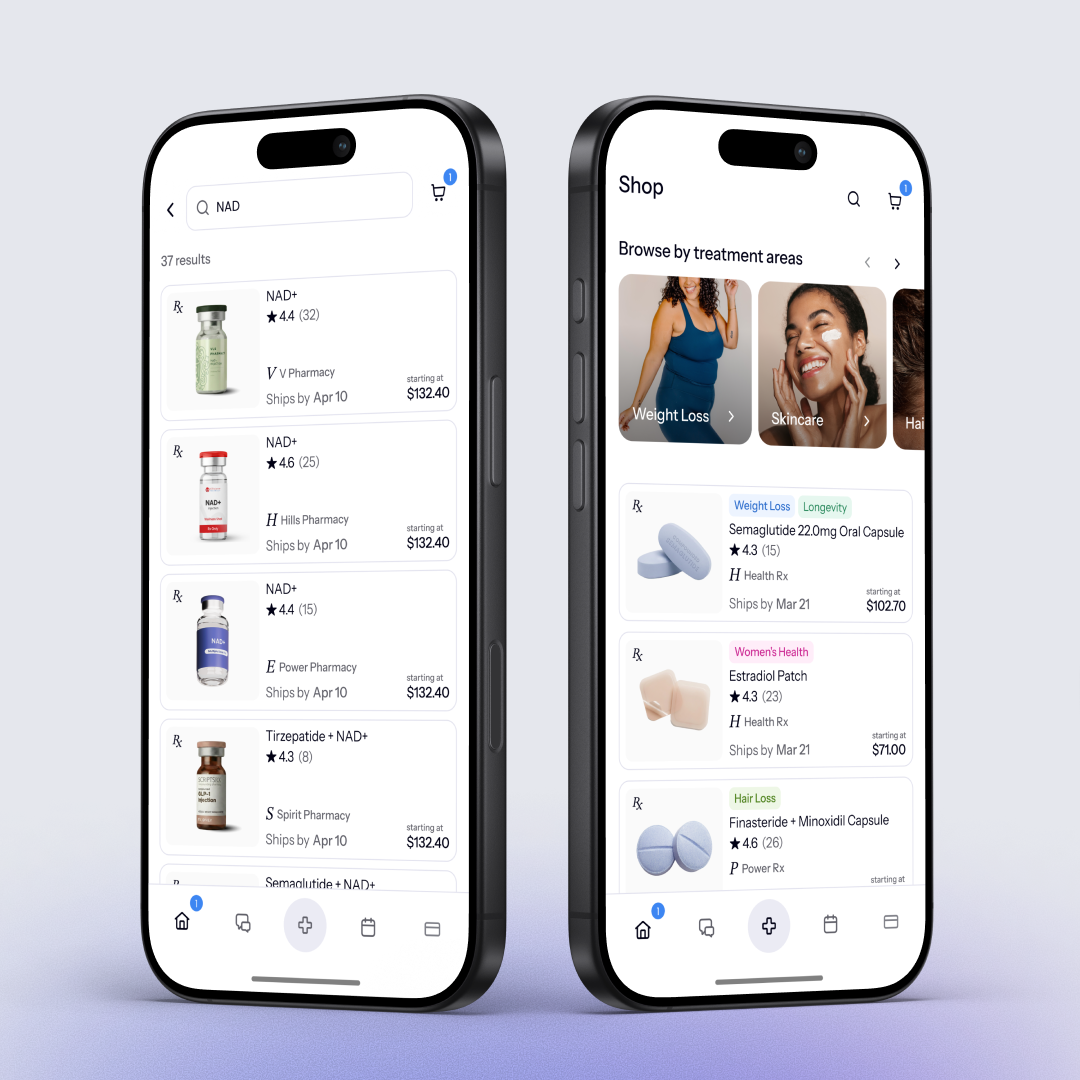
That research and frustration eventually led to me founding Mochi Health in 2022. We built a direct primary care marketplace where patients choose their own provider, pharmacies plug into our software for transparent fulfillment, and care is structured around long-term continuity relationships. Each patient has 24/7 access to their providers, nutritionists and dietitians, because choice is something that individuals cannot get from the current healthcare system. For women managing their obesity, as well as additional health complications such as PCOS, perimenopause, or fertility issues, having continuity in care is essential. To date, we have served 500,000+ patients while being cash flow positive.
We are now focused on growing Mochi into a primary care platform, not only focused on obesity and weight loss. Our patients have requested that their Mochi providers manage more of their care, and our providers have welcomed the opportunity to offer more than weight-loss treatment. It is our vision to create the “primary care home” for patients who would like the best personalized care for all their medical needs – from metabolic health to reproductive health to skin health and beyond – at a transparent price point, with a provider of their choice they trust.
How did you get into this industry? Has it been an easy industry to get into or have you had many challenges?
During my time at UW, I did extensive research into obesity care delivery and kept finding the same thing: patients with obesity were bouncing between bariatric surgeons, endocrinologists, and primary care providers, and none of them were really treating the underlying disease. I felt the need to do something.
The challenge was real. The regulatory environment has been genuinely complex. We operate at the intersection of telehealth, pharmaceutical compounding, and direct primary care, and all three of those spaces have been under significant scrutiny. We (as well as many other telehealth companies) were recently sued by Eli Lilly, in which they challenged the legality of compounded GLP-1s and the legality of our business. That litigation was a pivotal moment for us because it enabled us to publicly communicate our beliefs around this multi-faceted topic, such as our conviction that compounded medicines aren’t “loopholes”, but rather personalized medications. We believe that patients deserve access to care tailored to their individual circumstances rather than only one-size-fits-all solutions. We won that lawsuit by the way!
How long did it take you to be where you are now? What was the biggest obstacle? What are the challenges of being in the industry you are in?
Mochi started in 2022, so we're only about four years in. Honestly, I wasn't even a GLP-1 believer when we launched as a weight loss company. I had anticipated there would be a large barrier to entry with injectables, just as I had seen biologic medications be a hard sell for patients with RA or Crohn’s. After examining the data, I realized I was wrong and updated our approach. Being willing to be objectively wrong and change course quickly has probably been one of the more important skills in building a company.
The biggest structural obstacle in this industry is that traditional incentives have never been built around the patient. Providers get paid by billing code volume, not by whether someone actually got better or stayed on treatment. Building a model centered on continuity and long-term outcomes means working against the grain of how the entire system operates. That tension is constant.
What are your biggest achievements to date?
Honestly, the number I'm most proud of is the over 500,000 patients we've served. These 500,000+ people chose their own providers, and got access to medications at a price point that actually worked for them. For a large proportion of those patients, especially women, Mochi is where healthcare finally felt like it was built for people like them.
The expansion to 15 plus treatment areas, over 120 conditions, and 2,000+ medications also feels like a huge milestone. It wasn't our original plan, but it has been requested by patients and providers and we have evolved to meet that demand. Being able to have women who are coming to us for weight loss to also come for hormonal support, dermatology, etc. from a single trusted relationship, I think that is what healthcare was always supposed to look like.
What are the projects you are currently working on?
The biggest thing we're focused on right now is completing the vision of Mochi as a true primary care platform. We started in weight loss and we're building towards a platform where patients have access to comprehensive, personalized care in every major area of health, with a provider that they chose and transparent pricing. I'm particularly excited about longevity, which means hormone replacement, peptides, skincare, and really focusing on health span, not just weight. We are also expanding into meaningful areas in dermatology and reproductive health. In terms of pharmacy, we are continuing to build out our marketplace to provide patients visibility and comparison with medication pricing and formulary.
Labs are also a big area for us. We're building toward giving patients and their providers access to lab testing that feeds directly into their care plan. The vision is that your labs, your medications, your provider relationship, and your care are all integrated in one system. Currently, most providers are getting labs from separate systems that never talk to each other and so it is difficult to really provide the individualized medicine that we know we should provide.
Is the #WomenInTech movement important to you and if yes, why?
Yes, but in a pretty practical way. The majority of patients in healthcare are women. The majority of the frontline healthcare workers are women, and yet historically, the systems, the protocols, the trials, and the founding teams haven't reflected that. The one-size-fits-all approach that I have spoken out about with obesity care is the same as the one that has historically failed to work for women. Protocols were developed around an average trial population that wasn't representative of women, that is now being distributed through a system that wasn't designed for women's actual lives and health needs. When I think about why women in tech is so important, it's not an abstract goal of having more representation in tech. It is knowing that it matters what you are building because the people who are building it have lived experience with that problem. The fact that Mochi is a place where women come for PCOS, perimenopause, fertility, weight loss, and now comprehensive primary care, I don't think that is by chance. I think that is by truly understanding the needs of those patients and building toward it. So, yes, women in tech is important to me. And I think the most compelling way to show it is just to build something that actually works.
What will be the key trends in your industry in the next five years and where do you see them heading?
I am keeping my eyes on three things right now.
First, the middleman model for insurance is going to continue to fracture. We're already seeing a critical mass of patients on high deductible plans essentially being forced into cash pay. I think the price transparency and direct provider relationship business models are going to take off in the next few years as that becomes more widespread.
On the GLP-1 side specifically, I think we're going to see the same stratification we've seen with every major drug class, antidepressants, birth control, biologics. First we just have one drug, then a best in class drug, and eventually the market breaks down to match the individual patients with the drug that's best for them. I think we're pretty early in this trend. These new products will require more advanced care models and the clinicians to manage those patients.
I think AI is also going to really upend how the back office of healthcare works. Credentialing, prior authorizations, medical billing/scheduling, and even note-taking and documentation are all going to be changed with AI. That's where the most immediate value is, and it will be in freeing up the administrative burden on providers and increasing access to care, and NOT in trying to replace doctors. It's also going to be critical for labs and diagnostic data to become integrated directly into patient care. There's so much data today: labs live on the lab company's site, medications live on the pharmacy's site and the provider lives on the provider's site. I think that over the next five years we're going to start connecting it all together and providing truly personalized care and medicine (rather than just talking about it).
What is the most important piece of advice you could give to anyone who wants to start a career in this industry?
I'd say that if you want to have success in healthcare today you need to be willing to be wrong (objectively) and you need to change quickly. This sounds like a simple thing, and for many it probably is, but for others, it seems that holding on to a position they hold for too long can actually prevent change.
I'm not saying this out of ego: I wasn't a GLP-1 believer when we launched. I was holding onto a view of what the drug would do and the data simply disagreed. I changed my view quickly, but I realized how much of a blind spot I had, how much value was being missed. If I had held onto that original position out of stubbornness or ego we would have missed the most important moment in obesity care in a generation.
And the second thing is try to get close to the patient problem, and not the business problem. Too many people go into this space with a solution in search of a problem. The founders and operators I have respect for are those that started with a frustration for how patients were being underserved and then built to a solution where the need followed the problem. Healthcare has a unique attribute in that the person getting the care, delivering the care, paying for the care and setting the rules are rarely the same person. If you can see where those incentives are misaligned and build to fix them even partially, that's a big opportunity. It's a really hard industry to get into. The regulatory environment is complicated, incumbents are strong and a lot of the capital assumptions don't lend to the models that actually help patients. It is an industry where getting it right means you're making a real difference in people's lives and that's pretty cool.
Who are three inspirational women in your respective industry you admire?
Anne Wojcicki comes to mind first. I respect the vision she had with 23andMe and her philosophy that people should own their own data and that that information should drive personalized health outcomes. The vision of diagnostics and precision medicine that they started has stuck with me.
Katrina Lake is my second answer. She's not in health care, but I think about her a lot. She started the same type of company I started, thinking the model wasn't meeting customer needs and data and customization could do better. She built the capital structure efficiently, stayed focused on the customer and was able to take her young female owned company public in an environment where you didn't usually see that. The arc there resonates with me.
For number three I'd point to every single female physician who started their own independent practice as a direct primary care company. I mean that genuinely. There are providers on our platform that didn't feel like the insurance based model met their needs or their patients' needs and built a new practice from scratch focused on their patient relationships. Those physicians are doing work every day that's really bold and important. They rarely get the recognition that founders or executives get but they are the ones actually delivering the care. Everything we build at Mochi is in service of making their work more sustainable and more impactful.
Find out more about Mochi Health on their website.

If you want to share your story with us and be featured on our WoW Women blog, get in touch.