WoW Woman in FemTech - Katya Solov (Igoshina), founder and CEO of Miranna
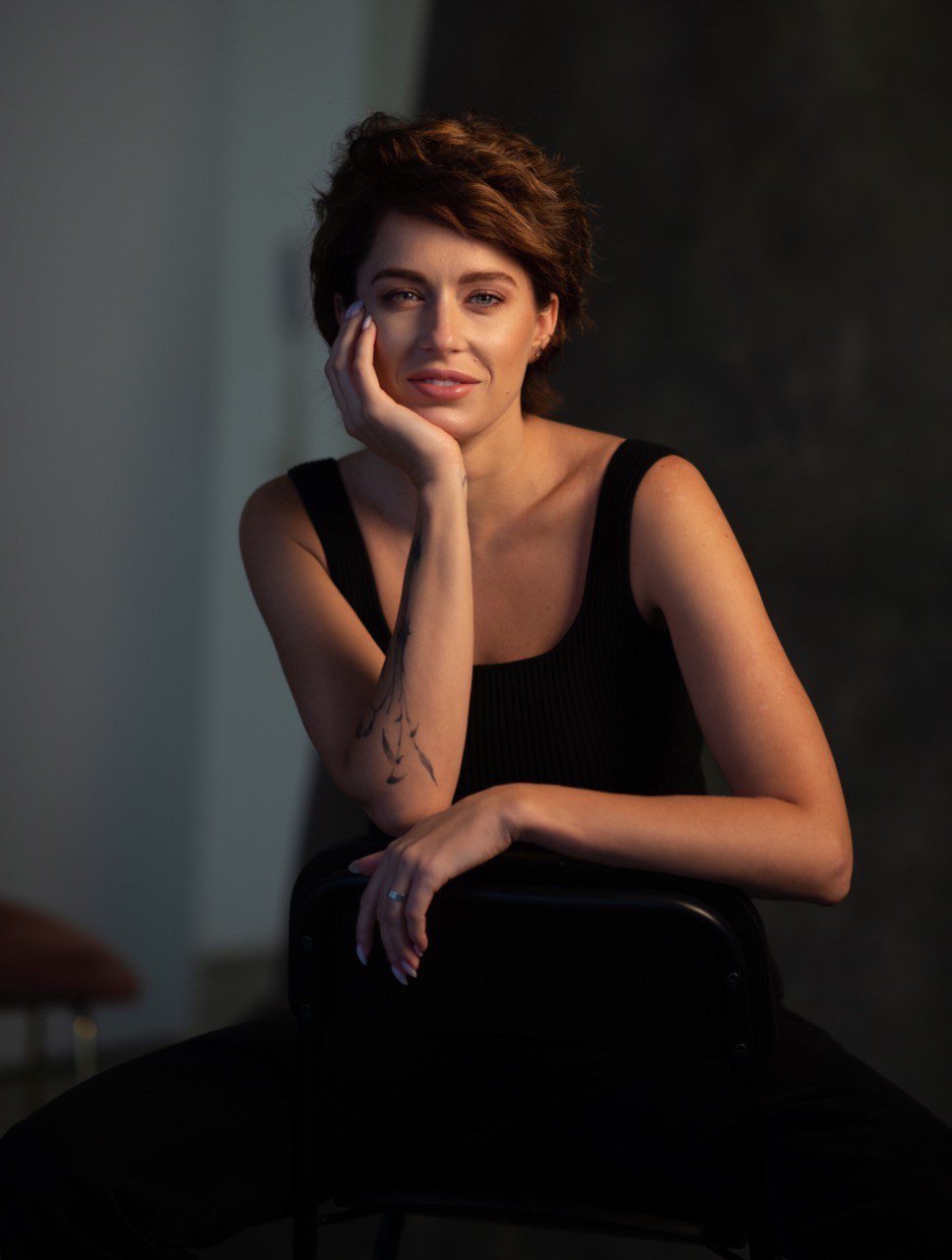
Katya Solov (Igoshina) is the founder and CEO of Miranna, a coaching and micro-learning app built specifically for women navigating career, family, and wellbeing.
With over a decade of experience as a legal specialist in startups, venture capital and technology across Eastern Europe, she brings a rare combination of legal rigour and entrepreneurial instinct to the femtech space. Before Miranna, she built and ran the first women-focused mentorship platform in Russia, facilitating over two thousand one-on-one sessions between women and trusted specialists. She still provides legal consulting for tech entrepreneurs - from building in-house legal teams to negotiating terms ahead of M&A deals. A graduate of the Founder Institute Zurich chapter, Katya now mentors early-stage founders at its newly launched Cyprus chapter. She is an active member of Women in Tech Cyprus, and has moderated panels on women's health and femtech community building at the Women in STEM Cyprus Summit and other spaces. Katya also leads the Female Founder media network - the channel for women entrepreneurs, with over eleven thousand subscribers. Based in Cyprus with a distributed team across Europe, she is a mother of two daughters.
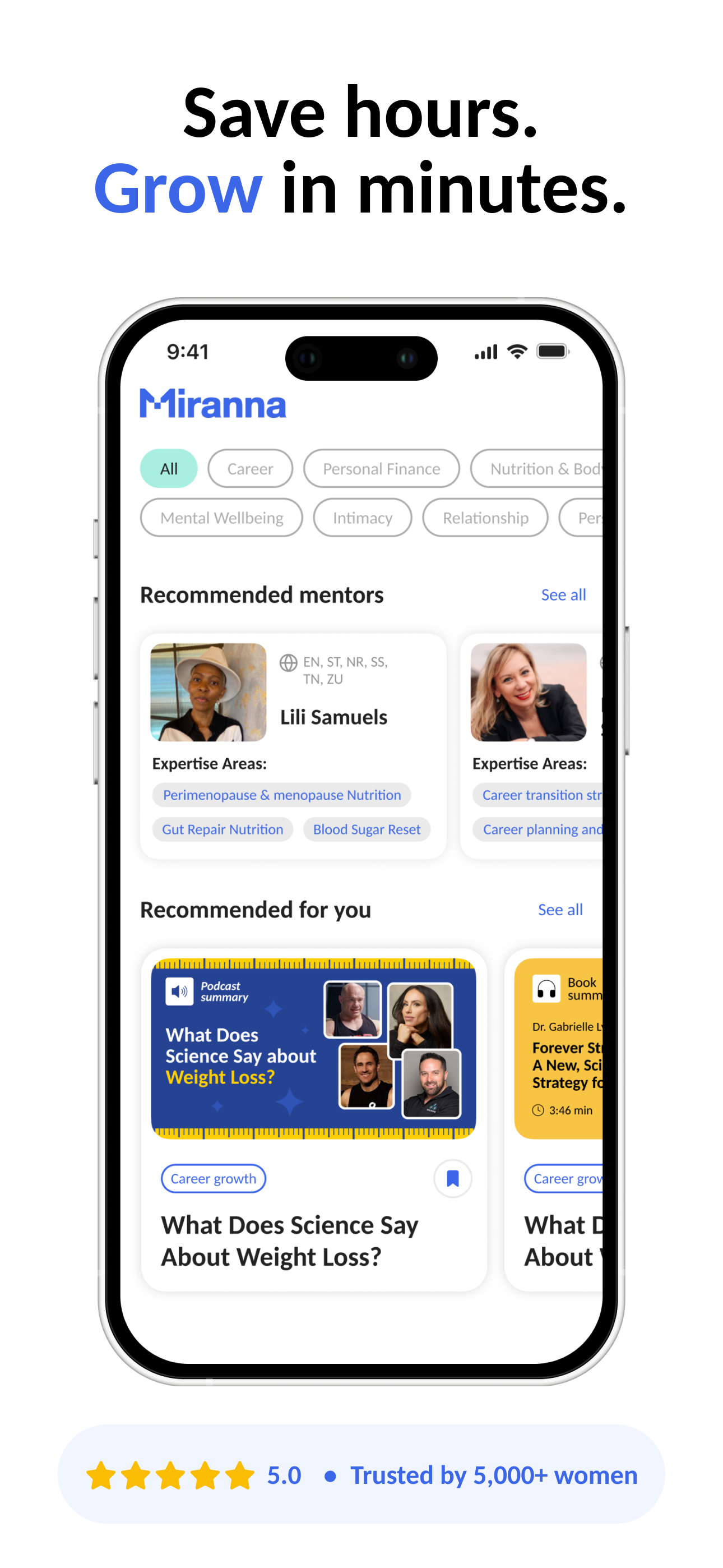
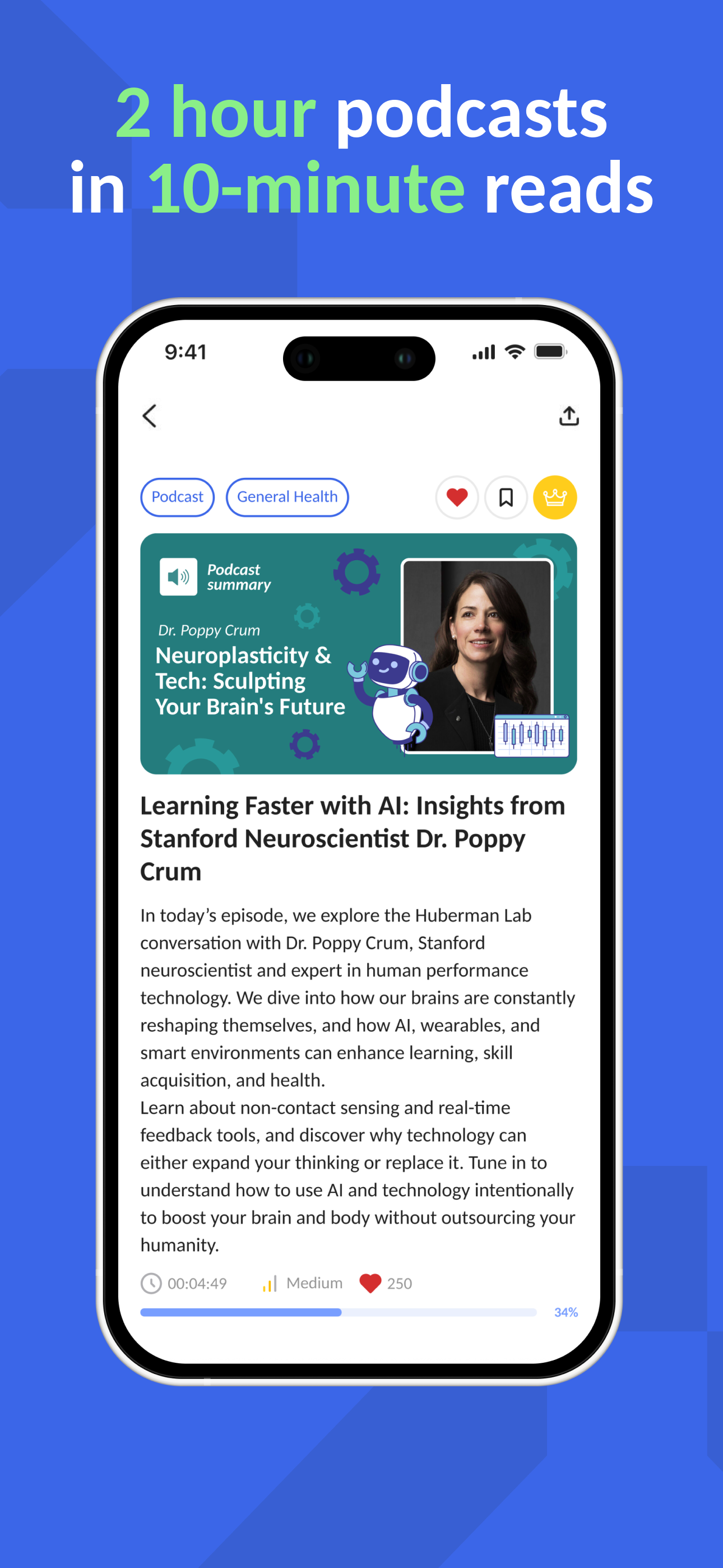
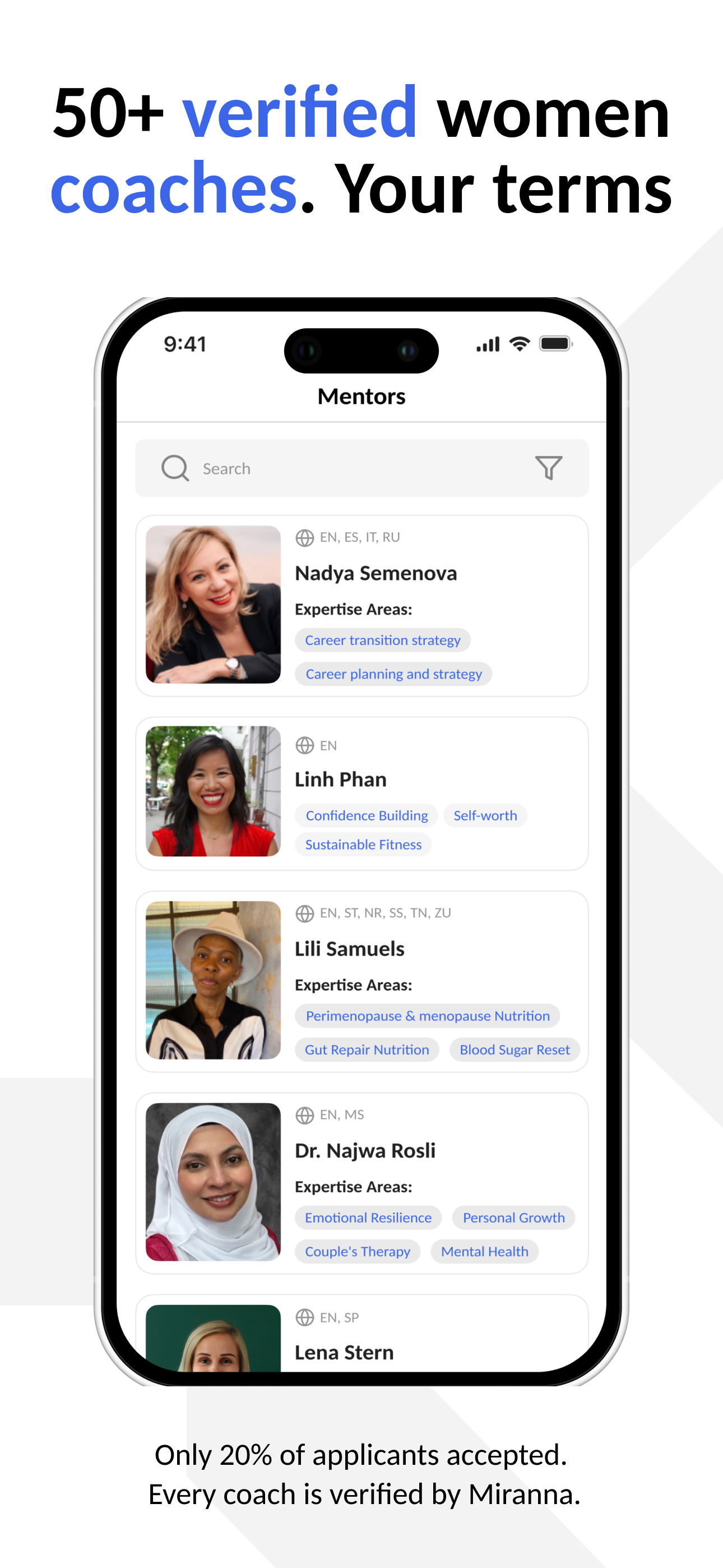
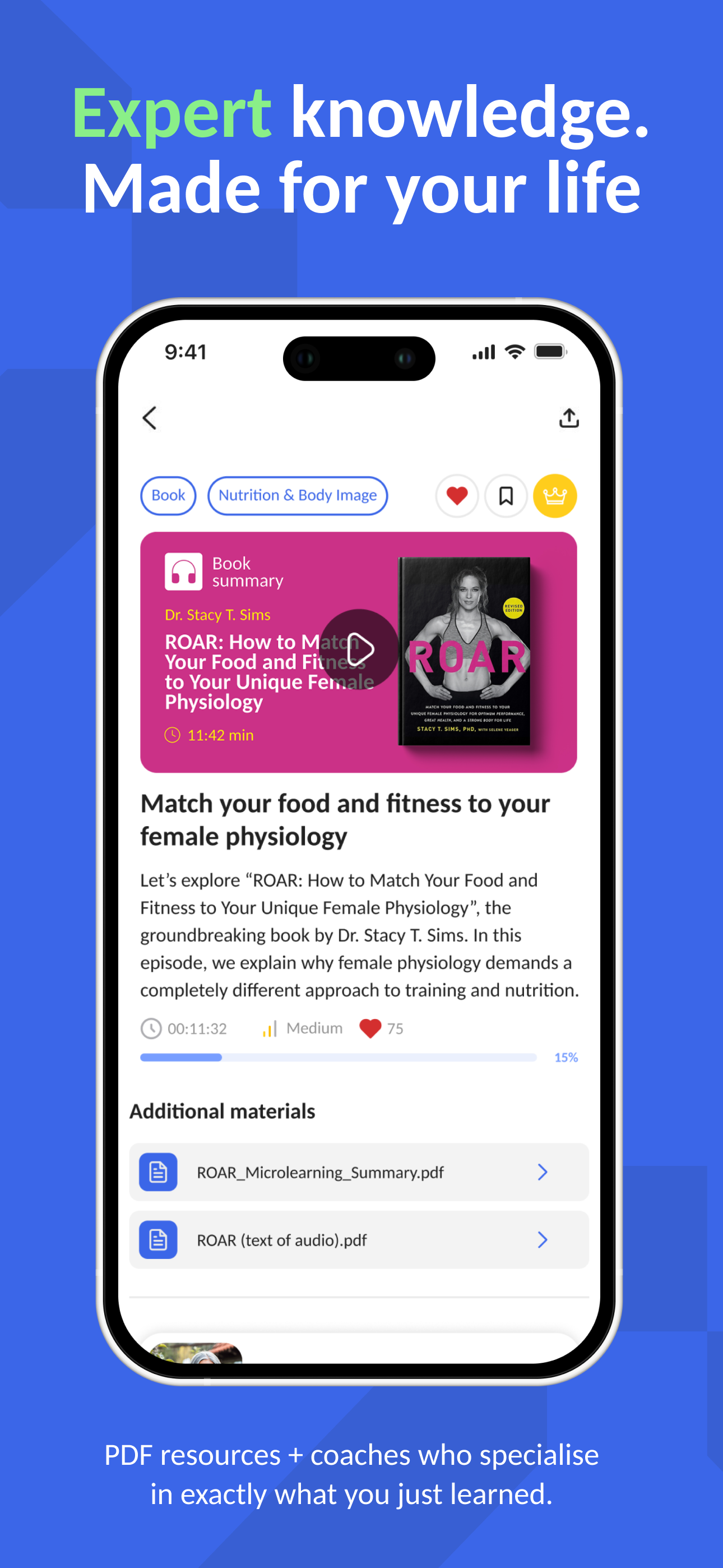
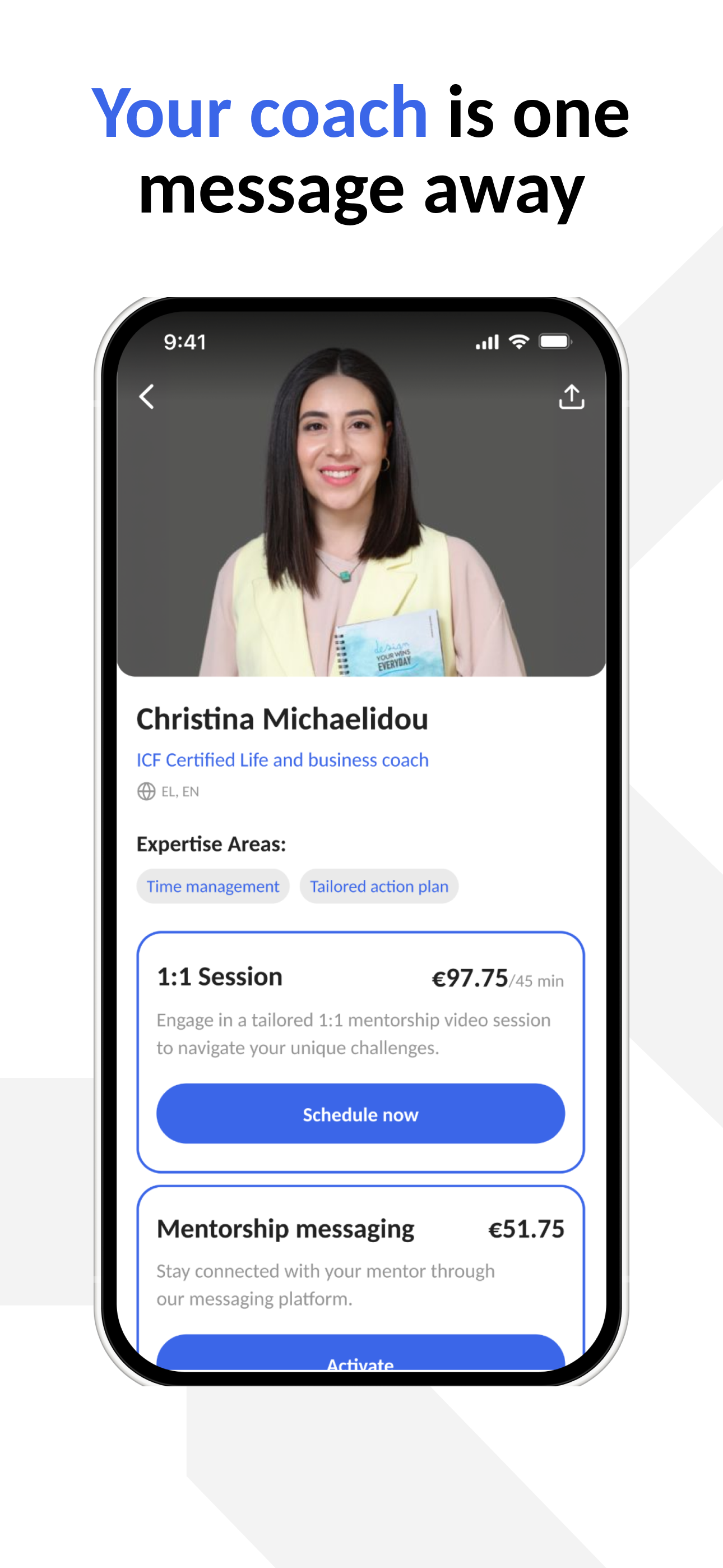
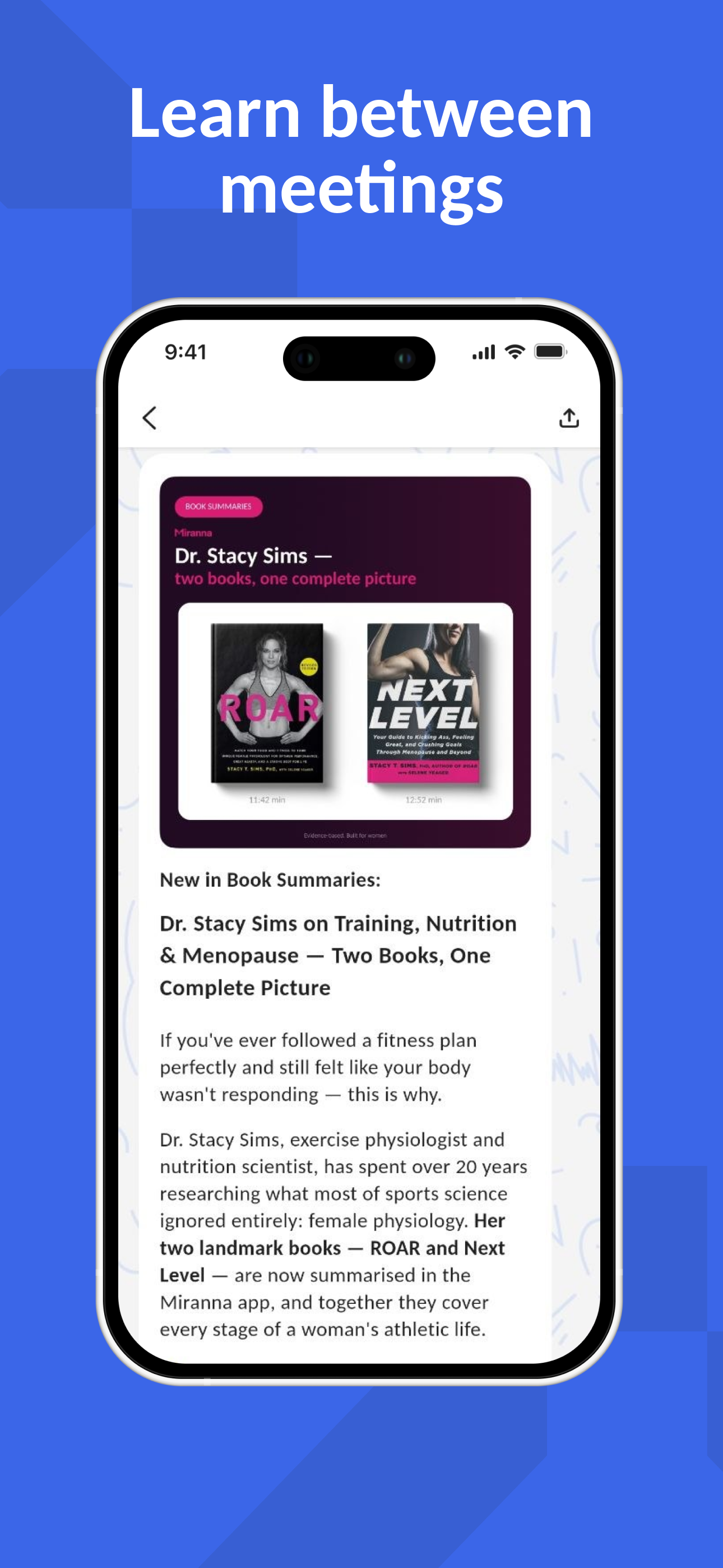
Miranna is a female-focused coaching and micro-learning app designed for women aged 30+ managing careers, children, health, and everything in between. The app combines micro-learning - short, research-backed audio and video content - with a curated directory of specialists: ICF-verified coaches, therapists, doctors, and hormone specialists, all vetted through a rigorous credentialing process with an 80% applicant rejection rate. Women can browse the directory for free, then book video sessions or chat-based support when they're ready. A growing micro-learning subscription library delivers insights in twelve-minute windows, not two-hour blocks. With Miranna’s AI assistant in development to help women prepare for specialist sessions - not replace them - Miranna is where women go when they need clarity and credible guidance, not more content or contradictory advice.
Tell us a bit about your background and your projects so far.
I'm Katya Solov, the founder and CEO of Miranna. For over a decade I worked in technology law and venture - corporate structuring, IP, investment deals - across Eastern Europe and Russia. I still do legal consulting for tech entrepreneurs: last year I helped an IT company build a small in-house legal department from scratch, before that I helped a founder find the right counsel and negotiate terms ahead of a merger. I know how to find the right specialist for a specific problem - and that skill turned out to be the foundation of everything Miranna is.
But the environment I came up in shaped me just as much as the skills. This was a world built by and for men. Women among founders were close to zero, women in actual decision-making were close to zero, and the culture reflected that.
It drove me to build a community for women founders that grew to over 11,000 members. From that community, I launched the first women-focused mentorship platform in Russia - a marketplace where women could book sessions with role models and niche specialists. We facilitated over two thousand sessions. That's where I learned how women actually seek guidance - what makes them book, what makes them stay, what makes them never come back.
But where I felt the need most intensely was when my own kids were small. Juggling work and small children - that's when you realize you desperately need frameworks from experienced women. Shortcuts, hints, protocols. Not theory. Not inspiration. Just someone who's been through it telling you what actually works. That's the nerve Miranna touches.
All of that became the foundation for Miranna - a coaching and micro-learning app designed around how women actually live. We combine short, science-backed content women can absorb in ten minutes with access to a curated directory of ICF-verified coaches and medical specialists. Instead of drowning in contradictory advice online, you get a shortcut to someone who actually knows - and whose credentials we've checked. Today I build from Cyprus with a team spread across Europe, working on something I wish I'd had when I needed it most.
How did you get into this industry? Has it been an easy industry to get into or have you had many challenges?
I came from law - years of negotiating investment deals and IP structures in tech ecosystems where I could count the women in the room on one hand. A male colleague could call you "sweetie" in a meeting and treat you like a decoration, and that was just the atmosphere. I've been a feminist since childhood, and that frustration - that the playing field was rigged and everyone was pretending it wasn't - never left me.
The real turning point was also personal. After my second daughter, everything collided - exhaustion, hormonal chaos, the weight of holding a career and a family together without a manual. When I went looking for real support, what I found was noise. A wellness industry and platforms full of confident voices and thin credentials. And underneath it all, a blind spot I couldn't unsee: nearly every framework for productivity, health, and performance was designed around male biology. Women's hormonal cycles, cognitive shifts, life-stage transitions - treated as footnotes, if acknowledged at all. That gap is what pulled me into femtech. And no, it hasn't been easy. You're building in a space that's chronically underfunded, often misunderstood by investors, and competing with an ocean of surface-level content. But the difficulty is also the proof - if it were simple, someone would have solved it already.
How long did it take you to be where you are now? What was the biggest obstacle? What are the challenges of being in the industry you are in?
Miranna app was formally founded in 2025, but it feels much older. Everything that came before my years in law, building a community of 11,000 women, launching a mentorship platform (the name was the same), running two thousand sessions - was laying the groundwork. Depending on how you count, this journey has been unfolding for six years or closer to fifteen.
The biggest obstacle is something the startup world doesn't talk about honestly enough. Everyone overspeaks success. You read a beautiful article about a founder's breakthrough, and behind the scenes you know the full story - the near-collapse, the impossible choices, the walking on the edge for months. I saw this constantly during my years in venture. The public narrative is always the winner's version. The real experience is pain and uncertainty stretched over years. And as a mother of two small kids and a founder bootstrapping a company, that gap between the polished story and the daily reality is even wider. Nobody romanticizes the specific maths of building a startup while managing bedtime routines and daycare logistics at the same time.
The broader industry challenge is structural. The coaching market has a dangerously low barrier to entry - anyone with a weekend certificate can call themselves a coach and begin charging. The result is a flood of practitioners who lack the depth to handle what women actually bring to a session: postpartum anxiety layered with career burnout, hormonal shifts affecting cognition and mood, caregiving fatigue nobody warned them about. Building a platform that insists on real and proven credentials means growing slower than competitors who don't. And convincing investors that "slower but trustworthy" is a defensible strategy in femtech - that trust compounds, that every verified specialist and quality outcome feeds back into the system - that's a conversation I have more often than I'd like. But I've seen from two thousand sessions on our earlier platform that women return when they trust the person on the other side, and they leave permanently when that trust breaks. There's no second chance. That's the only evidence I need.
What are your biggest achievements to date?
I'd separate this into two parts - personal and Miranna.
Personally, the path that led here is an achievement. Building a community of over 11,000 women entrepreneurs, launching the first women-focused mentorship platform in Russia with over two thousand sessions, surviving a failed legaltech startup, doing angel investing, graduating from the Founder Institute Zurich chapter and now mentoring at its newly launched Cyprus chapter. Each of those taught me something I use daily. And doing all of it while raising two young daughters, without outside funding - that's the one I'm most quietly proud of.
As for Miranna - we have a working app. We have the trust of our first users. We have first subscriptions, first paid sessions with coaches, and an audience that's growing. People recognize Miranna even here in Cyprus, which was not a given. It works. The product works, the model works, women come back. That's the achievement at this stage - not a hockey stick chart, but proof that the thing we believed in holds up when real people use it.
Now the journey is growth - and that's a completely different challenge. We're ready for it. What makes me confident is that right now we're bootstrapped, and every hour I and the team spend goes directly into product and traction. Nothing else. No performative meetings, no chasing vanity metrics. Just building the thing and getting it into the hands of the women who need it.
What are the projects you are currently working on?
Miranna is my primary focus - we're in an intensive phase right now, refining both the coaching side and the micro-learning library, while carefully testing our AI assistant. The boundary there is important - AI supports women in navigating the app, surfaces the right coach or content, and supports intelligent preparation prior to the session - it doesn't coach, it doesn't diagnose and doesn’t replace professional judgement. The human always stays central. We're also actively building partnerships with other femtech and women-focused organisations, because this industry grows by supporting each other - the stronger we are as a network, the better we serve the women who need us.
Is the #WomenInTech movement important to you and if yes, why?
It's the context of everything I do. Spending years in rooms where my voice was treated as optional - that doesn't leave you. It shapes what you build and who you build it for.
What I value most isn't the hashtag - it's what it makes structurally possible. When women founders are seen, they get funded. When they're connected, they're harder to sideline. I'm an active member of Women in Tech Cyprus and TechIsland, and I've been a speaker and have moderated panels on women's wellbeing at the Women in STEM Cyprus Summit. But I'll be honest - we're still in the early chapters.
Celebrating women in tech isn't enough. We need the capital and institutional support to match the ambition that's already there. The movement opened the door. Now we need to rebuild the room.
What will be the key trends in your industry in the next five years and where do you see them heading?
Femtech crossed nine billion dollars in 2025 and is growing at nearly eighteen percent a year - this is no longer a niche. By 2030, over a billion women will be in perimenopause or menopause. The demand is massive and still underserved.
The biggest shift I see is personalisation becoming non-negotiable. Women are done with wellness tools that ignore the fact our biology shapes how we think, work, and make decisions. Generic is over.
AI will play a real role - but only the platforms that use it to connect women to credible human expertise, not replace it. And the coaching industry is heading for a trust reckoning. Too many unqualified voices, and women are starting to notice. The companies that built for credibility - even slowly - will be the ones left standing.
What is the most important piece of advice you could give to anyone who wants to start a career in this industry?
Trust what you see. Sara Blakely built Spanx on intuition and protected her ownership the whole way. Ida Tin saw that women's health tech had no name, no category - so she coined "femtech" and created the space. Whitney Wolfe Herd wants to package the insider knowledge women discover the hard way, because the informal networks that help men navigate deals barely exist for us. The pattern across all of them is the same: they trusted their own observation when everyone around them doubted it.
So my advice is simple. If you see a problem clearly and you've lived it - that's enough to start. Don't wait for a market report to confirm what your experience already tells you. Focus on execution, not labels. And be honest about your stage - performed confidence fools no one worth impressing.
Who are three inspirational women in your respective industry you admire?
I'd rather give you a list of women worth following than three safe names everyone already knows.
Ridhi Tariyal (NextGen Jane) - turned a personal fertility question into hard science: genomic diagnostics from menstrual blood. Recently got an NIH grant for non-invasive endometriosis detection. She builds medicine, not wellness content.
Ellen Rudolph (WellTheory) - spent years misdiagnosed with autoimmune disease, quit at 28, built a virtual care platform for the 50 million Americans navigating autoimmunity. Eighty percent of them are women. Her approach - root causes, not quick fixes - is very close to what we do at Miranna.
Priya Oberoi (Goddess Gaia Ventures) - ex-Clifford Chance lawyer, cancer survivor, now running Europe's first women-centric healthcare fund. She understood that products alone won't fix the gap - you need women making investment decisions. As someone from law and venture myself, her path resonates.
Follow all three. They don't perform femtech - they build it.
Find out more about Miranna on their website.