
WoW Woman in FemTech - Dr. Christy Lane, co-founder of Flora
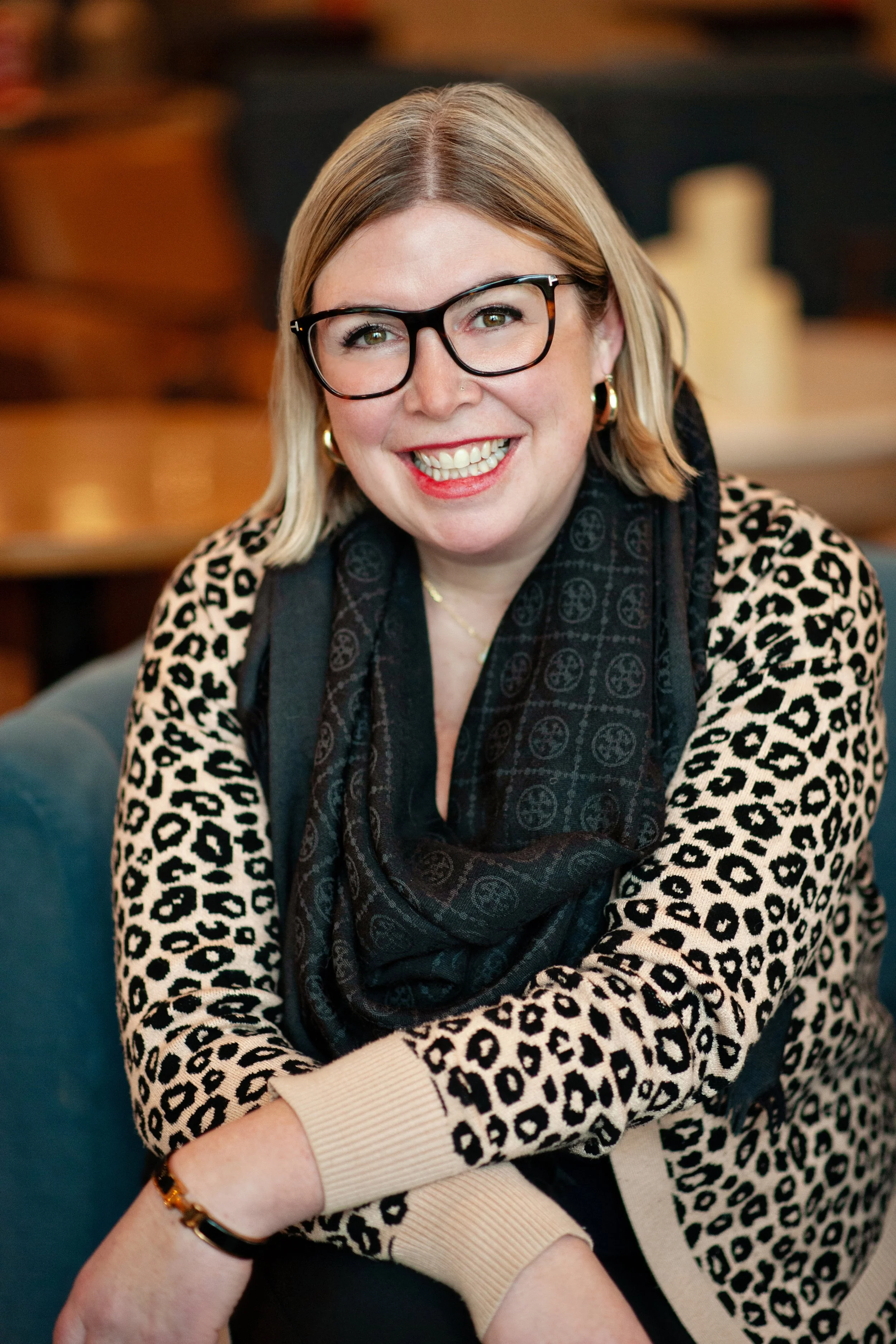
Dr. Christy Lane is a global leader in InsurTech, an investor, founder, and award-winning health scientist with expertise in wearables, AI, and digital health. She co-founded Flora Fertility and the Stanford Wearable Health Lab, and previously founded and served as CEO of Vivametrica. As a Venture Partner with IA Capital, an InsurTech/fintech venture firm in New York, she works with emerging companies at the intersection of insurance and technology. Since the 90s, she has built her career in women's health and wearable device research and is now blazing a new path forward, combining wearable tech with insurance to make fertility treatments more accessible. As a mom of 3, Dr. Lane has gone through IVF herself and deeply understands the emotional and financial challenges of treatment. She has been recognized as Top 40 Under 40 in Calgary, Female Founders of Insuretech Winner and Top 20 Women in Tech.
Flora Fertility is the first individually-owned fertility insurance platform in North America, revolutionizing access to reproductive care. Starting at just $25 per month, Flora provides portable, comprehensive coverage for the full spectrum of fertility care, from diagnostics and medications to IUI and IVF, independent of employment status. Backed by A-rated insurers and a global reinsurance panel, Flora empowers Gen Z and Millennials to proactively plan for their reproductive futures on their own terms and timelines. By combining cutting-edge InsurTech innovation with community-driven education, Flora is transforming fertility to an empowered choice.
Tell us a bit about your background and your projects so far.
I began my career in academia and am now a tenured Full Professor of Rehabilitation Medicine, I have been researching wearables, predictive analytics and AI in women’s health for 25 years. In 2014, I co-founded the Stanford Wearable Health Lab, one of the first multidisciplinary research groups exploring how consumer wearables could meaningfully inform clinical care. This was very early days, long before today’s sleek devices, when we were working with simple accelerometers or clip-on pedometers and often had to manually log data.
As early as 1999, I led studies with high-risk pregnant women, tracking activity patterns and identifying early signals that could predict outcomes. That work expanded to orthopaedic and neurosurgery patients with spinal disorders and arthritis, where we demonstrated that continuous wearable data could help forecast recovery and guide rehabilitation. This work proved that continuous data catches patterns you'd never see in a single doctor’s visit. We could predict complications and recovery trajectories weeks before they'd show up in traditional assessments.
I was winning academic and scientific awards for this work, but was concerned that I was not having enough impact on real patients and people. So, during maternity leave with my first child, I founded Vivametrica to bring this research into the commercial world. While most fitness trackers were focused on step counts, we built a platform that translated wearable data into meaningful health predictions and proved to insurers that these signals could predict health risks and mortality as accurately as traditional medical exams. This is where I gained vast experience in insurance and underwriting. I was building new risk and underwriting models with novel data. Vivametrica successfully exited in 2020, and these underwriting models are still used today by global life insurers and reinsurers.
My path to co-founding Flora came from my own personal experience with fertility treatments. When I was ready to start a family, I didn’t expect to need fertility treatment. I was in my early 30s, and after a year of trying without success, I went through multiple rounds of treatment and failed cycles, all paid for out of pocket. The financial options were nonexistent, and there was no infrastructure to help people plan, pay, or even talk openly about fertility care. After 3 years of treatment I was fortunate to have my first daughter, and now have 3 beautiful children.
I kept asking myself why there was no financial solution or community designed for this moment in life. Coincidentally, my co-founder Laura McDonald was thinking about the same problem after watching a close family member go through treatments and face identical financial barriers. We were connected through a mutual friend, and that initial conversation became the green light to build Flora. We combined our backgrounds in InsurTech, financial strategy, and women's health to create the solution we both wished had existed. Today, we’re building a way for the next generation to plan and pay for fertility care on their own terms; alongside building careers, traveling, and defining happiness for themselves first.
How did you get into this industry? Has it been an easy industry to get into or have you had many challenges?
My entire career has been building blocks that led to Flora. I started in health technology research focused on wearables and health outcomes. During my time as a Professor at Stanford, I more deeply understood the foundations of how lifestyle data can predict health outcomes - we were tracking activity levels and seeing real connections to recovery and health risks. I studied how to best leverage emerging technologies to improve outcomes for patients. At Vivametrica, I built the framework for insurers to trust that wearable data and use it for health predictions, and the understanding of how to develop novel underwriting models. Now with Flora, we've created an entirely new category of insurance with proprietary underwriting models built from scratch. Insurance and healthcare are two of the most regulated, risk-averse industries you can enter, and I wouldn't have been able to build this product without that deep background in both. But there were personal challenges too. I was building this while raising three kids and carrying the weight of my own fertility journey. When you've lived the problem, it makes you all the more determined for your idea to succeed.
How long did it take you to be where you are now? What was the biggest obstacle? What are the challenges of being in the industry you are in?
By the time I started Flora with my co-founder Laura McDonald, I had been building toward this moment for over 25 years. The biggest obstacle was proving that a completely new insurance model deserved to exist when the entire industry is designed to resist that kind of change. Insurance is all about risk, and we had to prove to A-rated insurers and reinsurers that this new model of fertility coverage, individually underwritten and personal to each policyholder, was a sustainable model. We built actuarial frameworks from nothing, secured reinsurance backing, navigated regulatory approval across two countries, built a tech stack - all before launching and helping a single person. It requires extreme patience when you know how urgently people need this.
What are your biggest achievements to date?
Co-founding Vivametrica and Stanford Wearable Health Lab built the foundation for everything that came after. We established the framework for how consumer-grade devices could be validated for clinical research and care, and also how this data could be used to better understand risk and drive outcomes. Selling our first Flora policy stands out as one of my proudest achievements. Fertility care is often financially devastating, and for too long, people have had to take on debt or forgo care altogether. Seeing our model work in practice and knowing that we can help individuals access treatment confirmed that we’re building more than just technology or insurance infrastructure. Flora is creating a system that can change financial and fertility outcomes for people.
What are the projects you are currently working on?
My primary focus right now is Flora, where I’m focused on scaling the platform, strengthening partnerships, and continuing to refine how we can build more sustainable access to fertility care. I’m also an advisor and investor in digital health and wearable technology companies, which allows me to stay close to how innovation is evolving across the broader healthcare ecosystem.
Is the #WomenInTech movement important to you and if yes, why?
Yes, both personally and structurally. Women’s health has been historically underfunded and understudied, largely because women were excluded from clinical research and decision-making roles for decades. That gap still shapes the data we rely on and the products we build.
The #WomenInTech movement matters because it puts more women in positions to design solutions for problems they understand intellectually and through lived experience. Flora exists because of my own fertility journey, but it also shows that when women lead, entire categories of need that were once overlooked finally become possible.
What will be the key trends in your industry in the next five years and where do you see them heading?
We’re moving toward continuous, longitudinal health data becoming central to care, particularly in women’s health, where changes across cycles and life stages are poorly captured by episodic clinical visits. Wearables and digital biomarkers will increasingly inform prevention, risk assessment, and earlier intervention. At the same time, financial and insurance models will begin to evolve alongside the data. As we better understand individual risk through real-world inputs, we’ll see more personalized, preventative approaches that reduce both cost and burden, especially in areas like reproductive health that have traditionally relied on reactive care.
What is the most important piece of advice you could give to anyone who wants to start a career in this industry?
Get comfortable operating at the intersections. The most meaningful work in health technology happens between disciplines, clinical care, data science, policy, and business, and being able to translate across those worlds is a real advantage. In my experience, being a ‘translator’ between tech, clinical practice and insurance has been invaluable. Just as important is knowing when to lean on others’ expertise. Surround yourself with people who are exceptional at what they do, even if it’s outside your own background. I have built an extensive network of colleagues and friends in insurance and healthcare who bring unique perspectives to every problem. You need to be open to talking with experts outside of your area, and also open to asking for advice. For example, my co-founder, Laura McDonald, whose experience in financial education and marketing filled gaps in areas I hadn't worked in before. She founded and scaled Canada's largest financial media company focused on women and wealth, and brings a perspective on how people actually think about and plan for major financial decisions that has been invaluable. When you are building in health tech you need to assemble the right perspectives and be open enough to learn from them.
Who are three inspirational women in your respective industry you admire?
Fazilya Abdulkafarova - a Medical Underwriting Leader
Bobbie Shrivastav, an InsurTech Powerhouse
Jill Dewes, a Branding Maven

Find out more about Flora on their website.
Follow Flora on Instagram.
If you want to share your story with us and be featured on our WoW Women blog, get in touch.