
WoW Woman in Wearable Tech - Jenny Duan, CEO and Co-Founder of Clair Health
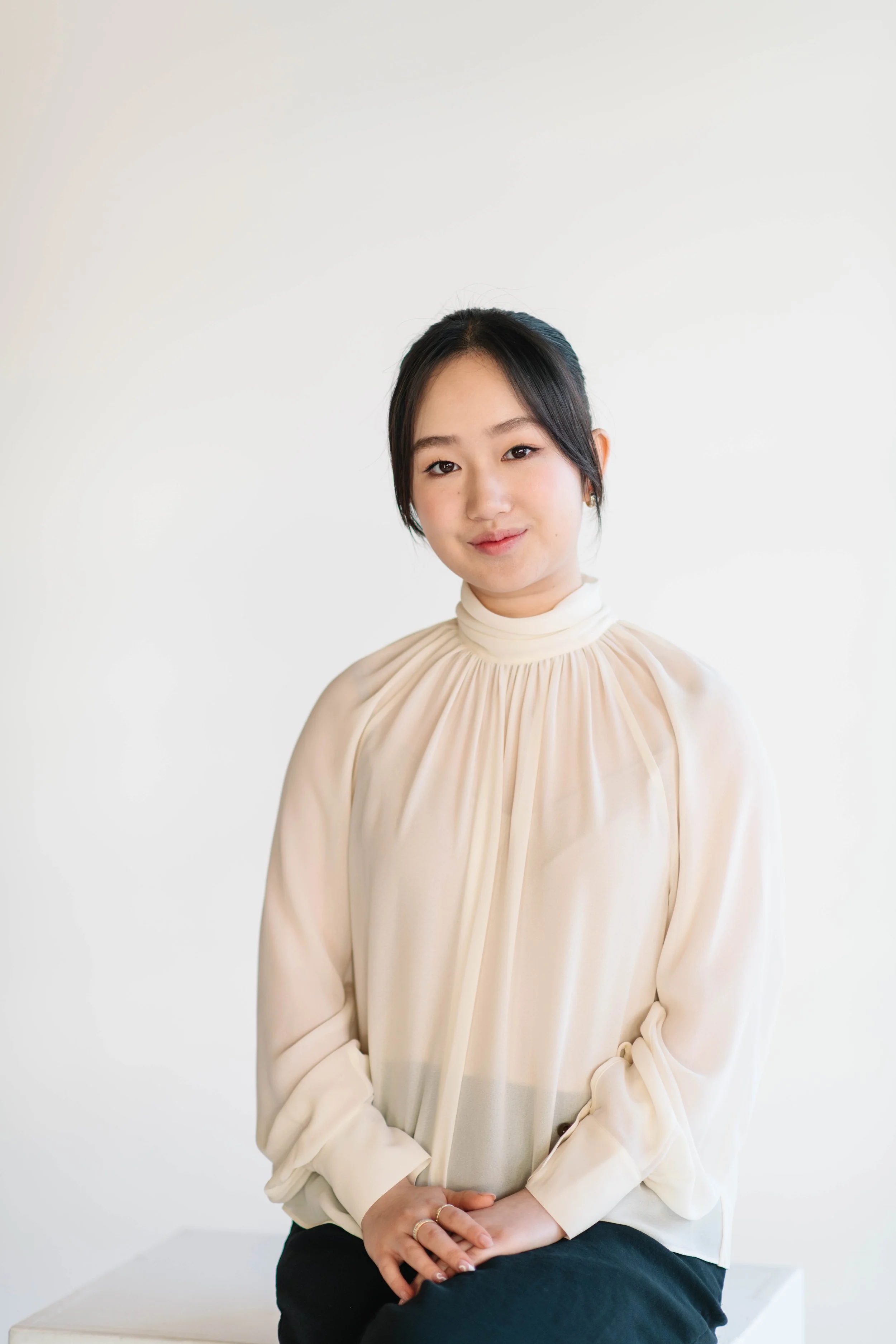
Jenny Duan is the 21-year-old Co-Founder and CEO of Clair Health, bringing expertise in women's health advocacy, growth marketing, and venture investing to revolutionize how women understand their bodies. Jenny's path to founding Clair Health began in high school while working with women experiencing domestic violence and homelessness through Rose Haven nonprofit in Oregon, where she witnessed repeatedly how women weren't taken seriously by healthcare providers due to lack of quantitative data. At Stanford University, where she graduated early with a B.S. in Symbolic Systems (AI Ethics and the Social Internet), she met co-founder Abhinav and recognized that wearables had been collecting the right signals–heart rate, temperature, HRV–but lacked algorithms to read hormonal patterns from those signals, which were essential to fully understanding the dynamic female body and providing women with insights into their hormonal health. Harnessing her knowledge from Stanford, an internship at Daydream, and her passion for women’s health, Jenny developed and launched Clair to be the world’s first non-invasive continuous hormone tracker for women. As CEO, Jenny leads Clair Health’s brand strategy, fundraising, partnerships, and go-to-market execution, building technology to give women the tools and insights to understand their bodies and truly live with their cycles.
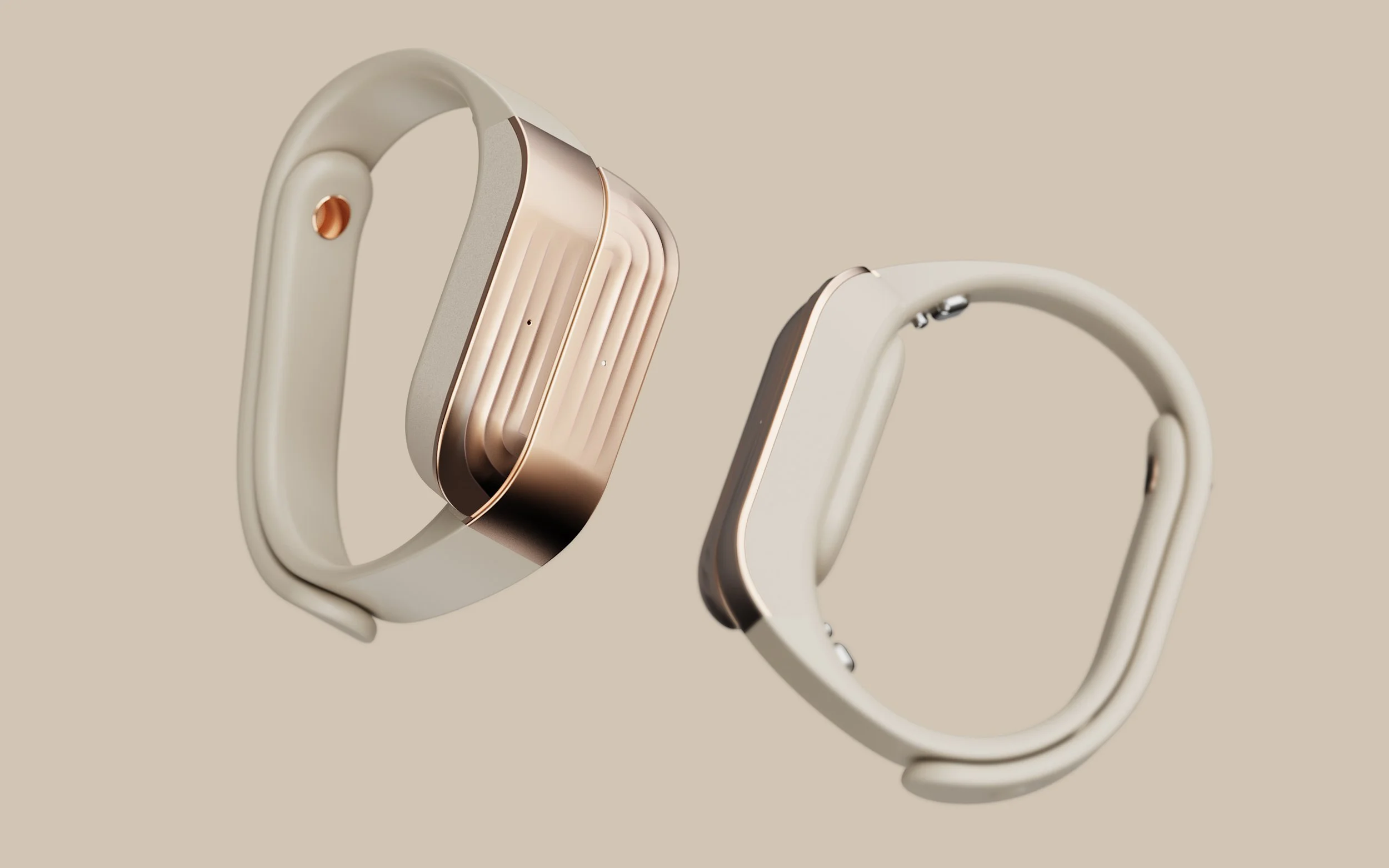
Clair Health, the company behind Clair, the world’s first noninvasive continuous hormone tracker, provides women with real-time hormone insights, paired with personalized knowledge on how to interpret them in their everyday lives. Using advanced sensor fusion, the wrist-worn device integrates 10 biosensors and 100+ proprietary biomarkers to monitor estrogen, progesterone, LH, and FSH continuously without blood draws, urine tests, or needles. Backed by leading experts in wearables and women’s health, Clair delivers 94% cycle phase classification accuracy and actionable insights across fertility, performance, hormonal health, and perimenopause. Built on deep learning models trained on diverse female physiology, Clair supports both regular and irregular cycles while prioritizing accuracy, accessibility, and data privacy. Clair empowers women from their first period beyond perimenopause to understand their hormonal patterns, advocate with evidence, and move from reactive to preventative healthcare.
Tell us a bit about your background and your projects so far.
My journey to Clair Health started long before college when I worked with Rose Haven, a nonprofit supporting women and children experiencing domestic violence and homelessness. There, I saw how often women were dismissed by healthcare providers, told their symptoms were “in their head” because there was no data to prove otherwise. At Stanford, I leaned into women’s health, startups, and investing, participating in hackathons, working with early-stage companies, and doing consumer investing through Anthos. When I met Abhinav, my-co-founder, I recognized hormone health as a critical missing layer in healthcare and saw that the technology had finally reached a point where continuous tracking could become reality. I knew the time was now or never, so right after graduation, I chose to start developing Clair. Women have already waited decades for better hormone tools. Every year of delay is another year without access to understanding their own biology.
How did you get into this industry? Has it been an easy industry to get into or have you had many challenges?
I didn’t enter the wearable or health-tech space through a traditional engineering or technical background. Instead, I was pulled into this industry through a much more personal experience. While working with women experiencing instability and trauma, I repeatedly saw women whose health concerns were dismissed because there was no measurable data or physical proof behind the symptoms they were describing. That experience deeply affected me and stayed with me throughout my time at Stanford, where I became increasingly drawn to startups and healthcare innovation.
While at Stanford, I met my co-founder, Abhinav, and we immediately bonded over a shared passion for healthcare, and more specifically, women’s health. We spent a lot of time talking about the wearables space and what simply wasn’t being built. We both recognized that modern healthcare and consumer health technology weren’t designed with women’s physiology in mind. From my earlier experiences working with women, I was very aware of how dangerous that gap can be. Abhinav, coming from the wearable and sensor side, understood what these devices were technically capable of detecting. Together, we realized that wearables had been capturing signals like heart rate, temperature, and HRV for years, yet no one had developed the algorithms to translate those signals into hormonal insight. It truly felt like a now-or-never moment to build something entirely new in this space.
How long did it take you to be where you are now? What was the biggest obstacle? What are the challenges of being in the industry you are in?
We began seriously thinking about this problem while we were still at Stanford and started building shortly after. Creating a net-new, first-of-its-kind product at the intersection of healthcare and wearable technology requires an extraordinary degree of patience and rigor, and we officially announced Clair Health this past February, with the Clair wearable planned for launch in late 2026.
One of the biggest challenges in the wearable industry is trust. Consumer confidence, particularly around safety and data privacy, has been shaken in recent years. For us, trust had to be foundational and was never something we wanted to retrofit later. From the very beginning, Clair was designed with a privacy-first architecture where hormone inference and analysis happen on-device. We use HIPAA-compliant, enterprise-grade security, and unlike many platforms that send sensitive health data to the cloud or share anonymized information with third parties, Clair processes everything locally so your most intimate health data never leaves your phone.
Building in women’s health presents its own structural obstacles since we’re working in areas that have historically been under-researched, under-prioritized, and under-funded, which means there are fewer precedents and more unknowns. I’ve learned that progress in this space rarely comes from waiting for perfect conditions. Any meaningful step forward matters, particularly when generations of women have lived without access to interpretable data about their own bodies.
What are your biggest achievements to date?
One of my most meaningful achievements has been validating the underlying science behind Clair. In Clair’s prototype testing, we collected more than 5,000 days of continuous physiological data across 127 menstrual cycles from over 40 women, intentionally capturing a mix of regular and irregular cycles and a wide range of biological variation. From wearable sensors alone, Clair achieved 94.10% cycle phase classification accuracy, along with strong performance in identifying key hormonal events like the LH surge. This really proved to us that non-invasive continuous hormone monitoring was possible, and had great potential to provide actionable insights for a wide variety of use cases, from fertility tracking, athletic performance optimization, hormonal health management, and perimenopause navigation.
Beyond the technical validation, the achievement that matters most to me is what this represents for women. For decades, women have had to interpret their health through fragmented signals, guesswork, or reactive tools. Knowing that we can translate continuous physiological patterns into meaningful insight means women can finally access information their bodies have always been communicating.
What are the projects you are currently working on?
Clair Health is my primary focus right now. Beyond building the Clair itself, my work is centered on addressing a much broader health equity gap. Women were not required to be included in clinical research until 1993, and as a result, much of modern medical technology and physiological modeling has been built around male biology. In many systems, deviations from those baselines are treated as anomalies rather than meaningful signals, which has shaped how women’s symptoms are interpreted and often dismissed. Clair Health is designed around the premise that cyclical physiology is not noise, but essential biological information that can be measured and understood. With a more complete understanding of women’s physiological data, women’s health can move toward predictive insight and reshape how women train, age, plan for families, and understand long-term health patterns.
Is the #WomenInTech movement important to you and if yes, why?
Yes, the more women who participate in building technology, the more likely it is that longstanding, overlooked problems will be addressed. Women’s health is a clear example, despite its universal relevance, it still receives a disproportionately small share of funding and attention. Representation in technology directly shapes what gets prioritized, researched, and built. Expanding access and opportunity in tech influences the direction of innovation altogether.
What will be the key trends in your industry in the next five years and where do you see them heading?
Privacy will become one of the defining trends in the wearable industry. As devices collect increasingly sensitive biological data, users will demand far greater control, transparency, and on-device intelligence rather than default cloud dependence. At the same time, advances in deep machine learning will change how health data is interpreted, moving from simple metric reporting to contextual understanding. Instead of a device merely indicating that a value has shifted, systems will increasingly explain why, for example, recognizing that changes in energy, recovery, or physiology may be tied to underlying hormonal patterns rather than isolated anomalies. In women’s health particularly, this shift toward hormone-informed personalization will enable more meaningful at-home insight, allowing individuals to better understand their bodies and walking into doctors’ visits armed with their own personal health data.
What is the most important piece of advice you could give to anyone who wants to start a career in this industry?
Women are often told their dreams are impossible before they even get the chance to begin. Be relentlessly audacious in your mission and pursuit towards greatness.
Who are three inspirational women in your respective industry you admire?
Emile Radyte: Founder of Samphire Neuro, is doing incredible work in neurostimulation. I love how she is pioneering a new, brain-first approach to women’s health and opening up entirely new possibilities for reducing menstrual pain and mood symptoms through non-invasive technology.
Ivy Ross: Chief Design Officer for Google’s consumer devices!
Imogen Heap: is a musician and innovator who built gloves that allow her to compose and perform music through movement, blending technology and creativity in a new way.
Find out more about Clair Health on their website.
If you want to share your story with us and be featured on our WoW Women blog, get in touch.