
WoW Woman in BioTech - Delfina Vilieri, founder and CEO of Embryoxite
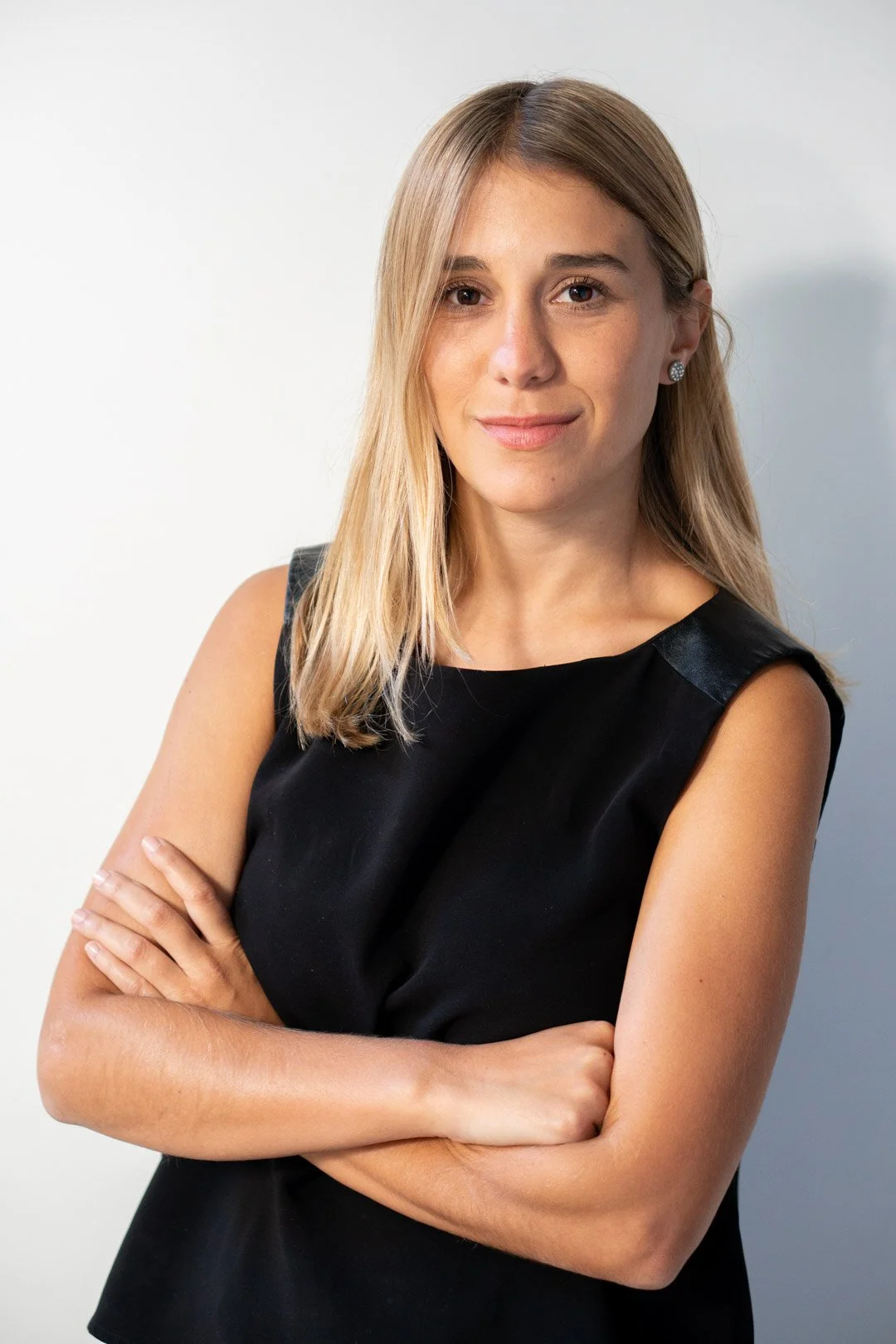
Delfina Vilieri is the Founder and CEO of Embryoxite, a biotech company developing AI-powered, non-invasive solutions to improve embryo selection in IVF.
She is an industrial engineer and full-stack developer with over 15 years of experience building and optimizing systems across startups and large corporations, including Volkswagen. Her work sits at the intersection of technology, science, and healthcare, with a focus on increasing pregnancy success rates through data-driven decision-making.
Delfina has led Embryoxite’s expansion across the U.S., Latin America, and Europe, establishing partnerships with leading fertility clinics and building a unique global dataset. She has participated in international programs such as Techstars and has been recognized for her commitment to innovation in women’s health. Originally from Argentina, she is passionate about empowering women—especially mothers—to pursue their careers and ambitions without compromise.
Embryoxite is a biotech company developing AI-powered, non-invasive solutions to improve embryo selection in IVF. By analyzing molecular signals from the embryo’s culture medium, our technology predicts the probability of achieving a successful pregnancy without requiring embryo biopsy or changes to clinical workflows. Our approach integrates seamlessly into existing lab processes, helping clinics make more informed, data-driven decisions. Embryoxite is currently collaborating with fertility centers across the U.S., Latin America, and Europe, building a unique global dataset to advance reproductive medicine. Our mission is to increase IVF success rates while protecting embryo integrity.
Tell us a bit about your background and your projects so far.
I’m Delfina Vilieri, an industrial engineer, full-stack developer, and the Founder & CEO of Embryoxite, a biotech startup focused on improving pregnancy success rates in IVF. I’m also a mother of two, which has deeply shaped both my perspective and my purpose.
My career started in large corporations like Volkswagen, where I began to notice something that stayed with me: how often women’s professional growth is in tension with motherhood. That experience was a turning point — I realized I didn’t want to just adapt to the system, but to help redesign it.
That’s when I moved into entrepreneurship. I first built a consulting company focused on helping startups optimize their operations and scale, and later founded Embryoxite with a scientific team. Today, we’re developing a non-invasive, AI-powered solution that helps select the embryo with the highest chance of leading to a successful pregnancy, aiming to bring more clarity and better outcomes to a process that is still full of uncertainty.
Throughout this journey, I’ve had the opportunity to work with clinics across the U.S., Latin America, and Europe, and to be part of global programs like Techstars. But beyond milestones, what drives me is the impact: supporting women in one of the most important decisions of their lives — if and when to become mothers — with better tools and more information.
How did you get into this industry? Has it been an easy industry to get into or have you had many challenges?
I’ve always wanted to build something with real impact. That’s what led me to apply to an accelerator called Grid Exponential, where I connected with my scientific co-founders. That moment was key — it brought together my background in engineering, processes, and business with deep scientific expertise.
Entering this industry hasn’t been easy. Coming from an engineering and business background, I had to learn a lot — from the science behind embryo development to the complexities of the assisted reproduction market. Understanding both the clinical side and the industry dynamics has been one of the biggest challenges.
But at the same time, that learning curve has been one of the most valuable parts of the journey. It allowed me to bridge two worlds — science and business — and build something that can truly make a difference.
How long did it take you to be where you are now? What was the biggest obstacle? What are the challenges of being in the industry you are in?
Getting to where I am today has been a 15-year journey.
I spent my first 7 years working in large corporations, where I learned how to build structures, lead teams, and scale operations. Then I transitioned into entrepreneurship with my own consultancy, and 4 years ago, we founded Embryoxite.
If I had to choose the biggest obstacle, it would be learning to move from structured environments into uncertainty. Going from places where everything is defined to building something from scratch means making decisions without always having all the answers. And in biotech, that uncertainty is even greater—timelines are long, and results take time.
One of the biggest challenges in this industry is finding the balance between science and business. You’re not only building a company—you’re also validating technology, working with clinics, generating evidence, and navigating regulatory pathways. It requires a lot of resilience.
What are your biggest achievements to date?
One of my biggest achievements has been building Embryoxite from an idea into a company working with fertility clinics across different regions, generating real clinical data and advancing toward validation. Taking something so complex—at the intersection of science, technology, and healthcare—and turning it into a real, applicable solution has been incredibly meaningful.
Another important milestone has been raising funding and being part of international programs like Techstars, which allowed us to expand our vision globally and connect with key players in the industry.
And on a personal level, doing all of this while becoming a mother of two has been one of my greatest achievements. It’s shown me that it’s possible to build, lead, and grow—both a company and a family—at the same time.
What are the projects you are currently working on?
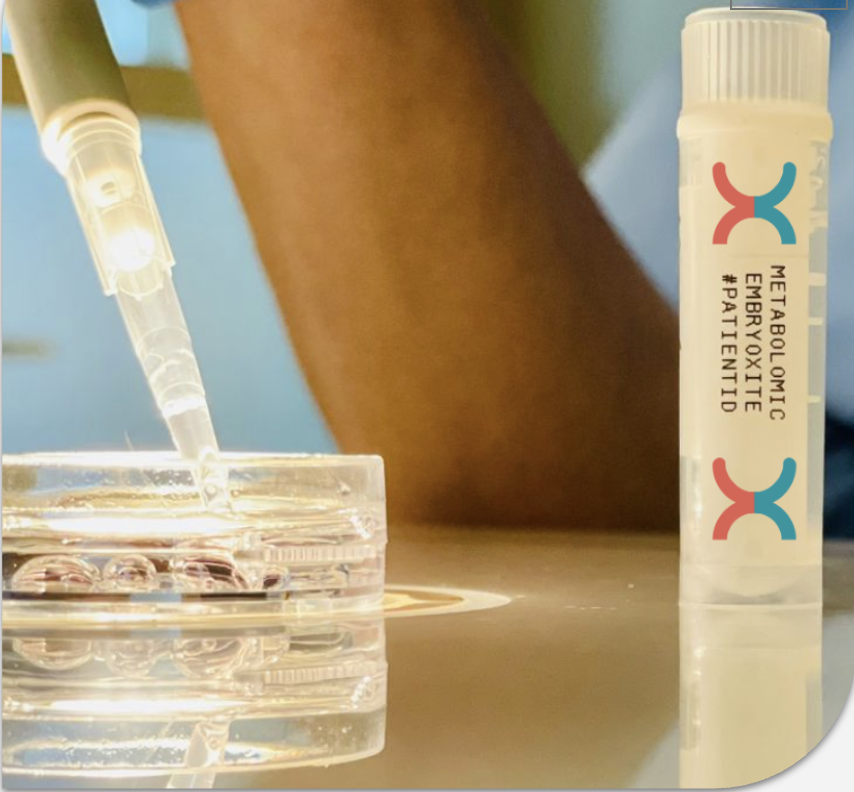
Right now, I’m fully focused on building and scaling Embryoxite. We are developing a non-invasive solution that uses metabolomics and artificial intelligence to help identify the embryo with the highest probability of achieving a successful pregnancy in IVF. Our main focus today is clinical validation, working with fertility clinics across different regions to generate strong, real-world evidence.
At the same time, we’re expanding our technology platform, integrating clinical data, embryo images, and molecular information to build a more holistic understanding of embryo development. The goal is to bring more clarity and confidence into a process that today is still highly uncertain for many women.
In parallel, we’re growing the company—closing our funding round, building strategic partnerships, and preparing for regulatory pathways to bring this solution to patients globally.
Is the #WomenInTech movement important to you and if yes, why?
Yes, it’s very important to me. A big part of what drives me is the desire to support and inspire more women — especially mothers — to continue building their careers and pursuing their ambitions.
Throughout my journey, I’ve seen how often women feel they have to choose between professional growth and motherhood. I truly believe we need to change that narrative. Being part of the #WomenInTech movement means not only creating opportunities, but also showing, through action, that it’s possible to build, lead, and grow without giving up on your personal life or your dreams.
If my path can help even one woman feel more confident in pursuing hers, then it’s already worth it.
What will be the key trends in your industry in the next five years and where do you see them heading?
In the next five years, I believe the industry will be driven by automation, AI, and more personalized, non-invasive diagnostics.
The focus will be on protecting what matters most for patients — their embryos, which represent potential future lives. That’s why there will be a strong shift toward solutions that can provide deeper insights without compromising embryo integrity.
We’ll see technologies that combine different types of data to make more precise, individualized decisions, while also making clinical workflows more efficient through automation.
Ultimately, the future of this field is about increasing success rates while minimizing risk — using smarter, less invasive tools to support both clinicians and patients in one of the most important moments of their lives.
What is the most important piece of advice you could give to anyone who wants to start a career in this industry?
The most important advice I can give is to surround yourself with people who truly understand the industry. Mentors and experienced professionals are key — they will help you challenge your assumptions, make better decisions, and pivot when needed.
In a complex field like this, it’s very easy to fall in love with an idea. What really makes the difference is having people around you who are willing to question it, stress-test it, and help you see what you might be missing.
That kind of feedback is not always comfortable, but it’s essential if you want to build something that actually works and creates real impact.
Who are three inspirational women in your respective industry you admire?
To be honest, I don’t have specific industry leaders I look up to. What truly inspires me are women who pursue their own path—those who take risks, put themselves out there, and keep moving forward despite uncertainty. I deeply admire that courage and determination.
Find out more about Embryoxite on their website.
If you want to share your story with us and be featured on our WoW Women blog, get in touch.