
WoW Woman in FemTech - Dr. Sasha Hakman, a double board-certified OB-GYN and Reproductive Endocrinology & Infertility specialist
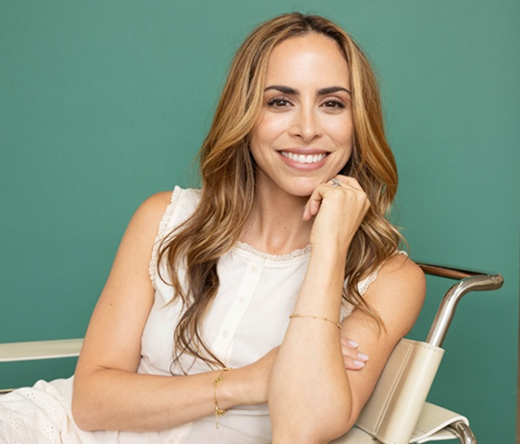
Dr. Sasha Hakman is a double board-certified OB-GYN and Reproductive Endocrinology & Infertility specialist practising at HRC Fertility in Beverly Hills, in affiliation with the Keck School of Medicine at USC.
She’s one of a select group of physicians who serve as a Subject Matter Expert for the American Board of OBGYN, helping shape the rigorous board exam for future fertility specialists. She is also one of the few physicians globally who offer needle-free IVF. Her research has been published in multiple peer-reviewed journals, spanning assisted reproductive technologies, stem cell research, and the genetics of uterine abnormalities.
Beyond her clinical practice, Dr. Hakman is an online educator and advocate surrounding all topics of reproductive medicine, and has recently been nominated for the position of vice chair for the American Society of Reproductive Medicine social media special interest group. She’s also the creator and host of Trying to Conceive with Dr. Hakman, one of the first in-studio, video podcasts in the fertility space, where she blends expert interviews, patient stories, and the latest innovations in reproductive medicine.
Inito is a consumer tech company focused on at-home diagnostics. Its flagship product is an at-home fertility monitor that measures hormone levels, confirms if you actually ovulate, the right days to try and gives people a better sense of what is happening inside their own cycles. Starting with fertility and expanding into areas like testosterone, vitamins, thyroid, and more, Inito’s vision is to bring the lab into the comfort of their homes. With 20+ patents, a database of over 40 million fertility hormone tests, and a rapidly growing global team across Dubai, Bangalore, and London, Inito is committed to helping more people reach their life-size goals by putting lab-grade, biological insights in their hands.
Tell us a bit about your background and your clinical work so far.
I am a double board-certified OB/GYN and reproductive endocrinologist at HRC Fertility in Beverly Hills and West Los Angeles. On any given day, I am seeing women navigating IVF, egg freezing, recurrent pregnancy loss, PCOS, endometriosis, unexplained infertility, and LGBTQ+ family building. Outside the clinic, I host a podcast (Trying to Conceive with Dr. Sasha Hakman), serve as a subject matter expert for the American Board of OB/GYN, and am an advisor to Inito.
How did you become a reproductive endocrinologist? Has it been an easy industry to get into, or have you had many challenges?
The path to becoming an REI is long: medical school for 4 years, four years of OB/GYN residency, then a three-year fellowship in reproductive endocrinology and infertility. This is followed by board certification, which takes approximately 2 years minimum after graduating from a fellowship. Fellowship acceptance is highly competitive, and the training is demanding.
This industry is quickly evolving over time and once you get into a fellowship and graduate, it’s fairly easy to integrate into. I do honestly think that our medical field has unfortunately changed into an industry that focuses more on assisted reproduction rather than focusing on the basics of treating underlying disease and optimising natural fertility.
Another challenge has been not just treating infertility but also managing patients’ anxiety and emotional distress since it’s such a vulnerable population. You have to be able to hold both the clinical rigour and the human experience at the same time. That is a skill that takes years to develop.
How long did it take you to be where you are now? What was the biggest obstacle? What are the challenges of being in the industry you are in?
From the start of medical school to where I am now has been more than a decade of training and early practice. The biggest obstacle was navigating my own fertility journey while caring for patients going through the same thing. I have non-classical CAH, which was previously misdiagnosed as PCOS, and that experience changed the way I practice since I’ve been on the patient side.
The broader challenge in our industry is misinformation. Fertility has become a content category, and a lot of the loudest voices online are not clinicians. They have never counselled a patient through a miscarriage, a failed transfer, or a neural tube defect diagnosis. Part of my job now is countering that in a way that is evidence-based without being condescending.
How did you become an advocate for women’s health in your clinical practice?
It started with my patients showing me a huge gap in knowledge regarding their own reproductive biology. Women would come in, not even understanding the menstrual cycle or how to properly track ovulation. For those who wanted to understand more about their cycles, the tools available to them were either too simplistic, like binary yes-no ovulation sticks, or required routine clinic visits for ultrasounds and blood draw, which can take time and can be quite pricey if out of pocket.
Technology built around women’s health is starting to close that gap, but only when the products are built on real data and science. That is exactly what drew me to Inito.
The Inito InSight Wireless Reader measures four key fertility hormones - LH, FSH, estrogen, and PdG - quantitatively from home, and confirms ovulation rather than just predicting it. What stood out to me early on was how strongly the technology is validated. Research across both clinical and engineering studies shows that quantitative hormone tracking at home can closely mirror real hormone patterns - and Inito has demonstrated up to 95% alignment with lab-based results - so I trust it not just as a user, but as a clinician relying on that data for real decisions.
When a woman can see her real hormone values across a cycle, not just a line on a stick, I can properly evaluate ovulatory patterns and possible pathologies like an ovulatory infertility or a short luteal phase. That helps women take action sooner to improve their reproductive outcomes, and that is what advocacy in women’s health should look like.
What are your biggest achievements to date?
My number one achievement is becoming a mom. It has changed me in the best way and, frankly, has helped me become an even better doctor. It really shaped my mission of helping patients achieve their family-building goals. While yes, all my research awards, credentials, and board certifications are amazing achievements, nothing supersedes the accomplishment of becoming a mother.
What are the projects you are currently working on?
My podcast, Trying to Conceive, is my primary education platform, and I am continuing to grow it with new episodes and some great industry voices discussing some of the most pertinent fertility conversations we need to have. On the clinical side, I’m working with Inito on the launch of the InSight Wireless Reader, their next-generation at-home fertility monitor powered by Spectral Mapping technology, designed to deliver the most precise* and consistent hormone readings at home, setting a new benchmark for precision in this category.
What's the biggest gap you see between what patients need and what current fertility tools deliver?
I think the biggest gap is that most fertility tools still treat fertility like a single moment, when in reality it is a pattern unfolding across the cycle. Traditional ovulation strips can help predict ovulation by detecting an LH surge, but they do not confirm whether ovulation actually happened. That is an important distinction biologically, especially for women with irregular cycles, PCOS, or anyone who wants a clearer understanding of what their body is doing.
What women need are precise, longitudinal hormone insights that are also easy to interpret. When readings are more precise and consistent, the trends become clearer, and that clarity helps women better understand their own bodies. That is one of the reasons I chose to work with Inito. It goes beyond prediction alone by tracking multiple hormones over time, helping confirm ovulation, and presenting those insights in a way that is easier to understand and use at home.
What technologies or tools are you currently recommending to patients, and why?
I recommend tools I can stand behind biologically and based on the quality of the data. For women who want to understand their cycles in more depth, that often means moving beyond traditional ovulation strips and toward at-home hormone monitors that measure multiple hormones quantitatively.
Inito’s InSight Wireless Reader is one of the key tools I use and recommend. It measures estrogen, LH, FSH, and PdG, provides actual hormone values rather than a yes-or-no result, and helps users see hormone patterns across the cycle more clearly. What makes it especially compelling is that published research showed Inito’s urine hormone trends matched with 95% accuracy to corresponding blood hormone trends, thus ensuring it gives lab-grade results while translating that information into something patients can understand easily in the comfort of their homes
Is the #WomenInTech movement important to you, and if so, why?
Yes, because the products that shape women's health get built the way they do because of who is in the room when they are designed. Historically, that room has not included enough women, and it has rarely included clinicians who actually treat women. The result is tools that are physiologically incorrect, or that solve for the wrong user need, or that market fear instead of offering information.
What role do you think clinicians should play in shaping femtech products?
I think clinicians, especially those with expertise in gynaecology and reproductive endocrinology, should play a central role in shaping femtech products because we can help keep claims disciplined.
In reproductive health, overclaiming erodes trust and can even become predatory, especially in a very fraught and vulnerable stage of a woman's life. Patients come into my office carrying the weight of whatever the last piece of content told them. If a product says something it cannot back up, the patient is often the one paying the price.
What will be the key trends in your industry in the next five years, and where do you see them heading?
First, we have seen major shifts in quantitative at-home diagnostics. For decades, at-home fertility testing has largely meant a single-hormone test that gives you a yes-or-no answer. But that is not enough to understand a real cycle, especially for women with PCOS, irregular cycles, anovulation, or anyone who wants a deeper understanding of their body. The future is multi-hormone measurement at home, with real quantitative values, ovulation confirmation, and better cycle characterisation. Tools like the Inito InSight Wireless Reader are a real promise of where the category is heading: beyond single-hormone prediction and toward more precise, multi-hormone tracking at home. And over time, I think that will expand well beyond trying to conceive into areas like perimenopause, menopause, and broader hormone health, powered by better hardware, wireless devices, and more continuous forms of tracking.
Second, I think personalisation will start replacing population-based thresholds. So much of reproductive medicine still relies on broad reference ranges built on population averages. Those ranges can tell you whether a result falls inside a statistical band, but they do not always tell you what is normal for that individual woman. The companies that are able to build strong longitudinal hormone datasets will be in the best position to move the category forward, from saying, “this is normal in general,” to saying, “this looks normal for you, based on your own baseline and pattern over time.”
Where I hope all of this is heading is earlier understanding and earlier intervention. Today, many women arrive at care after months or even years of trying to piece things together on their own, often with app logs or ovulation strip photos that still do not fully explain what is happening in their cycle. As these tools get better, women will increasingly come into that first appointment with more meaningful hormone data collected across multiple cycles. That has the potential to change the entire first conversation. Instead of spending months trying to establish the basics, we may be able to identify patterns earlier, ask better questions sooner, and move toward the right care faster.
What is the most important piece of advice you could give to anyone who wants to start a career in this industry?
The most important advice I would give is to stay relentlessly curious and grounded in evidence while never losing sight of the human side of this work. Fertility medicine sits at the intersection of science and some of the most vulnerable moments in people’s lives. Patients will remember how you made them feel just as much as the outcomes you helped them achieve.
I would also say do not underestimate how much resilience this speciality requires. You will celebrate extraordinary wins, but you will also walk with patients through loss and uncertainty. The physicians who thrive here are the ones who can hold both.
Who are three inspirational women in your respective industry you admire?
There are so many women in reproductive medicine who have shaped how I think about patient care, education, and advocacy, but a few stand out to me personally.
Firstly, my mentor in fellowship has tremendously shaped my need for staying organised and attention to detail to ensure patient care and outcomes are never compromised.
I also really admire Serena Chen. She has been such a strong voice for reproductive rights and access to fertility care at a national level and shows what it looks like to pair clinical excellence with meaningful public advocacy that reaches far beyond the exam room.
Natalie Crawford has done something I find especially powerful, which is making reproductive medicine accessible to a broader audience. She has helped normalise conversations about fertility through education that is approachable, honest, and grounded in science.
Find out more about Inito on their website.
Follow Inito on Facebook, Instagram, YouTube, and TikTok.
* ”Most precise” refers to controlled lab testing of inter-device, system-level precision across key hormone levels versus comparable U.S. quantitative at-home fertility monitors.

If you want to share your story with us and be featured on our WoW Women blog, get in touch.