
WoW Woman in Women's Health - Lauren Barker, CEO and co-founder of Uresta

Lauren Barker is the CEO and co-founder of Uresta, an FDA-cleared bladder support device revolutionizing how women manage stress incontinence. After spending nearly a decade in finance, she took over the medical device company and has since transformed it into an 8-figure business, serving over 30,000 women across North America. Under her leadership, Uresta has raised $6 million in funding and successfully expanded into the United States in 2024. What sets Lauren apart is her deep commitment to her users. She personally reads every customer review, using their stories to drive product innovation and build a thriving online community of over 9,000 members. Her mission is rooted in destigmatizing women's health issues and creating dignified, accessible solutions that restore confidence and freedom to women's lives.
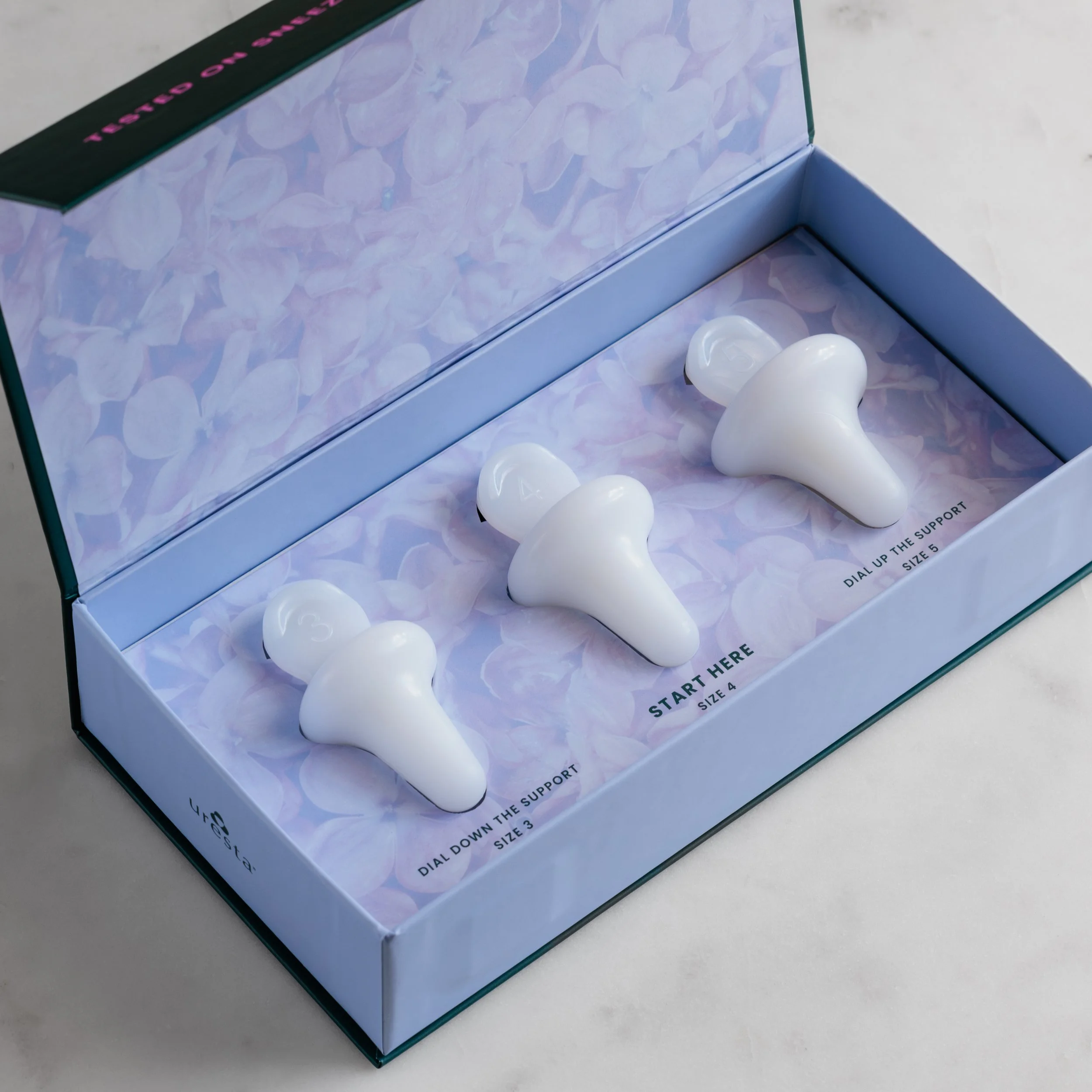
Uresta is the first FDA-cleared bladder control device for stress incontinence that stops leaks at the source, giving women the freedom to live without limits. This breakthrough self-managed solution provides immediate, all-day protection from leaks, without weakening muscles or requiring prescriptions. Reusable and comfortable, Uresta is specifically designed for stress urinary incontinence and works like a sports bra for the bladder, providing gentle support to the pelvic floor. With clinically proven results showing 97% of women experience leak reduction, Uresta is the leak-free solution women have been waiting for to get back to being themselves.
Tell us a bit about your background and your projects so far.
I spent nearly a decade in finance, which gave me strong analytical skills and an eye for untapped market opportunities. But I wanted to do work that had an impact. When I discovered Uresta and Dr. Scott Farrell’s groundbreaking work modernizing the pessary, I immediately saw both a significant market opportunity and a chance to meaningfully improve women’s lives. I joined as Co-Founder and CEO, and since then, we’ve raised $6M in funding, expanded into the U.S., built a community of more than 50,000 users, and grown the business to nearly 8-figures in revenue.
How did you get into this industry? Has it been an easy industry to get into or have you had many challenges?
I got into femtech by taking a leap. I quit my stable finance job to take over Uresta at a key moment in its evolution. At the time, bladder leaks, despite affecting one in three women, were rarely talked about. And mainstream solutions, such as absorbent products, were archaic and didn’t offer women a good quality of life. The more I learned, the clearer it became that this was not just an overlooked market but a deeply stigmatized health issue that had been treated as something to hide rather than something to solve. We've had to work hard to destigmatize the conversation and show women they deserve dignified solutions beyond just acceptance.
How long did it take you to be where you are now? What was the biggest obstacle? What are the challenges of being in the industry you are in?
I joined Uresta at 28, and it has been nearly five years of learning, growth, and persistence to get to where we are today. One of the biggest obstacles has been educating women about why SUI is happening, and that something inserted vaginally can stop your bladder leaks AND allow you to urinate even when inserted. We’ve also had to educate women simply around the fact that effective solutions exist beyond pads and surgery. Breaking through decades of silence and shame isn’t easy, but our growing community proves women are eager to have these conversations and take meaningful steps toward feeling confident in their bodies.
What are your biggest achievements to date?
Leading Uresta's expansion into the U.S. has been a major milestone, but hearing user success stories makes me most proud of the work we do. When I hear from women who tell me they can now play with their grandkids without worry, be confident at work, go for a run without mapping out bathrooms, or feel confident being intimate again is how I know we are making a real difference. Nearly all our users see a dramatic reduction in leaks (97% of women see an improvement with Uresta), and the fact that 90% of women continue to use their Uresta after one year tells me we've given them something that works.
What are the projects you are currently working on?
Right now, we're really focused on growth, as we only launched in the US in November 2024. Specifically, we want to build on the success of our online community, which has grown from zero to 9,000+. We’re also working to expand our product offerings to tackle other medical taboo issues and address quality-of-life issues within the pelvic health space, such as vaginal dryness and pelvic organ prolapse.
Is the #WomenInTech movement important to you, and if so, why?
Absolutely. Women's health has been historically underfunded and overlooked by both traditional medicine and the tech industry. The #WomenInTech movement creates space for female founders to build solutions that truly address women's needs. As a female-led company solving a problem that affects millions of women, we're proof that when women have a seat at the table, we’re able to develop solutions based on lived experience rather than assumptions.
What will be the key trends in your industry in the next five years and where do you see them heading?
Self-managed care is the future. Women are tired of long wait times, dismissive doctors, and unnecessary prescriptions. Over the next five years, I expect we'll see more FDA-cleared solutions that put power back in patients' hands. We'll also see continued destigmatization of women's health issues as companies like Uresta help normalize these conversations. In the incontinence space specifically, I anticipate a continued shift away from absorbent products to preventative solutions that address the root cause of women’s chronic conditions.
What is the most important piece of advice you could give to anyone who wants to start a career in this industry?
Listen to your users! Read every customer review. Those stories drive everything from product improvements to messaging and growth strategy. One of the biggest mistakes I see in women’s health is building solutions without truly understanding women's lived experiences. One of the best pieces of advice I could give is don't wait for permission. The problems are massive and the need is urgent. If you see a gap, fill it.
Who are three inspirational women in your respective industry you admire?
I definitely look up to Dr. Sarah Boyles, a urogynecologist on our advisory team who's incredibly passionate about patient education and advocacy for pelvic health issues, such as incontinence and pelvic organ prolapse. Having her expertise and perspective has been invaluable as we've grown Uresta and worked to educate women on their treatment options. Caroline Packard, too, is a pelvic floor physical therapist and long-time user of Uresta, who's doing amazing work destigmatizing pelvic health and helping improve pelvic floor dysfunction with an emphasis on fitness and lifestyle changes. More broadly, I'm inspired by any female founder who's built something from nothing in a space where our needs have been historically ignored. As a part of the femtech community, I have a front row seat to various female founders and innovations in women’s health. And I can say, while femtech has been overlooked and underfunded for years, I’m seeing so many things that are giving me hope for the future of women's health. It’s truly a pivotal and exciting time.

Find out more about Uresta on their website.
Connect with Lauren on LinkedIn.
If you want to share your story with us and be featured on our WoW Women blog, get in touch.