WoW Woman in Women's Health - Danielle Frost, founder of The Everyday Female Athlete
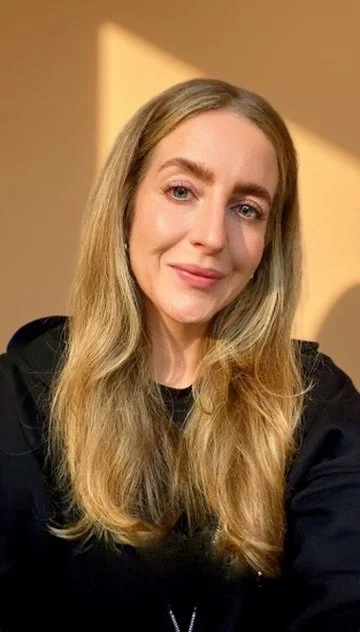
Danielle Frost is a women’s health educator, personal trainer and founder of The Everyday Female Athlete (The EFA). She has over eight years of experience in coaching and professional education, including seven years at Third Space as an Elite Personal Trainer and Head of Women’s Health. Alongside coaching, she developed the women’s health curriculum, created and delivered the first multi-day pre and postnatal courses within Third Space, taught and mentored PTs, and presented weekly education to teams across the group as part of the education team.
Her experience supporting women across life stages, alongside educating fitness professionals, led her to establish The EFA, a professional education platform dedicated to raising the standard of women’s health education in the fitness industry. Through evidence-informed education, practical tools and frameworks, The EFA helps professionals develop their knowledge, confidence, critical thinking and decision-making skills to better support female clients. Its curriculum covers female physiology across the lifespan, with the recently CIMSPA CPD-endorsed Women’s Health Foundations as its flagship course, alongside population-specific programmes in prenatal, postnatal, and perimenopause and menopause coaching.
Danielle is also the women’s health specialist and advisor at Goodnick, where she provides education and runs women’s health clinics for members. She continues to coach private clients alongside developing courses, workshops and mentorship for fitness professionals, with her ongoing coaching experience informing the education she delivers. Her approach brings together an understanding of female physiology with the art and skill of coaching, recognising the importance of individualisation, empathy and each woman’s experience. Making reliable women’s health information accessible to both women and the professionals supporting them is central to her work.
The Everyday Female Athlete (The EFA) is a professional education platform dedicated to raising the standard of women’s health education in the fitness industry. Founded by Danielle Frost, it bridges research, education and practical application through evidence-informed courses, tools and frameworks. Its curriculum covers female physiology across the lifespan, including women’s health conditions, menstrual health, pregnancy, postnatal recovery, perimenopause and menopause, alongside performance, recovery and wellbeing. The EFA helps fitness professionals develop their knowledge, confidence, critical thinking, communication and decision-making skills through an individualised, client-centred approach. Education includes Women’s Health Foundations, population-specific programmes, applied practice, workshops and mentorship.
Tell us a bit about your background and your projects so far.
I’m a women’s health educator, personal trainer and founder of The EFA. I spent seven years at Third Space as an Elite Personal Trainer and Head of Women’s Health.
Alongside coaching, I developed the women’s health curriculum and created and delivered the first multi-day pre and postnatal courses within Third Space. My work also included teaching and mentoring PTs, and presenting weekly education to the teams across the group as part of the education team.
I also coached a fantastic group of women through Mums Club. That work brought together two things I value enormously: access to training for mums and the community that can develop around it. Supporting women through different life stages includes understanding what helps them feel able to participate, and having a space where they can train and connect with other women is an important part of that.
I’d always had something in the back of my mind about building a business or venture of my own. The idea for The EFA developed through both my personal and professional experiences, and it was something I sat on for quite some time. After a lot of back and forth, I made the decision to leave Third Space to give it a go and build something of my own.
The EFA is a professional education platform dedicated to raising the standard of women’s health education. Our education covers female physiology across the lifespan, bringing together evidence-informed information, practical tools and frameworks to support professionals in developing their knowledge, confidence and skills to better support the women they work with.
I’m also the women’s health specialist and advisor at Get In Good Nick, where I provide education and run weekly women’s health clinics for members.
How did you get into this industry? Has it been an easy industry to get into, or have you had many challenges?
I’d always been into sports growing up. In my early teens, I really struggled with how I looked and felt, and I got into a pretty negative place mentally. My father actually suggested trying the gym, thinking it might help, and honestly, it changed everything. Training helped both my mental and physical health in ways that I will forever be grateful for and has been part of my life ever since.
After graduating from university, where I studied marketing, I went straight into work while continuing to train. After years working in agencies and then client-side, I really wanted a change, so I qualified as a PT. During my PT qualification, we trained at Third Space Canary Wharf, and that sold it to me. If I was
going to be a PT, it was going to be at Third Space. I joined as an Academy Trainer and worked my way up to Elite Personal Trainer.
My interest in women’s health came through my own health struggles. I experienced unexplained symptoms, as well as losing my menstrual cycle on two occasions, without a clear explanation or
understanding of why. Despite many referrals, appointments with specialists and consultants, and numerous tests, I struggled to get any clear answers and was often given conflicting information and guidance. I was doing a great deal of my own research, trying to understand what was happening and what it meant for my health.
The more I shared, the more friends, clients and colleagues shared their own experiences. It became clear just how prevalent this was and how many women were experiencing similar issues, but it wasn’t being spoken about. I’d experienced the difficulty of finding clear information and support myself, and I was seeing it through my work too.
That made me look more closely at the education available to fitness professionals. These were questions coming up in our everyday work with women, yet there was a gap in the education and support available to help us navigate them. At Third Space, I developed the women’s health curriculum, created pre and postnatal courses and implemented weekly group education for each of the teams across the group as part of the education team. As that work grew, I created and took on the role of Head of Women’s Health.
Throughout that time, I was still seeking answers about my own health. Around three years ago, I was initially diagnosed with chronic fatigue. The advice I was given was to stop working, which I found really disappointing.
It was only after laparoscopic surgery this year, around six years after I first started seeking advice, that I was told I had endometriosis. I had gone into surgery to have cysts removed and a blocked fallopian tube investigated. Endometriosis was found during the procedure, and I only learned about it afterwards.
How long did it take you to get to where you are now? What was the biggest obstacle? What are the challenges of being in the industry you are in?
It’s been over eight years since I qualified as a PT, but with The EFA still in its early days, I feel like I’m only just getting started. Working with clients, continuing my own education, teaching and mentoring other professionals have all contributed to where I am now. Stepping away from a job I loved to build The EFA has been my biggest professional challenge so far.
Building something on your own is pretty scary. There are a lot of unknowns and uncertainty, and I’m learning something new every day. I’ve made many a mistake, and I’m sure I’ll make many more, but I’ve absolutely loved getting to this point. There’s also a responsibility to make it valuable and worthwhile, because this work matters. I’m learning as I go, challenging myself and developing skills beyond those I’ve needed as a PT, educator and women’s health practitioner.
What keeps me committed is the belief that women deserve better. That comes from both my own personal experience and working with hundreds and hundreds of women. Fitness professionals also deserve better access to the education and support they need to provide that. Information can be fragmented, and knowing where to look, what to trust and how to apply it can be a challenge in itself. Through The EFA, I want to bring together coherent, trustworthy, evidence-informed education in one place, alongside practical tools and frameworks that help professionals develop their knowledge, confidence and skills.
For me, the value is in how that learning benefits the women they work with. A better-informed professional can ask considered questions, communicate with greater understanding and recognise when further support or referral is needed. Individualisation is fundamental to that: understanding each
woman’s experience and working with her to provide support that reflects her needs and goals. By better serving fitness professionals, we can help women access better support, education and information.
One of the challenges within the industry is ensuring that women’s health education becomes a standard part of professional development. We need to support professionals in understanding female physiology and developing the skills to use that knowledge thoughtfully. That takes continued learning, opportunities
to apply it and a willingness to question and refine how we work. It should be part of standard practice, and that’s what I’m working towards through The EFA.
What are your biggest achievements to date?
Developing the women’s health curriculum at Third Space and taking on the role of Head of Women’s Health are achievements I’m really proud of. They brought together both my work with clients and my commitment to professional education, and gave me the opportunity to contribute to how PTs were being educated and supported in this area.
And then, of course, building The EFA. It has involved drawing on years of experience to develop an education pathway, alongside the practical tools, frameworks and support that help professionals apply their learning. There are a lot of decisions behind that, from what needs to be taught to how learners will engage with it and develop their practice.
Women’s Health Foundations recently received CIMSPA CPD endorsement, which is a significant milestone for The EFA. As our flagship course, it establishes the core knowledge and understanding that professionals can build on through the wider education pathway. A considerable amount of work went into developing the curriculum and preparing it for review, so seeing that work receive endorsement felt particularly significant.
What are the projects you are currently working on?
I’m preparing to welcome our first Women’s Health Foundations cohort in February 2027. As our flagship course, it provides the core knowledge, understanding and decision-making frameworks that fitness professionals can build on through further education.
Alongside it, I’m developing population-specific programmes in prenatal, postnatal, and perimenopause and menopause coaching. The wider curriculum covers the female lifespan, including menstrual health, women’s health conditions, performance, recovery and wellbeing.
I’m also working on shorter courses, including The EFA Hormones Series, and Coaching Female Clients: Applied Practice for Fitness Professionals. These sit alongside practical resources, workshops and the Advanced Coach Mentorship, providing different ways for professionals to develop their education and practice.
I continue my work as the women’s health specialist and advisor at Get In Good Nick, providing education and weekly women’s health clinics for members. I’m also developing women’s health education for the workplace, beginning with menopause.
Writing, speaking and collaboration are areas I’m keen to develop further. There is considerable value in bringing together people working in research, healthcare, fitness, education and FemTech, and exploring how our different expertise can improve the information and support available to women.
Is the #WomenInTech movement important to you, and if yes, why?
Yes, absolutely. Supporting women’s participation and leadership in technology matters, including their involvement in deciding which problems are prioritised, what gets developed and how those solutions are evaluated. Women contributing as founders, researchers, clinicians, educators and users bring perspectives and experiences that need to inform those decisions.
My contribution comes through education and working directly with women and fitness professionals. I’m interested in how developments in FemTech and health technology can support that work, and how education can help people understand and use them appropriately.
A woman may bring information from an app or wearable into a conversation about her health or training. Education can help her understand what that information might tell her, where its limitations are and when further support may be needed. Her own experience needs to remain central to that conversation, including how she feels, the symptoms she notices and what is happening in her life.
These tools, and the data they provide, should be used to help women develop their understanding and confidence, while supporting them in listening to their bodies and feeling more in tune with themselves. There is an opportunity for collaboration between technology developers, healthcare professionals and
educators to support that. Making a tool available is one part of the work; helping each woman understand how to use it and interpret the information in relation to her individual health, needs, goals and experiences is equally important. That is where individualised education and support have an important role.
What will be the key trends in your industry in the next five years, and where do you see them heading?
The scale of growth in women’s health is significant. PwC projects that the global market for women’s health, including conditions that affect women differently or disproportionately, will exceed US$600 billion by 2030. That creates opportunities for investment, innovation and better support across the female lifespan. For me, the important question is how that growth translates into meaningful improvements for women.
Alongside that growth, I hope we see greater scrutiny of how women’s health is commercialised. Branding something for women, hormones or menopause should not be enough to justify a higher price or claims that aren’t supported by evidence. Marketing that plays on women’s insecurities, symptoms or understandable concerns about their health deserves to be challenged. Women deserve clear information about what a product can reasonably offer, what evidence supports it and whether it is relevant to their individual needs. Increased visibility should mean better support, rather than more things women are told they need to buy.
Within fitness, the shift I’d like to see is women’s health becoming a standard part of professional education, with greater attention to the skills professionals need to support women across the lifespan. That includes menstrual health, pregnancy, postnatal recovery, perimenopause and menopause, alongside women’s health conditions.
As apps, wearables and other technologies develop, education will have an important role in helping professionals and women understand their uses and limitations. The ability to interpret information alongside each woman’s health, experiences and goals needs to develop with them.
For education providers, demonstrating how learning translates into everyday coaching should be central to that progress. Completing a course should help someone develop their thinking, communication and ability to respond to the situations they encounter in their work. Case discussion, applied learning and mentorship all have a role in that.
My hope is that we will also see more collaboration across fitness, healthcare, research and technology, with clearer referral relationships and a better understanding of what each profession can contribute.
Source for market projection: PwC, From margin to mainstream: The future of women’s health (12 March 2026). Global market forecast, covering core women’s health and major adjacent conditions; a projection, not a guaranteed outcome.
https://www.pwc.com/us/en/industries/health-industries/library/the-future-of-womens-health.html Related coverage: Fitt Insider, Women’s Healthcare Projected to Hit $600B (24 April 2026). https://insider.fitt.co/womens-healthcare-projected-to-hit-600b/
What is the most important piece of advice you could give to anyone who wants to start a career in this industry?
Don’t be afraid to ask questions, whether that’s sitting in a room full of people or reaching out to someone directly. Put your hand up, start conversations and put yourself in rooms with people you can learn from, including those outside your own profession.
I’m still learning, and there is so much more I wish I knew and had the time to learn. It really is true: the more you learn, the more you realise how little you know. Continuing to learn and develop my skills has been part of every stage of my career, and it still is across my different roles and other areas of my life.
But give yourself some grace too. There needs to be time to apply what you’re learning, reflect and sometimes step away. You don’t have to constantly be doing another course or consuming more information. It’s important we give ourselves opportunities to use what we know, recognise where something hasn’t worked and learn from it. There can be a great deal of learning in the things that don’t always go to plan.
Building The EFA has reinforced this for me. There is so much involved in building a business alongside developing and delivering education, and I often feel out of my depth. I’ve been so appreciative of the people who have generously given their time, shared advice, offered support or simply listened. Reaching out is something I used to feel much more hesitant about, but those conversations have been incredibly valuable.
The conversations you have with clients are part of that learning too. Asking considered questions and listening to what someone shares helps you understand their experience, their goals and what they need from you. Being able to communicate clearly and with empathy is a skill that takes time to develop, and it’s something worth investing in as you build your knowledge.
Who are three inspirational women in your respective industry you admire?
I’m going slightly beyond three here, and including women in business as well as fitness and education, because building The EFA has made that an important part of my development too.
Shona Vertue has such an ability to break down complex ideas, whether that’s training, psychology, research papers or frameworks, and turn them into understandable, valuable pieces of content. I also appreciate how openly she shares her thinking and aspects of her life. There’s a sense of getting to know the person behind the education, and I really like that balance.
Sharelle Grant brings a direct, no-nonsense approach to women’s health and fitness. She challenges oversimplified advice and things women are repeatedly told about their bodies, while making the education accessible and useful. I appreciate her willingness to question those messages and explain the reasoning behind her position.
Grace Beverley and Emma Grede are women I admire immensely. They are formidable entrepreneurs. Unapologetically themselves, with a straight-talking, no-BS approach that I really appreciate. They’re clear about their values, what they stand for and what they’re building. Emma’s honesty about what it takes to build and run a business particularly resonates with me. Grace brings humour and personality to how she shares her work and life, challenging the idea that a successful businesswoman or CEO has to present herself in a particular way. As I build The EFA, I’ve found their business insight, honesty and openness about the process so valuable. They’re role models for women in business, showing that there is room to be ambitious, clear about what you stand for and still be yourself.
Connect with Danielle on LinkedIn.
Follow The EFA on LinkedIn.