WoW Woman in Product Design - Yiwen Yu, Product designer and a Co-designer of Clinexi
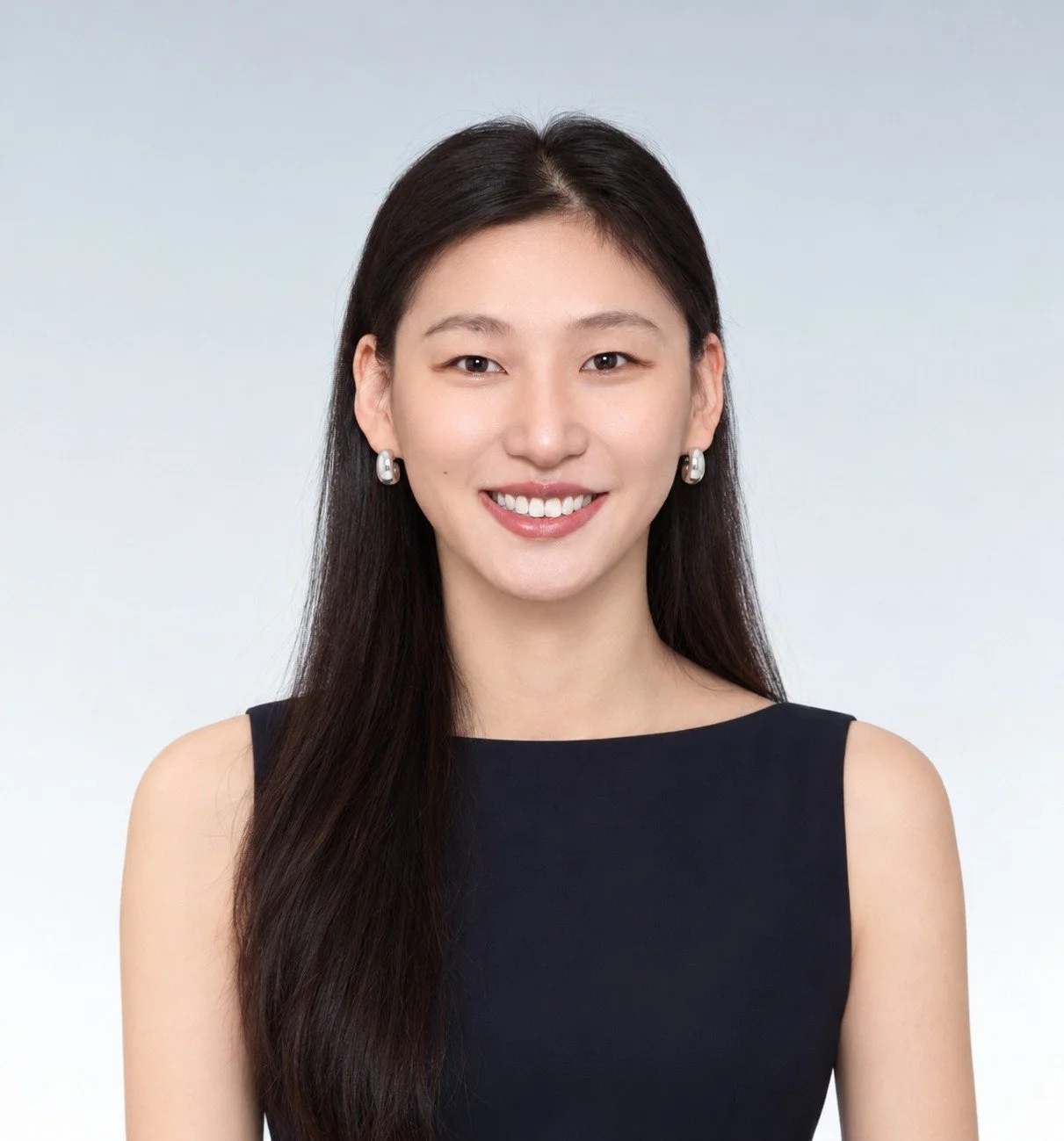
Yiwen Yu is a product designer based in Dallas, Texas, specializing in enterprise software and complex operational workflows. With a background in graphic design and human-computer interaction, she focuses on making complicated systems more intuitive, efficient, and human-centered.
She holds a BFA in Graphic Design from the Maryland Institute College of Art and an MS in Human-Computer Interaction from the University of Maryland. Her professional work focuses on designing internal enterprise tools in the aviation industry, where she collaborates with cross-functional teams to improve workflows and information accessibility.
Beyond her professional work, Yiwen is a co-designer of Clinexi, an independent maternal mental health design concept recognized with an iF Design Award and a Red Dot Design Concept Award in 2026. She is also actively involved in design mentorship and community initiatives, including serving as Mentor Match Chair for AIGA Dallas. She is passionate about using design to simplify complex problems, support meaningful collaboration, and create positive social impact.
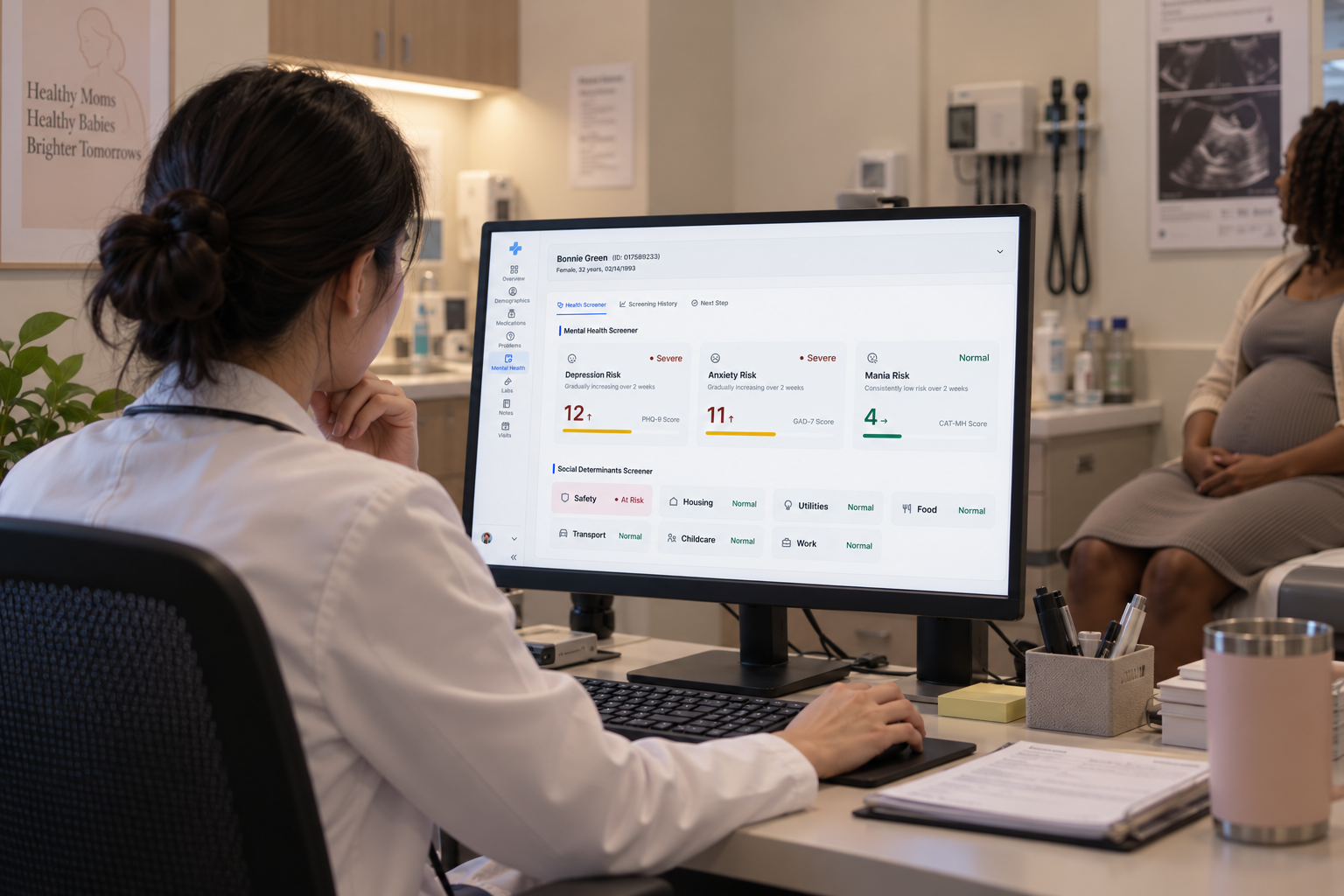
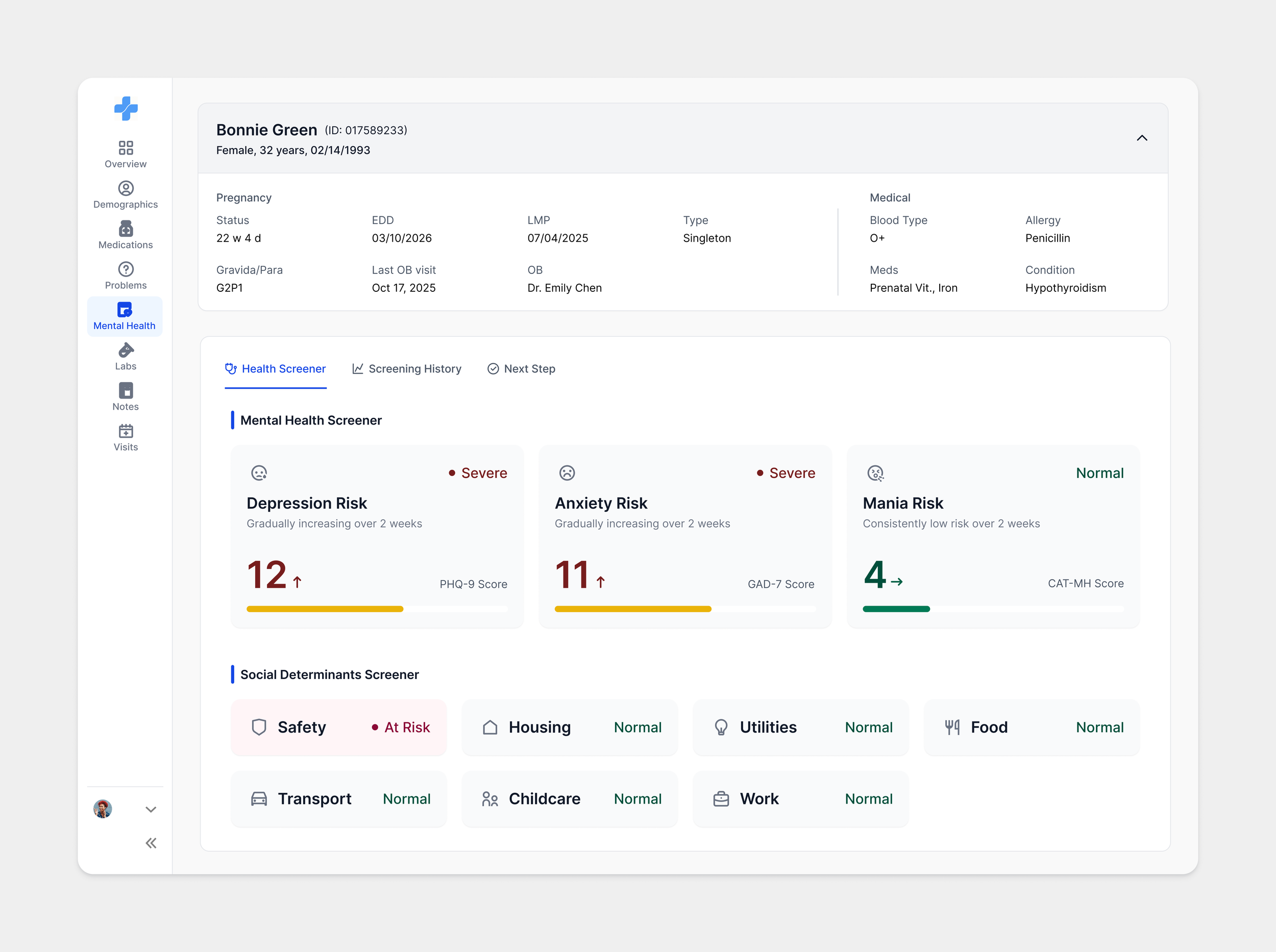
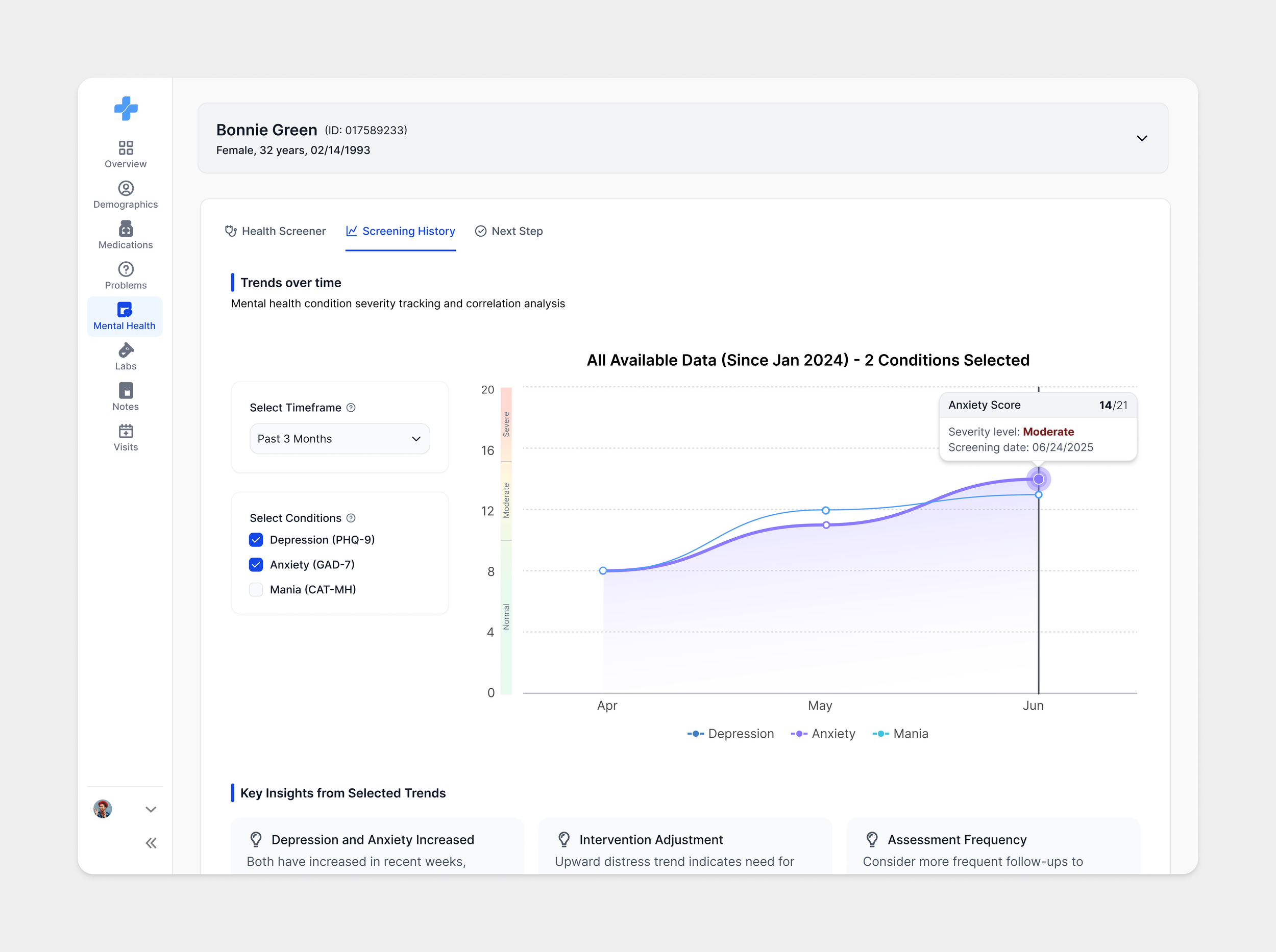
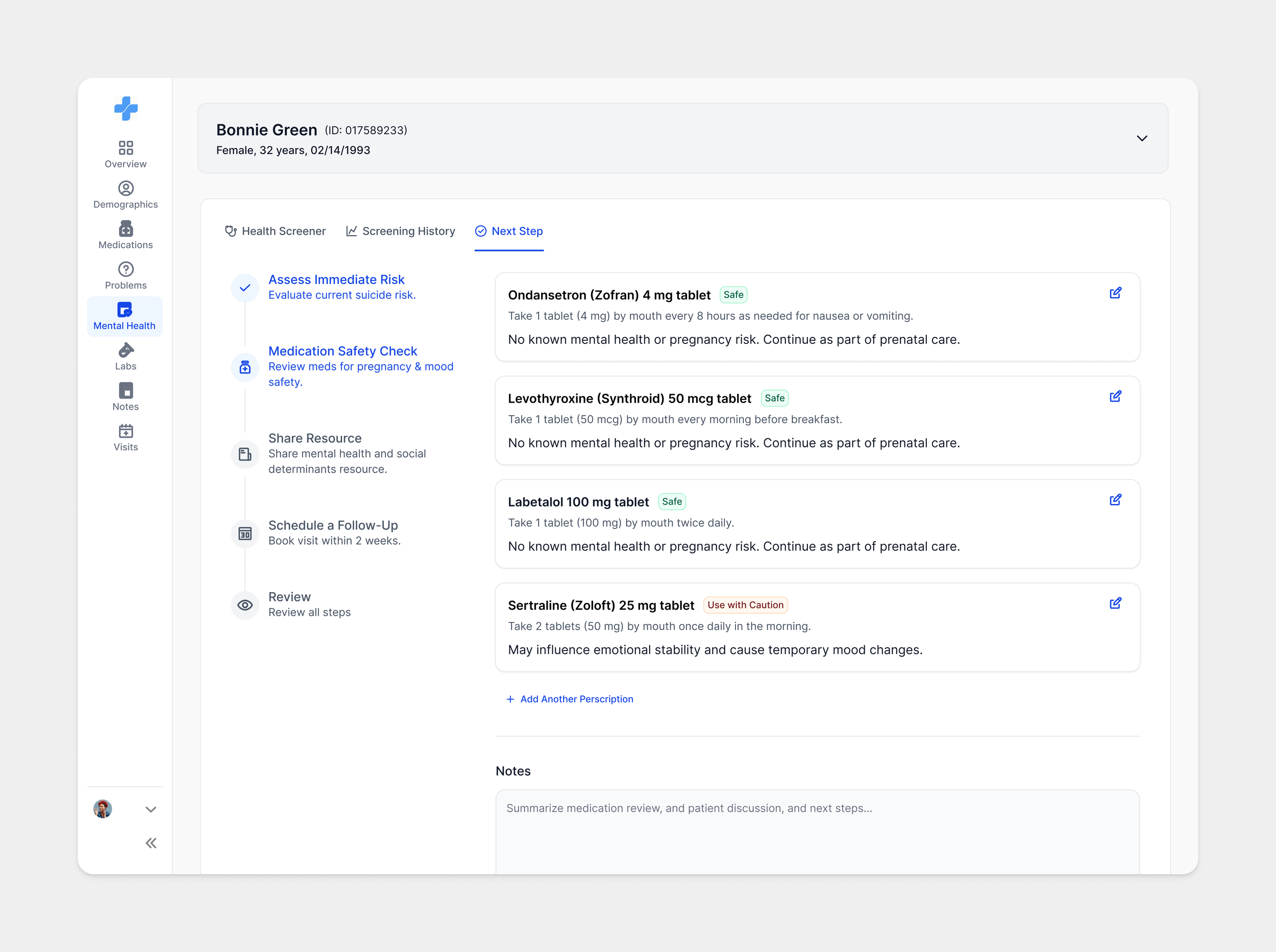
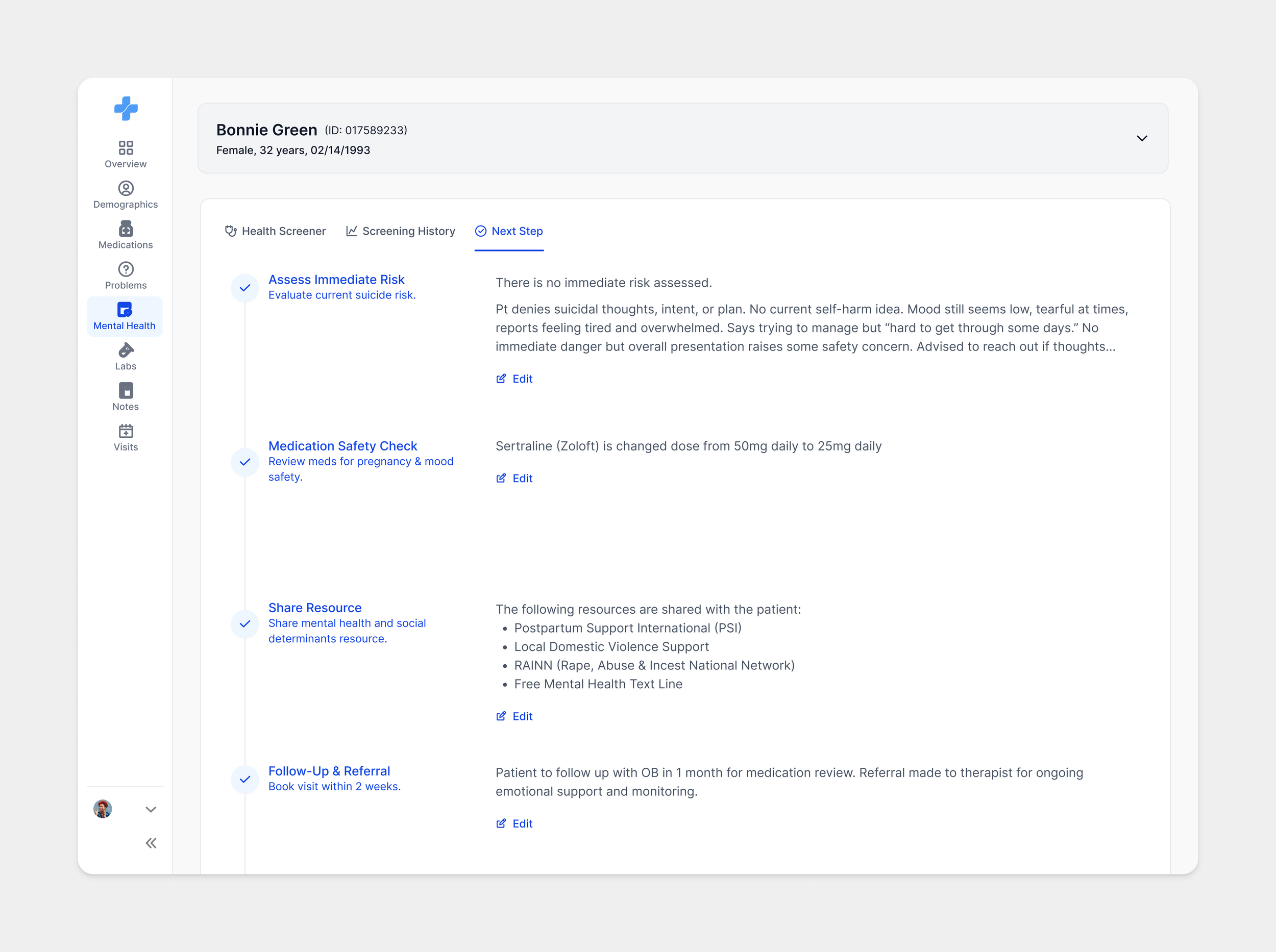
Clinexi is an independent healthcare design concept exploring how digital tools can better support maternal mental health screening and clinical decision-making. Developed by a team of four female designers, the project reimagines how healthcare providers review screening results, understand patient history, and navigate potential next steps within existing clinical workflows.
The concept focuses on making complex health information easier to interpret and act upon, while reducing the cognitive burden on medical professionals. Recognized with an iF Design Award and a Red Dot Design Concept Award in 2026, Clinexi is currently a completed design concept, and the team is open to future opportunities to explore its development with healthcare partners.
Tell us a bit about your background and your projects so far.
I'm a product designer focused on simplifying complex systems and creating more human-centered experiences. My background is in graphic design, and my work has evolved from consumer-facing products to enterprise product design. Today, I design internal tools for the aviation industry, focusing on improving operational workflows and helping different teams work more effectively together.
Outside of my professional work, I also explore how design can address issues I care about personally. Together with three other female designers, I developed Clinexi, a maternal mental health design concept that explores how better healthcare workflows and information design could support medical professionals.
Although my projects span different industries, what connects them is my interest in understanding how things work, finding opportunities to improve them, and making people's experiences a little easier.
How did you get into this industry? Has it been easy or challenging?
My path into product design wasn't entirely linear. I studied graphic design in college, and it was actually one of my professors, Brockett Horne, who encouraged me to participate in a hackathon. That was where I first discovered UX design and started to realize how many different directions a design career could take.
I went on to work on consumer-facing products early in my career. While I enjoyed the creative side of the work, I gradually realized that optimizing for metrics like clicks and engagement wasn't always what made me feel most fulfilled. I've always been someone who enjoys figuring out how things could work better, even in everyday life. But I never really thought of that as a professional strength until I became interested in enterprise design. I realized that I genuinely enjoyed understanding complicated workflows, connecting the dots between different teams, and finding ways to make things simpler and more efficient.
Making that transition wasn't particularly easy. In my experience, the product design job market has become increasingly specialized, and employers often look for experience in a very specific industry or type of product. Even moving between different areas of enterprise software can be challenging. I had some exposure to enterprise design during an internship, but I knew I needed to build more relevant experience. So I took on an independent enterprise-focused project to strengthen my skills and portfolio, and gradually made my way into the field.
Looking back, it was a process of exploration rather than a perfectly planned career path. But I'm glad I made that transition because I discovered a kind of design work that I genuinely enjoy.
How long did it take you to get where you are now? What was the biggest obstacle?
My journey in product design has taken shape over the past four years, through graduate school, different projects, and a lot of exploration.
One of the biggest challenges I've encountered in enterprise design is balancing efficiency with people's existing habits. Some internal systems have been around for decades, and employees have developed their own ways of working around them. A redesigned workflow might be more efficient, but that doesn't necessarily mean users will immediately feel comfortable with it or be willing to change how they've worked for years.
Another challenge is that you're rarely redesigning just one product. Often, you're rethinking an entire workflow, including how different teams communicate, share information, and make decisions. Even when users respond positively to a proposed solution, technical limitations, business priorities, and organizational dependencies can make implementation difficult. I've learned that coming up with an ideal solution is very different from making it happen.
My approach is to balance a long-term vision with realistic, incremental improvements. I often organize and facilitate workshops where I work with stakeholders to prioritize features, break down larger ideas into manageable phases, and align on what belongs in the MVP, post-MVP, and North Star vision.
For me, one of the most important parts of enterprise design is not just imagining a better system, but finding a realistic way to help people and organizations get there.
What are your biggest achievements to date?
Some of my most meaningful achievements as a designer have come from working directly with users.
During an enterprise redesign project, I worked with employees who had relied on the same system for over 15 years. Some were initially hesitant about changing workflows they were so familiar with. Through multiple rounds of user feedback sessions and design iterations, we gradually explored improvements while helping users become more comfortable with new ways of working.
I still remember one user telling us how excited they were to use the new tool and thanking us for continuously listening to their feedback and incorporating it into the design. That moment meant a lot to me. Seeing someone become genuinely excited about a new approach they were initially unsure of reminded me why I enjoy being a product designer.
Outside of my professional work, I'm also proud of Clinexi, a maternal mental health design project I developed with three other female designers. In 2026, it received both an iF Design Award and a Red Dot Design Concept Award. Having a project that addresses an issue I care about personally receive international recognition has encouraged me to continue exploring how design can contribute to social impact.
What projects are you currently working on?
I'm currently working on internal enterprise tools in the aviation industry, focusing on how different teams manage information, coordinate workflows, and collaborate across departments.
What makes these projects particularly interesting is the complexity of the systems behind them. A single workflow can involve frontline employees, office-based teams, and even external vendors, each with different responsibilities, needs, and ways of working. Many of these processes aren't fully documented, so a significant part of my work involves conducting research, talking to different stakeholders, and piecing together how things actually work across the organization.
The aviation industry also has incredibly detailed operational processes, with countless classifications, exceptions, and edge cases to consider. I enjoy the challenge of untangling that complexity, understanding how everything connects, and translating it into experiences that are easier for people to navigate and use.
One project I've also worked on outside of my professional role is Clinexi, which grew out of my interest in maternal mental health during my undergraduate studies. I first explored the topic through a patient-facing design project, and later revisited it with my team from a healthcare provider's perspective. Clinexi is currently a completed design concept rather than a product in development, but we're open to future opportunities to collaborate with organizations interested in exploring it further.
Is the #WomenInTech movement important to you, and if yes, why?
#WomenInTech is important to me because I believe women should have equal opportunities to pursue careers that offer financial independence, influence, and leadership. Many of the most powerful and highly compensated roles have historically been dominated by men, while women have often been encouraged toward a narrower set of career paths. I don't think those expectations should determine what anyone feels they can achieve.
Technology is an industry with enormous opportunities, and I want to see more women not only entering the field, but also growing into positions where they can make important decisions and shape its future.
I also believe that when more women enter an industry, the industry itself can begin to change. Different experiences and perspectives can bring attention to problems and needs that might otherwise be overlooked. Having women involved in building products, leading teams, and making decisions can help create technology that better serves a wider range of people.
To me, #WomenInTech is about both opportunity and impact. Women deserve the chance to build ambitious careers and have a real voice in shaping the industries they work in. And I believe progress happens gradually, as more women enter these spaces, support one another, and help create opportunities for the next generation.
What will be the key trends in your industry in the next five years?
I think AI will be one of the biggest forces shaping the product design industry over the next five years, but I don't think it's necessarily changing the fundamental problems we're trying to solve. What's changing is how we approach and build solutions.
In enterprise environments, there are still so many inefficient workflows. Some tasks don't even require AI to improve; simple automation could already eliminate hours of repetitive manual work. I think there's still an enormous amount of opportunity to make these systems better, whether through automation, AI, or simply more thoughtful design. Ideally, that would allow people to spend less time on mechanical tasks and more time on work that requires human judgment, creativity, and care.
As a designer, I've also been surprised by how quickly AI tools are improving. Earlier this year, I experimented with AI-generated designs and wasn't particularly impressed. I actually stopped using them for a while. But just a few months later, I tried again and found that the results had improved dramatically, especially during early design exploration. AI has already made that part of my workflow much faster, even though I still prefer to refine more detailed, high-fidelity designs myself.
That experience changed how I think about the future of design. I believe AI will continue lowering the technical barriers to creating things, whether that's designing interfaces, writing code, or building prototypes. We may see more hybrid roles emerge across product, design, and development, but I don't necessarily think that means designers will disappear. Instead, I think the skills and responsibilities of designers will continue to evolve.
As AI makes execution easier, knowing what to build and why becomes even more valuable. Understanding users, identifying the right problems, making thoughtful decisions, and setting product priorities are skills I believe will matter even more in the future. Personally, I'm excited about that shift.
What is the most important advice you could give to anyone starting a career in this industry?
My biggest advice would be to develop your communication and storytelling skills alongside your design skills. In school, we spend a lot of time learning how to research, design, and create good solutions, but I don't think we always emphasize enough how important it is to communicate those ideas effectively.
In the workplace, you're constantly presenting ideas to product managers, developers, stakeholders, and leadership. Being able to tell a compelling story about the problem you're solving, why your approach makes sense, and what value it could bring is incredibly important. A great design doesn't always speak for itself. You need to help people understand it and get them on board.
My second piece of advice is to stay open-minded about new technologies and ways of working. AI is changing the tools we use and how we create things. When the tools change, the advantage doesn't always belong to the person with the most years of experience. Someone who's curious, adaptable, and willing to experiment may discover new ways of working that even more experienced professionals haven't explored yet.
I know the job market can feel especially competitive for new graduates, but I think this is also an opportunity. You might not be able to compete on years of experience, but you can bring fresh perspectives, new skills, and a willingness to challenge established workflows. You don't need to chase every new trend, but staying curious and continuously learning can become one of your greatest strengths.
Who are three inspirational women in your respective industry you admire?
Three women who inspire me are Holly Li, Lisa Su, and Brockett Horne, each for different reasons.
Holly Li is someone who has inspired me personally in my career. I first learned about her when I watched her introduce Figma Make at Config. I was impressed by her work, but what stayed with me even more was learning about her career journey afterward. I admire how proactive she's been about seeking opportunities, stepping into unfamiliar areas, and pushing herself to grow rather than waiting for the perfect opportunity to appear. Her story reminds me that career growth isn't always about following a predefined path. Sometimes it's about having the courage to pursue something new.
Lisa Su, the CEO of AMD, inspires me through her technical expertise, leadership, and determination. I admire how she has built a remarkable career in a traditionally male-dominated industry while helping lead major technological innovation. To me, she's an example of a woman who isn't just participating in the technology industry, but actively shaping its direction.
Brockett Horne, one of my undergraduate professors at MICA, has had a lasting influence on me, both as a designer and as a person. She always encouraged students to explore new ideas and opportunities, and she was incredibly generous with her time and support. Her encouragement played an important role in helping me discover UX design, but what has stayed with me most is the example she set as a mentor. Today, as I become more involved in design mentorship and volunteering, I hope to offer others the same encouragement and support that she gave me.
Connect with Yiwen Yu on LinkedIn.
Find out more about her work on her website.