
WoW Woman in Mental Health - Iris Shtein, co-founder and CEO of Mentaily
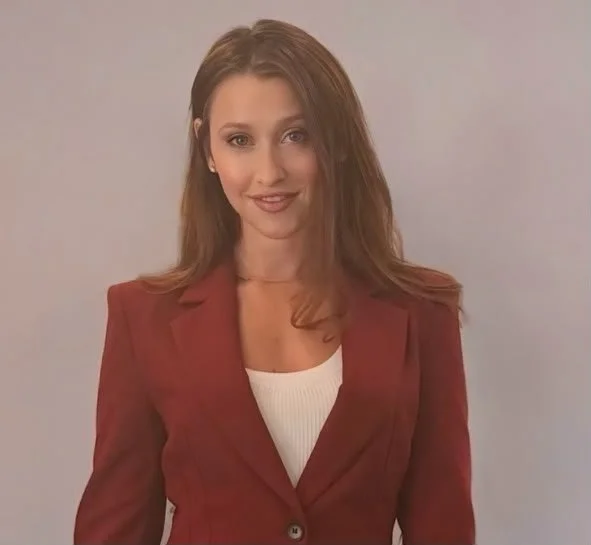
Iris Shtein is the co-founder and CEO of Mentaily, a clinical AI company building tools to expand mental-health capacity and improve access to timely assessment.
A registered nurse by training, she has spent her career at the intersection of clinical care, health-system operations, digital health, and innovation. Before founding Mentaily, Iris served as Director of Strategic Partnerships at ARC Innovation at Sheba Medical Center and previously led Sheba's Remote Care Hub, helping develop and scale telemedicine and digital-health initiatives. She holds an MBA in Healthcare Innovation, an MPH, and a BSN. At Mentaily, she leads the development and commercialisation of LIV, an AI-powered clinical decision-support platform for structured mental-health intake, assessment, triage, and risk identification. Mentaily's work has been recognised with first place in the mental-health track of the 2024 Reboot/ynet health initiative competition, and LIV has progressed from clinical development to real-world government and healthcare deployment. Iris is now focused on expanding Mentaily in the United States through clinical, academic, and federal collaborations. Based in Maryland, in the Washington, D.C. area, she is passionate about building technology that gives clinicians more capacity while keeping human judgment and patient care at the center.
Mentaily is a clinical AI company expanding mental-health capacity through intelligent, structured assessment and triage. Its platform, LIV, conducts conversational psychiatric intake and produces clinician-ready summaries, risk signals, symptom profiles, and decision support before the clinical encounter. LIV is designed to help clinicians work more efficiently while preserving clinical oversight and patient safety. The technology has been clinically validated and is being deployed across government and healthcare settings, with growing activity in the United States. Mentaily's mission is to make high-quality mental-health assessment more accessible, scalable, and consistent for patients, clinicians, and health systems worldwide.
Tell us a bit about your background and your projects so far.
I started my career as a nurse, and that clinical background still shapes the way I think about technology. I spent years inside healthcare systems before moving into digital health and innovation at Sheba Medical Center, where I eventually led the Remote Care Hub and later strategic partnerships at ARC Innovation. That gave me a practical view of where technology can genuinely help clinicians, and where it can create more noise if it isn't built around real workflows.
The idea behind LIV actually started several years before Mentaily. We saw a very clear bottleneck at the front door of mental-health care: clinicians were spending enormous amounts of time collecting structured information before they could begin the part of care that truly requires human judgment. At the time, the technology was not mature enough, so the idea waited. After October 7, the need became much more urgent, and the rapid advances in generative AI made it possible to revisit the concept. That work eventually became Mentaily. Today, my main focus is building and scaling LIV as a clinically responsible AI tool that can help health systems expand mental-health capacity without trying to replace clinicians.
How did you get into this industry? Has it been an easy industry to get into, or have you had many challenges?
I entered health tech from the clinical side rather than the technology side, and I actually think that has been one of my biggest advantages. When you have worked inside healthcare, you understand very quickly that a great algorithm is not enough. It has to solve a real problem, fit into a workflow, earn clinicians' trust, protect patients, and prove that it works.
It has definitely not been an easy industry. Healthcare moves more slowly than technology, while AI is moving faster than almost anything we have seen before. That tension creates a lot of challenges: evidence, regulation, privacy, security, integration, procurement, reimbursement, and — especially in mental health — trust. But I also think that is what makes the work meaningful. If you can navigate those challenges responsibly, the impact can be enormous.
How long did it take you to be where you are now? What was the biggest obstacle? What are the challenges of being in the industry you are in?
It took me many years of working across clinical care, telemedicine, innovation, and partnerships to get to the point where I could build Mentaily. The company itself has moved very quickly, but it sits on top of a lot of experience and a lot of lessons learned.
The biggest obstacle has been turning an exciting technology into something a clinician and a health system can actually rely on. In healthcare, you cannot stop at 'the AI can do this.' You have to validate it, define its boundaries, build safety mechanisms, understand the regulatory path, and show exactly how it improves care in the real world. One of the biggest ongoing challenges is balancing speed with responsibility: moving fast enough to take advantage of what AI can now do, while being careful enough to deserve the trust of clinicians and patients.
What are your biggest achievements to date?
One of my biggest achievements is seeing LIV move from an idea inside a health system to a clinically validated product that is now being used in real-world settings. Mentaily's clinical work has shown more than 90% agreement with psychiatrists across key assessment areas, and the product has progressed to national-scale government deployment in Israel.
I am also very proud that we have been able to build meaningful U.S. collaborations, including work with Walter Reed and the Henry M. Jackson Foundation supported by the BIRD Foundation, focused on adapting LIV for PTSD assessment and clinical support. And on a personal level, building a strong team around this mission - with so many talented women in clinical, product, and leadership roles - is something I am especially proud of.
What are the projects you are currently working on?
Right now, a major part of our work is scaling LIV across different clinical environments and populations. In Israel, we are expanding real-world deployments. In the U.S., we are working with healthcare organisations, academic groups, and federal partners on pilots and research, including PTSD and suicide-risk-related use cases.
At the same time, we are continuing to develop the product itself: improving longitudinal follow-up, making the system easier to integrate into clinical workflows, expanding language and cultural adaptation, and strengthening the safety and clinical decision-support layers. The larger goal is to build a platform that can support people from the first point of contact through follow-up, while giving clinicians structured information that helps them make faster, better-informed decisions.
Is the #WomenInTech movement important to you and if yes, why?
Yes, very much. For me, supporting women in technology and healthcare has to be something you actually do, not just something you talk about. Today, around three-quarters of Mentaily's team are women, and most of our managers and leaders are women. I am incredibly proud of that - not because we set out to hit a number, but because we have been able to build the company with exceptionally talented women across clinical, product, business and leadership roles.
This is something I cared about long before Mentaily. At Sheba Medical Center, I worked together with an amazing group of female physicians on SheRocks, an initiative focused on advancing women physicians into leadership positions and increasing the representation of women in management. That experience reinforced for me that supporting women cannot stop at encouragement - it has to mean creating real opportunities, visibility and pathways into leadership.
Women make up such a significant part of the healthcare workforce, yet they are still underrepresented in many of the positions where technology, capital and strategy are shaped. I genuinely believe women do extraordinary work, and I feel a responsibility to help create an environment where they can lead, grow and have a real seat at the table.
What will be the key trends in your industry in the next five years and where do you see them heading?
I think we are going to see a shift from AI as a standalone chatbot to AI as embedded clinical infrastructure. The most valuable systems will not simply 'talk' to patients; they will collect information in a structured way, reason within defined clinical boundaries, integrate with existing records and workflows, and help clinicians make decisions.
I also expect much more focus on continuous and longitudinal assessment rather than one-time snapshots, as well as greater use of multimodal data. At the same time, safety, validation, governance, and transparency will become real competitive advantages. In mental health specifically, I do not believe the future is AI replacing therapists or psychiatrists. I believe the future is AI extending their capacity - doing the work that technology can do well so clinicians have more time for the work that only humans should do.
What is the most important piece of advice you could give to anyone who wants to start a career in this industry?
First, understand that it is going to be a roller coaster. You will probably hear "no" much more often than "yes," especially in healthcare. Do not let that stop you. Every no teaches you something—about the product, the market, the timing, or sometimes simply about who the right partner is. And eventually, the yeses come.
Healthcare is a long game. Decisions take time, evidence takes time, trust takes time, and sometimes even getting an answer takes time. You need patience, resilience and a lot of persistence. At the same time, start with the problem, not the technology. Spend time with the people who actually live with that problem - patients, clinicians, nurses and health-system leaders - and understand what really needs to change.
In healthcare especially, do not fall in love with a demo. Fall in love with solving something that genuinely matters. Build something people can trust, keep learning from every rejection, and remember that credibility and progress compound over time.
Who are three inspirational women in your respective industry you admire?
There are many women I admire, but three who particularly inspire me are Dr. Alona Barnea, Dr. Marjan Holloway and Judy Faulkner.
Dr. Alona Barnea is someone I know personally and deeply admire. She is a neuroscientist and currently leads the Neurotechnology Division within Israel's Directorate of Defense Research & Development. She works at the intersection of neuroscience, AI, neurotechnology and defense innovation, and has also been leading work focused on mental resilience. What inspires me most is her ability to take very sophisticated science and push it toward real-world impact. She is an incredibly senior woman in a traditionally male-dominated defense and technology environment, and I admire both her scientific depth and the courage with which she continues to open new frontiers.
Dr. Marjan Holloway is another woman I have had the privilege of getting to know through our work in the U.S. She is a clinical psychologist, professor and one of the leading voices in military suicide prevention. She directs the Suicide Care, Prevention and Research Initiative at the Uniformed Services University and also serves in senior research leadership roles at USU and the Center for Deployment Psychology. What I admire most about Marjan is the combination of extraordinary scientific rigor with a deeply human mission. Her career is about translating research into interventions, training and practice that can genuinely save lives, particularly for service members and their families.
Judy Faulkner is an inspiration to me as a founder and CEO. She built Epic from a small startup into one of the most consequential healthcare technology companies in the world and has led it for nearly five decades while keeping the company private, independent and deeply focused on patients and healthcare organizations. I admire the long-term conviction behind the way she has built the company - investing in R&D, staying close to clinical workflows and resisting the pressure to chase every short-term trend. As Epic expands the use of AI across healthcare, her career is a powerful reminder that the most meaningful healthcare companies are built over years, with patience, focus and an almost obsessive commitment to solving real problems.
Find out more about Mentaily on their website.