WoW Woman in AI - Shubhi Rao, founder and CEO of Uplevyl
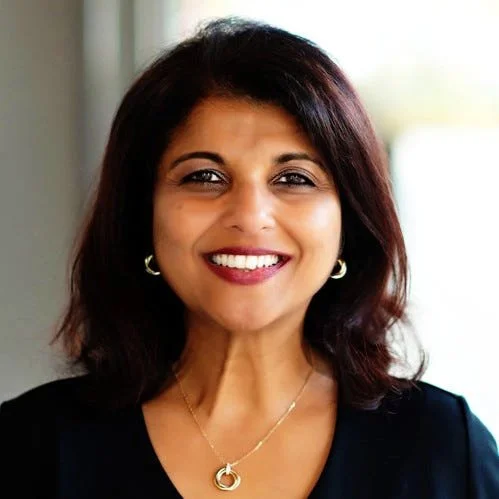
Shubhi Rao is the Founder and CEO of Uplevyl, an AI company building secure, women-centered intelligence hubs that transform authoritative data into actionable insights, collaboration tools, and learning programs. A STEM-trained entrepreneur and AI practitioner, she works at the intersection of gender and technology, with deep expertise in artificial intelligence, MLOps, retrieval-augmented generation, knowledge graphs, model governance, and data privacy.
Previously, Shubhi held senior leadership roles at Alphabet/Google, Tesco, PwC, Ford Motor Company, Tyco International, and Cardlytics, where she served as CFO/COO of Dosh before its exit to Cardlytics. She was the first woman and person of color to serve as Treasurer at both Alphabet/Google and Tesco, and she has also served on the boards of the Center for Global Development, Open Lending, and the International Center for Research on Women, along with advisory roles at the Federal Reserve Bank of San Francisco.
Based in Austin, Texas, Shubhi is also a member of UNESCO’s Women4Ethical AI Platform Executive Bureau and has been recognized as one of the Women of Influence in Central Texas. She holds a B.S. in Computer Science Engineering from Michigan State University and an MBA in Finance from the University of Michigan.
Uplevyl is the first female-forward tech ecosystem — an AI-powered, multi-tenant platform built to partner with corporates and women’s organizations. While organizations bring their communities, Uplevyl provides the infrastructure: generative AI trained on women data sets, personalized experiences, gender-literate AI agents for both members and administrators, data-driven insights, intelligent content systems, and private engagement hubs. Whether it’s acquiring new skills, building networks, or navigating career, health, and wealth choices, Uplevyl meets women where they are — and helps move them forward. If AI is becoming the next great brain, Uplevyl is building one that finally sees and serves women — not as an afterthought, but as the starting point.
Tell us a bit about your background and your projects so far.
Numbers are my first language. Before I understood much about the world, I understood that capital moved, that patterns revealed themselves in data, and that if you could read those patterns you could see opportunity. I have always asked a lot of questions, built things, and taken calculated risks — that combination gave me the chance to work across diverse sectors — Ford, PwC, Tesco, Google. Automotive, professional services, retail, tech. Corporate boards and nonprofit boards. First person of color and woman to sit in the treasurer’s seat at both Tesco and Alphabet.
The longer I worked with data and capital, the more clearly I saw a gap so consistent it had to be structural. The data we were building AI on didn’t include women. Not meaningfully. The lived experience, the financial behavior, the career trajectory, the health reality — absent, aggregated away, or simply never collected. Five years ago, before AI became the word on every stage and every deck, I started building to fill that gap. That work became Uplevyl.
The system was designed overwhelmingly to benefit a world built without women as a primary use case. That is what my career is now entirely about: creating digital infrastructure so women can thrive.
How did you get into this industry? Has it been an easy industry to get into or have you had many challenges?
Thirty years of career prepared me for this moment. As a founder, you have to build the company, build the product, and sell the product — and somewhere across Ford, PwC, Tesco, and Google, I built all of those muscles. Computer science engineering gave me the technical foundation. An MBA sharpened the business instincts. And a career that kept pulling me toward fintech and capital markets gave me the domain depth to know exactly what I was building when I started Uplevyl.
Easy or hard is subjective. It depends entirely on your reference point.
My father came to the United States on a cargo ship. He painted the ship every time it docked to pay for his passage. He dug trenches at night and held multiple jobs to put himself through school and support his family back in India. So, is being a founder hard? Absolutely. And relative to what my father navigated, I wake up every day grateful — grateful for the opportunity, for the problem worth solving, and for the remarkable humans I get to work with who believe we can genuinely accelerate the advancement of women through technology.
How long did it take you to be where you are now? What was the biggest obstacle? What are the challenges of being in the industry you are in?
Five years in, and there is no blueprint for what we are building. That is both the challenge and the thrill of it.
To train our models, we had to create the data ourselves. We built first-party data across scores of topics spanning women’s professional, financial, and personal lives — going directly to women experts, interviewing them, capturing their knowledge. Think of it as the Reddit model that OpenAI used to train its models, applied specifically to the lived experiences of women. That data didn’t exist. We built it.
We have been deliberate about external capital, staying scrappy, which demands a particular kind of discipline. In a space moving this fast, you have to keep your north star firmly in front of you while staying agile enough to move with it. The biggest risk is hardening too early — locking in systems and processes before you truly understand where the ground is settling. So we stay light, stay curious, and stay focused.
I am also fortunate to have investors who genuinely believe in what we are building. That belief matters more than most people realize, especially when you are pioneering something the market hasn’t seen before.
What are your biggest achievements to date?
My son. That is my biggest achievement. Watching him grow into this kind, smart, beautiful human being — nothing comes close.
After that, I am genuinely humbled watching something that started as a tiny kernel of a thought grow into what Uplevyl is today. And I want to be clear that that growth happened because so many hands jumped on this bus. The team, the investors, the clients, the believers. It touches me deeply that so many people saw what we were building and said yes.
And then there is the work itself. Building AI for good, where trust and security are not features we bolted on but are native to the technology stack, to our processes, to our DNA — that makes me proud. In an industry where those things are often an afterthought, we made them the foundation from day one.
What are the projects you are currently working on?
Uplevyl continues to be the center of everything. We are deepening our AI capabilities across women’s professional, financial, and personal lives, building on the first-party data foundation we spent years constructing. The model gets smarter as more women engage with it, and that compounding effect is something we are leaning into hard.
Beyond the product itself, we are investing in research around the impact of AI on women and the broader workforce — because the question of who AI serves is not academic; it is urgent. The data gap we set out to close five years ago is now a mainstream conversation, and we intend to stay at the leading edge of it.
We are also building partnerships with organizations and leaders who share our conviction that AI should accelerate women, not leave them behind. That work is as much about the ecosystem as it is about the product.
The through line across all of it is the same one it has always been — digital infrastructure that actually works for women.
Is the #WomenInTech movement important to you and if so, why?
Deeply. And I want to be precise about why.
Technology is no longer a sector. It is the infrastructure that every other sector runs on. It shapes how we work, how we borrow, how we heal, how we learn, how we age. If women are not in the rooms where that infrastructure is designed and built, we end up with systems that treat half the population as an edge case. We have seen what that looks like. We are living inside it.
So the #WomenInTech movement matters to me because representation is not the goal — it is the mechanism. When women are in those rooms, the questions change. The data changes. The products change. The infrastructure changes. And the world that runs on that infrastructure changes with it.
That is the work. That is why I get up in the morning.
What will be the key trends in your industry in the next five years and where do you see them heading?
The next five years will be defined by one question: who does AI actually serve?
We are at an inflexion point. AI is automating the very roles women have been disproportionately channeled into for generations — first in homes, then in offices. The maintenance work. The repeatable work. The work the economy depended on and refused to see. That is not a coincidence. It is the compounding interest on very old decisions.
The risk is a K-shaped economy that accelerates wealth upward while displacing women at the bottom of it. The opportunity — if we are intentional — is to redirect that human capacity toward the work the world actually needs done. Climate. Health. Food security. Education. Problems that are nowhere close to being solved and are starving for exactly the skills being automated out of the corporate sector right now.
AI will not fix this on its own. The data it runs on, the products it powers, the infrastructure it becomes — all of it reflects the choices of whoever is in the room when it gets built. That is why representation is not a diversity talking point. It is a design requirement.
The next five years will either widen the gap or begin to close it. I am building for the latter.
What is the most important piece of advice you could give to anyone who wants to start a career in this industry?
Ask more questions than you think you should. The people who move fastest in this industry are not always the ones who know the most — they are the ones who stay curious longest and act before they feel ready.
Get comfortable with not having a blueprint. I built Uplevyl in a space that had no roadmap, no existing data, no obvious path. That is not a bug. That is where the real opportunity lives — in the problems everyone else walked past because they looked too hard or too undefined.
And find your north star early and protect it fiercely. The industry moves fast, the noise is constant, and there will be no shortage of people telling you what you should be building, raising, or chasing. The discipline to stay focused on what actually matters — that is the skill no accelerator teaches and no investor can give you.
Who are three inspirational women in your respective industry that you admire?
So many of us get to do what we do because we stand on the shoulders of giants — known and unknown.
I think about the countless women whose names I will never know, whose work I walk past in museums and encounter in everyday life. The exquisite Arabic geometric art. The intricately woven baskets. Work of such precision and beauty that it takes your breath away, created by women whose names history never bothered to record. They built and created and contributed anyway.
I think about the early women botanists — permitted by a world that excluded them from formal science to do exactly one thing: go into the garden, study flowers, sketch them, document them. And within that impossibly narrow lane, they produced work that advanced human knowledge. They did not wait for permission to expand. They worked with what they were given and made it count.
I think about Rosa Parks. Fearless. Gritty. Someone who understood that a single act of refusal, held with absolute conviction, could move an entire society.
These women — named and unnamed, celebrated and forgotten — are why I get to build what I build. That is not lost on me for a single day.