WoW Woman in Health Tech I Caroline McCallum, co-founder of Verbo
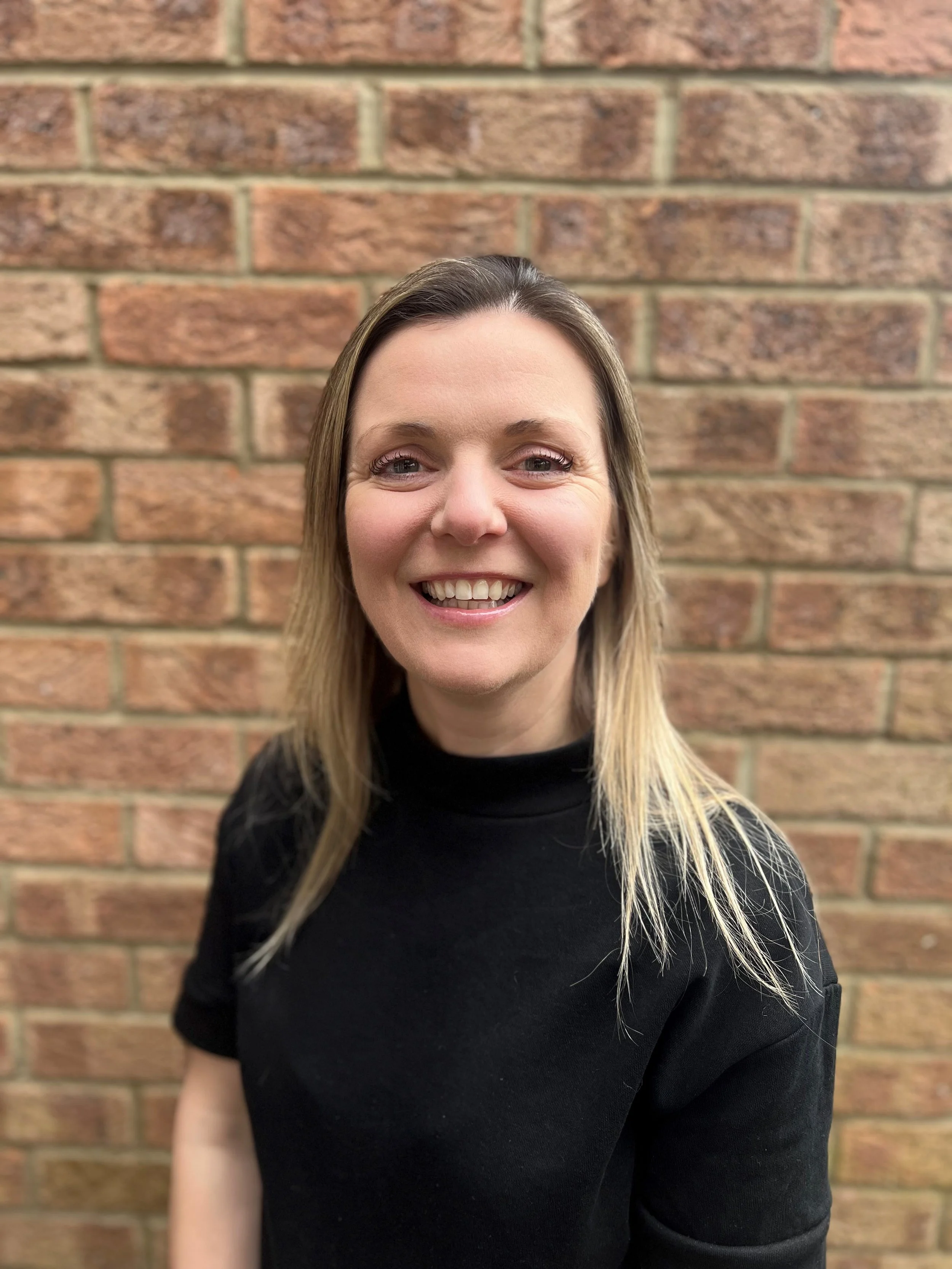
Caroline McCallum has worked as a children’s Speech and Language Therapist (SaLT) in London for almost fifteen years and has worked across the NHS, Local Authorities and Independent Practice. Caroline currently works as a practicing clinician at Homerton Healthcare NHS Foundation trust.
As co-founder of Verbo, Caroline collaborated with Blum Health Ltd. to successfully secure four grants, resulting in the development of Verbo, a commercially successful online speech and language therapy toolkit. Verbo aims to support the 1.9 million children with communication needs and responds to the nationwide shortfall of SaLTs. The platform also aims to build capacity and increase efficiencies for therapists.
Since launching in late 2022, Verbo has been recognised by x2 HSJ awards, x2 Digital Impact awards and most recently in November 2025, x2 Children and Young People Now Awards. Caroline’s vision is to reduce the health inequalities within SLCN support so that all children can maximise their communication potential.
Verbo is an online speech and language and occupational therapy toolkit for education settings to support children aged 2-18 years. Developed by Speech and Language and Occupational Therapists at Homerton NHS Healthcare Trust, Verbo upskills and empowers education-based professionals so they can help all pupils develop communication and independence skills. The aim is to provide instant access to screening tools and resources to equip staff with SaLT and OT support through a virtual platform, enabling them to deliver preventative care in the community that can help every child maximise their potential without the limitations of staffing capacity or specialist expertise.
Tell us a bit about your background and your projects so far.
I am currently working as a Clinical Leads Speech and Language Therapist (SaLT) at Homerton Healthcare NHS Foundation Trust. My clinical specialism is Autism. Across the years I have worked with children in early years through to teenagers in secondary schools. In Hackney we are a community-based service, supporting children in their community education settings. It is a great team, where ideas and projects are always supported - which was lucky for me!
After getting on the Clinical Entrepreneur Programme during Covid, and watching the impact of lockdown on children’s development alongside the SaLT recruitment crisis, I developed the idea of an online toolkit which we later named Verbo. I was fortunate enough to acquire grant funding to enable a team to be put together, and the software to be developed. Amazingly when we launched in October 2022 we were very quickly adopted by individual schools, local authorities, NHS teams and now an ICB. This market traction has enabled us to continue developing and enhancing Verbo. The platform is now in use in over 2000 settings, meaning that it is available to approx 600,000 children. More than 13,000 children are currently receiving bespoke support as a result of it, and over 12,500 members of staff are being helped to upskill in the area of children’s communication needs. It’s been an incredible journey!
How did you get into this industry? Has it been an easy industry to get into or have you had many challenges?
When I think about the industry, I feel there are two elements to my career. The first being my experience as a clinician and the second being the transition into innovation and the development of Verbo. When I look back to getting into SaLT and looking at the new graduates coming into the field now, I am struck by the need for increased awareness of the profession within local communities. There is a recruitment crisis and ever-growing waiting lists. During my Psychology undergraduate degree I was particularly interested in unpicking academic assessment of D/deaf children, but it was only when doing my dissertation and going into schools that I learnt about SaLT as a career option.
As for innovation, on reflection I have always been a member of the team throwing out ideas, and, perhaps similarly to the knowledge about SaLT as a career, I was not aware that ideas could become bigger within the NHS. I feel very fortunate to have discovered the NHS Clinical Entrepreneur Programme and had the support and advice of its mentors and other entrepreneurs to guide my journey. Although doing something for the first time is never a smooth journey! I am a huge advocate of Allied Health Professionals; to be bold and shout out about ideas and engage with innovation departments. There are so many incredible creative minds across our profession.
How long did it take you to be where you are now? What was the biggest obstacle? What are the challenges of being in the industry you are in?
The Verbo journey has taken several years of persistence. It has certainly been a roller coaster of a few years! I would say that one of the biggest challenges is that Verbo is a preventative tool and therefore stakeholders need persuading that preventative communication support isn’t a “nice-to-have”- it’s life-changing. Services very rarely commission preventative care, and the impact and change to a child’s life is not instantaneous. Within the healthcare and education sector it is paramount to find the right people, especially the ones who will champion change and prevention rather than treatment.
What are your biggest achievements to date?
In my career as a Speech and Language Therapist, it has to be this project- launch of Verbo. Seeing an idea develop into something tangible that continues to grow. Seeing the platform used in real education settings makes me feel very proud. As a therapist, working with the children is still the best part of the job. Having been able to build something that exponentially extends the reach of a SaLTs expertise to affect children who may not have otherwise received support is just incredible.
What are the projects you are currently working on?
We’re continuing to expand Verbo to be an NHS developed children’s multi-disciplinary toolkit. We are expanding the recently added OT content, and looking ahead to other disciplines such as dentistry and physiotherapy. We’re also wanting to improve access through the expansion of Verbo’s AI-driven translation to better support local and hard-to-reach communities.
Is the #WomenInTech movement important to you and if yes, why?
Absolutely. Representation isn’t just a buzzword - it changes outcomes. I am lucky enough to work in a clinical team of over 100 amazing women. The care, creativity and solution focused approach to their clinical work is inspiring. It was quite a shift moving to work with an all-male technical team. I hope that combining the two teams begins to bridge that gap and share skillsets. I want the next generation to see tech as a space where they belong and can thrive.
What will be the key trends in your industry in the next five years and where do you see them heading?
It is an exciting time to be working across health, education and technology. I can see some key trends for speech and language therapy to be an increasing shift to SaaS models to support care and enhance the capacity of the workforce. AI-driving change is already being seen in some areas to support children. I can see over the next five years there being a huge increase in the use of AI to generate therapy activities, games, and resources personalised to individuals to maximise engagement and ultimately progress.
What is the most important piece of advice you could give to anyone who wants to start a career in this industry?
Be bold, be brave and don’t stop yourself from thinking big. If you have an idea, don’t be afraid to explore it. Even something that feels small can affect big change. My biggest learning has certainly been to find your team. You don’t need to know everything - look to the experts around you for support. Building an idea can be so exciting, but there are certainly highs and lows where you need someone to lean on.
Who are three inspirational women in your respective industry you admire?
Tough question, there are so many, I have pulled a few from different areas:
Temple Grandin: Temple is an autistic woman. She is a professor of Animal Science and autism advocate. She revolutionised livestock handling systems while championing neurodiverse perspectives. As a visual thinker, she emphasises the power of clear, concrete communication. Her work reminds us that embracing different ways of thinking can lead to breakthroughs in design, technology, and human connection.
Marie Gascoigne: she has dedicated her career to improving outcomes for children with speech, language, and communication needs. She created the Balanced System® framework, which has transformed services across the UK by promoting integrated, evidence-based support. Through her consultancy and leadership, she has influenced national policy, empowered families and professionals, and driven systemic change that benefits thousands of children. Her blend of clinical expertise, strategic vision, and commitment to collaboration makes her a powerful advocate and change-maker in health and education.
Emily Rubin: is a pioneer for her work in autism support and speech and language therapy. As co-developer of the SCERTS Model, she has transformed how professionals approach social communication and emotional regulation, promoting evidence-based, relationship-focused strategies. Through her global training and advocacy, Emily bridges research and practice, empowering educators and families to create inclusive, individualised environments. Her commitment to neurodiversity and collaborative care makes her a leading voice in shaping compassionate, effective support for autistic individuals.
Why These Women Matter: Each of these trailblazers broke barriers in their own way - whether through science, technology, or advocacy. They remind us that communication is not just about words; it’s about creating access, understanding, and solutions that serve everyone. Their legacies continue to inspire innovators like Caroline and the Verbo team to build technology that bridges gaps and empowers people.
If you want to share your story with us and be featured on our WoW Women blog, get in touch.