
WoW Woman in Health - Irina Belenkaya, Head of Operations at CareTech Human
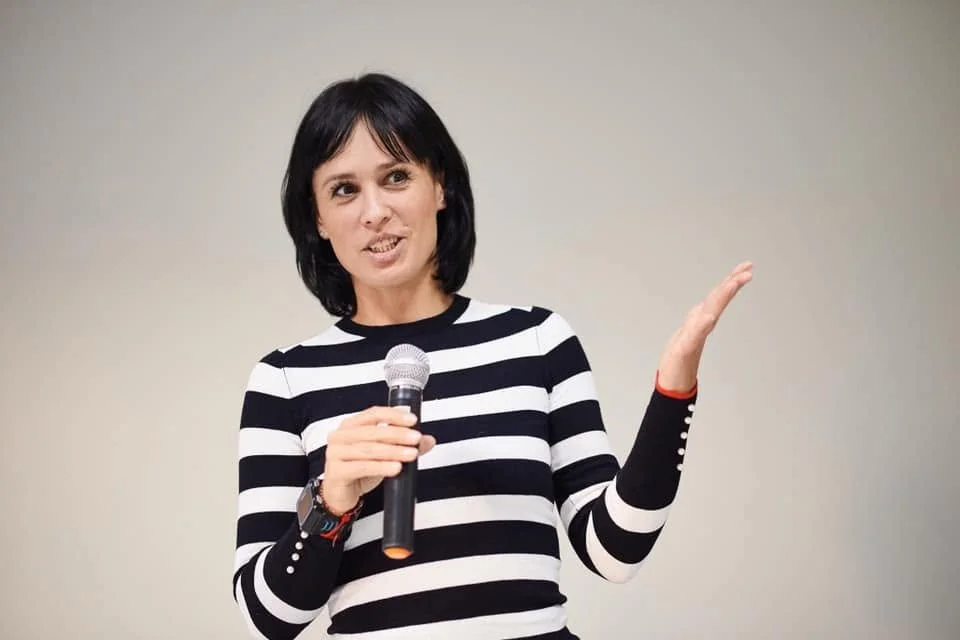
Irina Belenkaya is Head of Operations at CareTech Human, where she supports engineering, operations, and company growth. An engineer with an MBA, she is also a mother of two and a triathlete who has completed six full-distance IRONMAN races. Irina has worked in healthcare and digital health since 2018, first contributing to the digital transformation of Ukraine's healthcare system and later building new health-monitoring technology with CareTech Human. Her work includes fundraising and grant initiatives; during her time with the company, CareTech Human was selected as one of the first recipients of the Google for Startups Ukraine Support Fund and won the 2022 Infoshare Startup Contest. More than ten years in endurance sport taught her to value discipline, recovery, and data, but also showed her how much remains unknown about the female body. That gap now shapes both her work and her mission.
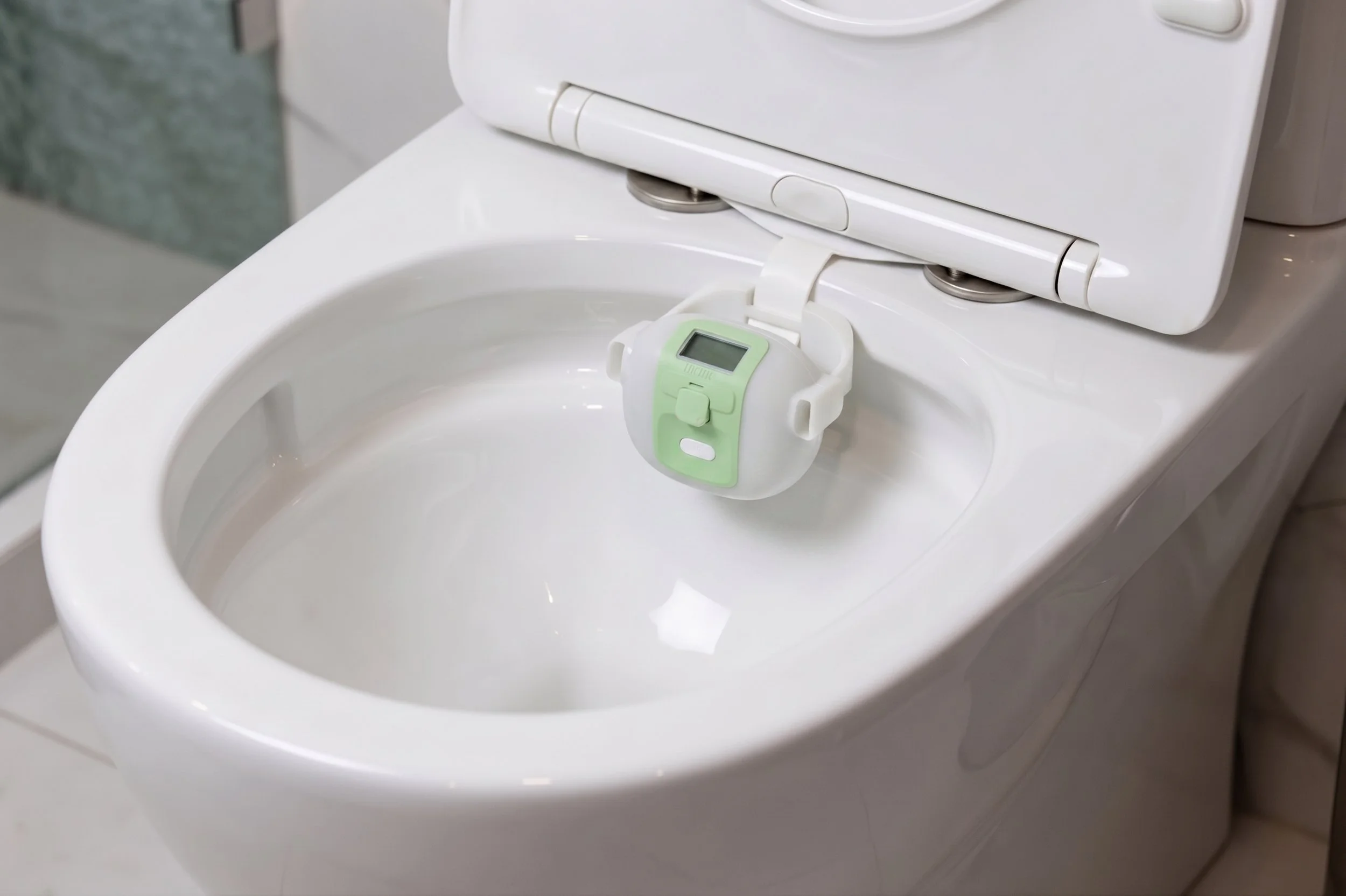
CareTech Human is developing Sniffer, a home health sensor that turns everyday bathroom visits into a new layer of health data. Mounted on the toilet, Sniffer works in the background to read chemical and urinary signals and reveal personal patterns. It helps people explore changes in hydration, metabolic recovery, digestion, urinary rhythms, and overall lifestyle balance, without anything to wear, collect, or log. Designed with privacy in mind, Sniffer uses no cameras or microphones and can support the whole household. Early Access is now open, with 300 places in the first production batch available for a fully refundable $30 deposit.
Tell us a bit about your background and your projects so far.
I often introduce myself through three parts of my life: I am a mother of two sons, an endurance athlete, and a woman building technology in healthcare. These roles may look separate, but for me they are deeply connected. Each has taught me to listen, adapt, and keep going when there is no simple answer.
I entered healthcare in 2018, when Dan Matsui, founder and CEO of CareTech Human, and I worked at Ukraine's State-Owned Enterprise eHealth and contributed to the digital transformation of Ukraine's healthcare system. It was an extraordinary experience. We saw that healthcare is never only about technology: it is about people, trust, habits, institutions, and the difficult work of making change useful in real life. Since 2020, I have been applying those lessons at CareTech Human, where we are developing passive technology that can help people understand their health through an ordinary daily routine.
How did you get into this industry? Has it been an easy industry to get into, or have you had many challenges?
Sport is what made health technology personal for me. I have trained in triathlon for more than ten years and completed six IRONMAN races. I could measure my pace, heart rate, distance, and sleep, yet I still had basic questions: Am I recovering well? What is changing inside my body? Should I train the same way today as I did last week? The data was plentiful, but the answers were often missing.
As a woman, I also realised that much of the available guidance was not really built around female physiology. A 2021 analysis of 5,261 publications across six leading sport and exercise science journals found that female participants accounted for only 34% of more than 12.5 million participants. Entering health tech has not been easy - the science is complex, development is slow, and trust must be earned - but this gap gives my work a very personal purpose. I want women to have information that reflects their bodies, not assumptions drawn mainly from research on men.
*Research reference: Cowley ES, Olenick AA, McNulty KL, and Ross EZ. “Invisible Sportswomen”: The Sex Data Gap in Sport and Exercise Science Research. Women in Sport and Physical Activity Journal, 2021; 29(2): 146–151.
How long did it take you to be where you are now? What was the biggest obstacle? What are the challenges of being in the industry you are in?
This has been a six-year journey, and it has taught me that deep tech rarely moves in a straight line. We have built several generations of prototypes, protected our ideas through patent filings, worked with engineers and physicians, tested assumptions, and started again whenever reality challenged the plan.
The biggest obstacle is turning a complex scientific idea into something people can use without becoming scientists themselves. A technology may work beautifully in a controlled setting, but real homes are unpredictable. At the same time, no one wants another device that demands constant attention. The challenge is to make sophisticated sensing feel almost invisible - and still produce information people and professionals can rely on.
What are your biggest achievements to date?
One of my proudest professional experiences was helping to transform healthcare in Ukraine. It showed me that even very complex systems can change when people share a clear purpose. At CareTech Human, I am proud that an idea once considered highly ambitious has earned the confidence of physicians, researchers, investors, and partners in both the United States and Europe.
There have been memorable milestones: receiving support from the Google for Startups Ukraine Support Fund and a Roddenberry Catalyst grant, joining Cornell University's Center for Life Science Ventures, and winning first place in the 2022 Infoshare Startup Contest, which drew 466 applications from 62 countries. But I value the journey behind them even more. We are a team with Ukrainian roots building in a field where almost everything is new. We do not have a ready-made map; we have belief in the technology and people willing to explore it with us.
Personally, I am proud of earning my MBA, raising two sons, and finishing six IRONMAN races. None of these achievements happened quickly. Together they taught me that ambition does not have to come at the expense of care, and that endurance is often simply the decision to continue.
What are the projects you are currently working on?
Today, we are developing a new way to learn from biological signals that people usually never see. The idea is simple to explain: what if an everyday bathroom routine could quietly reveal patterns connected to hydration, recovery, digestion, and overall well-being?
We are developing technology that requires no test strips, cameras, manual logging, or extra steps. It is designed to add a new layer of personal information - something that can complement wearables and help people notice how their own bodies change over time. We have now opened Early Access for Sniffer, where readers can learn more about the technology and join our early adopter community.
Is the #WomenInTech movement important to you and, if so, why?
Absolutely. Women need to be present not only as users of technology, but also as researchers, engineers, founders, investors, and decision-makers. The people in the room influence which questions are asked - and which problems remain invisible.
For me, women's health is not a marketing category. It is a reminder that technology designed for everyone must be tested with everyone. Our technology is intended for women and men, and our research must include both. Equality begins with representation, but it becomes meaningful only when representation changes the evidence, the product, and eventually the care people receive.
What will be the key trends in your industry over the next five years?
I believe health technology will become less visible and more useful. Instead of asking people to add another task, the best systems will fit naturally into routines that already exist. Wearables have taught us a great deal about movement, heart rate, and sleep. The next step is to connect those external signals with information from inside the body and understand personal patterns over time.
AI will help, but trust will matter just as much as intelligence. People will expect privacy, understandable insights, and evidence built from diverse populations. Women's health should not remain a separate conversation or an afterthought; it should become part of how good research and responsible product development are done from the beginning.
What is the most important piece of advice you would give anyone who wants to start a career in this industry?
Start with a problem that matters to you personally, then listen closely to the people who live with it. Health tech needs curiosity, but it also needs humility: an impressive invention is not enough if it does not fit into real life or earn people's trust.
And be patient. In an IRONMAN, you cannot think about the entire distance at once; you focus on the next kilometre and keep moving. Building meaningful health technology feels much the same. Progress may be slower than you expect, but consistency carries you further than excitement alone.
Who are three inspirational women in your industry whom you admire?
Dr. Stacy Sims inspires me because her work challenges one of sport's most persistent assumptions: that findings from male bodies can simply be applied to women. Her work has helped athletes ask better questions about female physiology.
Dr. Kristen Holmes inspires me through the way she connects elite sport, research, and technology. She shows how lived experience can lead to better science and more meaningful data.
Professor Rosalind Picard inspires me as a pioneer in wearable sensing and digital health. Her work at MIT and as a co-founder of Empatica demonstrates how physiological signals collected passively in everyday life can be transformed into technology with real clinical and human value.